


Theoretical prediction of nanomolar and sequence-selective binding of synthetic supramolecular cucurbit[7]uril to N-terminal Leu-containing tripeptides
文献情報
出版日
2023-02-18
DOI
10.1039/D2CP03818H
インパクトファクター
3.676
著者
Ying Zhao, Fei Li, Fenfen Ma, Junge Zhi, Guanglu Wu
原文を見る
要旨
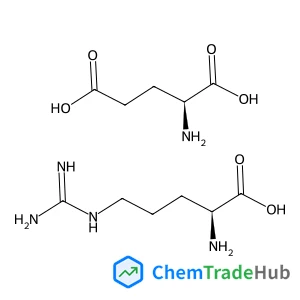
Molecular recognition towards peptides and proteins with high affinity by synthetic supramolecular hosts is important but challenging. In this work, we investigate the molecular recognition of the synthetic cucurbit[7]uril (CB[7]) to 17 designed N-terminal Leu-containing tripeptides in aqueous medium by molecular dynamics (MD) simulation and screen out tripeptides with high binding affinity. It is found that, compared to LGG, only the third residue is Arg (R), the binding affinity of CB[7] to LGR reaches nanomolar level with binding equilibrium constant (Ka) of 1.1 × 10⁹ M−1. The CB[7] recognition to the N-terminal Leu-containing tripeptides is highly sequence dependent; whether changing the sequence order (from LGR to LRG) or increasing the sequence length (from LGR to LGGR), Ka decreases by about three orders of magnitude. Interestingly, substituting N-terminal Leu for its isomer Ile, the binding of CB[7] to tripeptides weakens significantly with Ka decreasing by 3–8 orders of magnitude. Thus CB[7] can effectively distinguish N-terminal Leu-containing tripeptides from N-terminal Ile-containing tripeptides. Importantly, we predict that when R is as C-terminus, regardless of N-terminal residue being of aromatic type or Leu, the binding strength is always close to the nanomolar level. Therefore, R can be introduced to rationally design novel peptides with high binding affinity to CB[7] in practical applications.
おすすめジャーナル

Helvetica Chimica Acta

Journal of Physics and Chemistry of Solids

Pure and Applied Chemistry

Proceedings of the National Academy of Sciences of the United States of America

Israel Journal of Chemistry

Kinetics and Catalysis

Journal of Heterocyclic Chemistry

Russian Chemical Reviews

Pharmacological Reviews

Journal of Catalysis
関連文献
Electrochemical aspects of photocatalysis: Au@FeS2 nanocomposite for removal of industrial pollutant
Gurpreet Kaur, Pooja D., Manjeet Kumar, Anup Thakur, Rajni Bala, Akshay Kumar
2017-11-16
Paper
DOI: 10.1039/C7CP06289C
Thermally reversible nanoparticle gels with tuneable porosity showing structural colour
P. Cloetens, T. O’Neill, C. P. Grey, E. Eiser
2017-11-28
Paper
DOI: 10.1039/C7CP04835A
Control of chemical chaos through medium viscosity in a batch ferroin-catalysed Belousov–Zhabotinsky reaction
Marcello A. Budroni, Ilaria Calabrese, Ylenia Miele, Mauro Rustici, Nadia Marchettini, Federico Rossi
2017-11-16
Paper
DOI: 10.1039/C7CP06601E
Escape of anions from geminate recombination in THF due to charge delocalization
Hung-Cheng Chen, Andrew R. Cook, Sadayuki Asaoka, Jeffery S. Boschen, Theresa L. Windus, John R. Miller
2017-11-24
Paper
DOI: 10.1039/C7CP05880B
Polysulfide intercalation in bilayer-structured graphitic C3N4: a first-principles study
Sinan Li, Shaobin Yang, Ding Shen, Wen Sun, Xueying Shan, Wei Dong, Yuehui Chen, Xu Zhang, Yongqiang Mao, Shuwei Tang
2017-11-16
Paper
DOI: 10.1039/C7CP05334G
On the combustion mechanisms of ZrH2 in double-base propellant
Yanjing Yang, Fengqi Zhao, Zhifeng Yuan, Ying Wang, Ting An, Xueli Chen, Chunlei Xuan, Jiankan Zhang
2017-11-20
Paper
DOI: 10.1039/C7CP02593A
Role of halogen⋯halogen interactions in the 2D crystallization of n-semiconductors at the liquid–solid interface
Zongxia Guo, Ping Yu, Kai Sun, Shengbin Lei, Yuanping Yi, Zhibo Li
2017-09-25
Communication
DOI: 10.1039/C7CP06027K
Microscopic understanding of the conformational features of a protein–DNA complex
Sandip Mondal, Kaushik Chakraborty
2017-11-21
Paper
DOI: 10.1039/C7CP05161A
Amplification or cancellation of Fano resonance and quantum confinement induced asymmetries in Raman line-shapes
Shailendra K. Saxena, Priyanka Yogi, Suryakant Mishra, Hari Mohan Rai, Vikash Mishra, M. Kamal Warshi, Swarup Roy, Puspen Mondal, Pankaj R. Sagdeo, Rajesh Kumar
2017-11-13
Paper
DOI: 10.1039/C7CP04836J
こちらもおすすめ
化合物よくある質問
S-(甲硅烷基丙基)異硫酰氯を取り扱う際の実験室安全事項は何ですか?
取り扱う際にはPPE(防護具)が必要です。特に手袋と面マスクは必須です。ドラフトチャンバーを使用して漏洩処理を行い、温度は常温、湿度は乾燥状態、容器はガラス容器...
84682-36-02-Amino-7,7-dimethox...
化合物よくある質問
8-硝基-咪唑并[1,2-a]吡啶とは何ですか?
8-硝基-咪唑并[1,2-a]吡啶は、CAS番号52310-46-0の化合物で、8-位に硝基を有する咪唑並みの结构をもつ吡啶の化合物です。この化合物は、酸化還元...
52310-46-08-Nitroimidazo[1,2-a...
化合物よくある質問
4-ブロモ-5-メトキシピリジン-2-甲醇の代替品はありますか?
4-ブロモ-5-メトキシピリジン-2-甲醇の代替品には、類似構造を持つ化合物や機能性に等しい代替試薬があります。例えば、4-クロロ-5-メトキシピリジン-2-甲...
1454849-84-3(4-Bromo-5-methoxy-2...
化合物よくある質問
全氟-1,2-二甲基環己烷を含む廃棄物はどのように処理すべきですか?
全氟-1,2-二甲基環己烷(CAS番号:306-98-9)の廃棄物は、特別な処理が必要です。まず、廃棄物を密閉容器に収集し、適切な防漏容器に保管します。次に、専...
306-98-91,1,2,2,3,3,4,4,5,6-...
化合物よくある質問
3-(溴甲基)苯乙酸の主な用途は何ですか?
3-(溴甲基)苯乙酸は主に研究用化学薬品として利用され、有機合成や医薬品の開発に用いられます。また、特定の化合物の合成中間体としても使用されることがあります。
118647-53-32-(3-(Bromomethyl)ph...
化合物よくある質問
5-イドキド-4-メチオキシ-6-メチルピリミジニン-2-アミンはどのように保存すればよいですか?
5-イドキド-4-メチオキシ-6-メチルピリミジニン-2-アミンは冷暗所で密栓の容器に保存し、直射日光を避けて保管することをお勧めします。温度は常温とし、湿気を...
23368-84-55-Iodo-4-methoxy-6-m...
化合物よくある質問
1-(2-溴-6-甲氧基苯基)乙酮を取り扱う際の実験室安全事項は何ですか?
実験室では、1-(2- Bromo-6-methoxyphenyl)ethanoneを取り扱う際には、ゴーグルや面具、手袋などのPPEを使用することが推奨されま...
380225-68-31-(2-Bromo-6-methoxy...
化合物よくある質問
5-(4,4,5,5-テトラメチル-1,3,2-ダイオキサボラロール-2-イル)-1,3-ジヒドロ-2-ベンゾフランは安全ですか?
5-(4,4,5,5-テトラメチル-1,3,2-ダイオキサボラロール-2-イル)-1,3-ジヒドロ-2-ベンゾフランは一般に安全ですが、取扱いには注意が必要です...
1352037-60-55-(4,4,5,5-Tetrameth...
化合物よくある質問
4-溴萘-1-甲酸の代替品はありますか?
4-溴萘-1-甲酸は比較的稀な化合物ですが、類似物としては、4-クロロ-1-ナフホリック酸やその他のブロモ置換ナフホリック酸が挙げられます。ただし、これらの代替...
16650-55-84-Bromo-1-naphthoic ...
化合物よくある質問
ε-白藜芦醇脱氢二聚体の代替品はありますか?
ε-白藜芦醇脱氢二聚体の代替品としては、ε-白藜芦醇、ポリフェノール類、フラボノイド類が挙げられます。これらは類似の化学構造と生物学的活性を持っています。ただし...
62218-08-05-{(2R,3R)-6-Hydroxy...
掲載誌
Physical Chemistry Chemical Physics

CiteScore:
5.5
自己引用率:
10.3%
年間論文数:
3036
Physical Chemistry Chemical Physics (PCCP) is an international journal co-owned by 19 physical chemistry and physics societies from around the world. This journal publishes original, cutting-edge research in physical chemistry, chemical physics and biophysical chemistry. To be suitable for publication in PCCP, articles must include significant innovation and/or insight into physical chemistry; this is the most important criterion that reviewers and Editors will judge against when evaluating submissions. The journal has a broad scope and welcomes contributions spanning experiment, theory, computation and data science. Topical coverage includes spectroscopy, dynamics, kinetics, statistical mechanics, thermodynamics, electrochemistry, catalysis, surface science, quantum mechanics, quantum computing and machine learning. Interdisciplinary research areas such as polymers and soft matter, materials, nanoscience, energy, surfaces/interfaces, and biophysical chemistry are welcomed if they demonstrate significant innovation and/or insight into physical chemistry. Joined experimental/theoretical studies are particularly appreciated when complementary and based on up-to-date approaches.
おすすめ化合物
![N-[(9H-Fluoren-9-ylmethoxy)carbonyl]serine structure](https://static.chemtradehub.com/structs/737/73724-45-5-b0dc.webp "N-[(9H-Fluoren-9-ylmethoxy)carbonyl]serine structure")
![(1S)-1,5-Anhydro-1-[3-(1-benzothiophen-2-ylmethyl)-4-fluorophenyl]-D-glucitol structure](https://static.chemtradehub.com/structs/761/761423-87-4-dbeb.webp "(1S)-1,5-Anhydro-1-[3-(1-benzothiophen-2-ylmethyl)-4-fluorophenyl]-D-glucitol structure")
(1S)-1,5-Anhydro-1-[3-(1-benzothiophen-2-ylmethyl)-4-fluorophenyl]-D-glucitol
CAS番号:
761423-87-4
分子式:
C21H21FO5S
おすすめサプライヤー



免責事項
このページに表示される学術雑誌情報は、参考および研究目的のみを目的としています。当社は雑誌出版社とは提携しておらず、投稿の取り扱いも行っておりません。出版に関するお問い合わせは、各雑誌出版社に直接ご連絡ください。
表示されている情報に誤りがある場合は、support@chemtradehub.com までご連絡ください。迅速に確認し、対応いたします。