


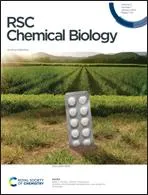
SREBP activation contributes to fatty acid accumulations in necroptosis
文献情報
出版日
2023-02-13
DOI
10.1039/D2CB00172A
インパクトファクター
0
著者
Daniel Lu, Laura R. Parisi, Omer Gokcumen, G. Ekin Atilla-Gokcumen
原文を見る
要旨
Necroptosis is a type of programmed cell death. It is characterized by membrane permeabilization and is associated with the release of intracellular components due to compromised membrane integrity which induces a strong inflammatory response. We recently showed that the accumulation of very long chain fatty acids (VLCFAs) contributes to membrane permeabilization during necroptosis. However, the mechanisms that result in the accumulation of these cytotoxic lipids remain unknown. Using comparative transcriptomics and digital PCR validations, we found that several target genes of sterol regulatory element-binding proteins (SREBPs) were upregulated during necroptosis, suggesting that they might be responsible for the accumulation of VLCFA in this process. We demonstrated that activation of SREBPs during necroptosis exacerbates the permeability of the plasma membrane and cell death. Consistent with these observations, targeting sterol regulatory element-binding protein cleavage-activating protein (SCAP), a protein involved in SREBP activation, reversed the accumulation of VLCFAs, and restored cell death and membrane permeabilization during necroptosis. Collectively, our results highlight a role for SREBP in regulating lipid changes during necroptosis and suggest SREBP-mediated lipid remodeling as a potential target for therapeutics to reduce membrane permeabilization during necroptosis.
おすすめジャーナル

Drug Discovery Today

Acta Materialia

Russian Journal of Organic Chemistry

Crystallography Reports

Russian Journal of Applied Chemistry

Saudi Pharmaceutical Journal

Current Opinion in Colloid & Interface Science

Journal of Peptide Science

Organic Process Research & Development

Russian Journal of Bioorganic Chemistry
関連文献
Kinetics and reactor modeling of the conversion of n-pentane using HZSM-5 catalysts with different Si/Al ratios
Tomás Cordero-Lanzac, Andrés T. Aguayo, Javier Bilbao
2019-07-03
Paper
DOI: 10.1039/C9RE00222G
Elementary reaction pathway study and a deduced macrokinetic model for the unified understanding of Ni-catalyzed steam methane reforming
Changming Ke, Zijing Lin
2020-02-26
Paper
DOI: 10.1039/C9RE00460B
Attaching hexylbenzene and poly(9,9-dihexylfluorene) to brominated graphenevia Suzuki coupling reaction
Jie Gao, Feng Bao, Qiandong Zhu, Zhifang Tan, Tao Chen, Haohao Cai, Cheng Zhao, Qingxia Cheng, Yandan Yang, Rui Ma
2012-12-19
Paper
DOI: 10.1039/C2PY20920A
Coupled stochastic simulation of the chain length and particle size distribution in miniemulsion radical copolymerization of styrene and N-vinylcaprolactam
Paul H. M. Van Steenberge
2019-08-22
Paper
DOI: 10.1039/C9RE00218A
Chiral polymeric microspheres grafted with optically active helical polymer chains: a new class of materials for chiral recognition and chirally controlled release
Ci Song, Chaohong Zhang, Fangjie Wang, Wantai Yang, Jianping Deng
2012-09-18
Paper
DOI: 10.1039/C2PY20546G
Reduction of the rate retardation effect in bulk RAFT radical polymerization under an externally applied magnetic field
Ling Lv, Wenxuan Wu, Gang Zou, Qijin Zhang
2013-01-07
Communication
DOI: 10.1039/C2PY20998E
Redox-switchable supramolecular polymers for responsive self-healing nanofibers in water
Qiang Yan, Anchao Feng, Huijuan Zhang, Yingwu Yin, Jinying Yuan
2012-11-06
Paper
DOI: 10.1039/C2PY20849K
Synthesis of poly(vinyl acetate)-b-poly(vinyl chloride) block copolymers by Cobalt-Mediated Radical Polymerization (CMRP)
Yasmine Piette, Antoine Debuigne, Vincent Bodart, Nicolas Willet, Anne-Sophie Duwez, Christine Jérôme, Christophe Detrembleur
2012-12-10
Paper
DOI: 10.1039/C2PY20965A
Synthesis of hyperbranched polythiophene with a controlled degree of branching viacatalyst-transfer Suzuki–Miyaura coupling reaction
Yukari Segawa, Tomoya Higashihara, Mitsuru Ueda
2012-11-30
Paper
DOI: 10.1039/C2PY20891A
UV-cleavable unimolecular micelles: synthesis and characterization toward photocontrolled drug release carriers
Xiao Liu, Zhicheng Tian, Chen Chen, Harry R. Allcock
2012-11-15
Paper
DOI: 10.1039/C2PY20825C
こちらもおすすめ
化合物よくある質問
1-{3-[5-(エチルカルボンイル)-2,4-ジメチル-1H-ピロロール-3-基]プロパニル}ピペリジン-4-カルボン酸について、適用される法規ガイドラインは何ですか?
この化合物はCAS番号1142209-81-1であり、GHS分類では corrosive (腐食性物質) と classified (分類物質) として指定され...
1142209-81-11-{3-[5-(Ethoxycarbo...
化合物よくある質問
2,2-二氟-1,3-ベンゾジオキサン-5-カルボキシlic酸とは何ですか?
2,2-二氟-1,3-ベンゾジオキサン-5-カルボキシlic酸は、CAS番号656-46-2の化合物で、化学式はC8H4F2O4です。この化合物は白色の結晶性粉...
656-46-22,2-Difluoro-1,3-ben...
化合物よくある質問
8-氯-4-色原酮の代替品はありますか?
8-氯-4-色原酮(CAS番号: 49701-11-3)の代替品には、他の色原酮類似物や、構造が似ている化合物があります。例えば、8-メチル-4-色原酮や、他の...
49701-11-38-Chloro-2,3-dihydro...
化合物よくある質問
エチル6,6-ジメチル-4,5,6,7-テトラヒドロ-1H-インドアゼー-3-カルボキシレートとは何ですか?
エチル6,6-ジメチル-4,5,6,7-テトラヒドロ-1H-インドアゼー-3-カルボキシレートは、CAS番号1233243-56-5を有する化合物です。これは有...
1233243-56-5Ethyl 6,6-dimethyl-4...
化合物よくある質問
4-叔丁基-6-氯-嘧啶に適用される法規ガイドラインは何ですか?
4-叔丁基-6-氯-嘧啶はCAS番号3435-24-3で、GHS分類では毒性物質とみなし、GHSの危険性分類が適用されます。REACH規則では登録が必要で、Eu...
3435-24-34-Tert-butyl-6-chlor...
化合物よくある質問
維库溴铵杂质Bはどのように合成されますか?
維库溴铵杂质Bは、アンドロステンデンから始まり、一連の合成反応、包括的な選択性と高い収率で合成されます。具体的には、ブロミド化、酸化、ジマーゼ反応、アミド化など...
50587-95-6(2beta,3alpha,5alpha...
化合物よくある質問
2-(4-氟苄基)-吡咯烷の物理化学的性質は何ですか?
CAS番号350017-04-8の2-(4-氟苄基)-吡咯烷は、結晶性の白色粉末です。分子量は199.17 g/molで、水に溶けにくいです。化学反応では比較的...
350017-04-82-(4-Fluorobenzyl)py...
化合物よくある質問
3-喹啉甲醛(2-チロール-8-エチル)は安全ですか?
3-喹啉甲醛(2-チロール-8-エチル)は一定の毒性を持つため、取扱には注意が必要です。使用する際は適切な防護具を着用し、密閉容器で保管・搬送し、直接的な接触を...
335196-05-92-Chloro-8-ethyl-3-q...
化合物よくある質問
エチル3-(ヒドロキシメチル)-1H-ピロール-2-カルボキシレートはどのように保存すればよいですか?
エチル3-(ヒドロキシメチル)-1H-ピロール-2-カルボキシレートは、室温(25℃)以下で保存し、直射日光を避け、乾燥した環境で保管することが推奨されます。ま...
75448-69-0Ethyl 3-(hydroxymeth...
119410-05-88-Chloro-11-(4-piper...
掲載誌
おすすめ化合物
![2-{3-[4-(3-Chlorophenyl)-1-piperazinyl]propyl}[1,2,4]triazolo[4,3-a]pyridin-3(2H)-one hydrochloride (1:1) structure](https://static.chemtradehub.com/structs/253/25332-39-2-496e.webp "2-{3-[4-(3-Chlorophenyl)-1-piperazinyl]propyl}[1,2,4]triazolo[4,3-a]pyridin-3(2H)-one hydrochloride (1:1) structure")


おすすめサプライヤー





免責事項
このページに表示される学術雑誌情報は、参考および研究目的のみを目的としています。当社は雑誌出版社とは提携しておらず、投稿の取り扱いも行っておりません。出版に関するお問い合わせは、各雑誌出版社に直接ご連絡ください。
表示されている情報に誤りがある場合は、support@chemtradehub.com までご連絡ください。迅速に確認し、対応いたします。