












Laminin-511 and recombinant vitronectin supplementation enables human pluripotent stem cell culture and differentiation on conventional tissue culture polystyrene surfaces in xeno-free conditions
文献情報
出版日
2021-09-24
DOI
10.1039/D1TB01878G
インパクトファクター
6.331
著者
Ya-Chu Liu, Lee-Kiat Ban, Hsin-Ting Lee, Yu-Tang Chang, Yun-Ting Lin, Her-Young Su, Shih-Tien Hsu
原文を見る
要旨
Human pluripotent stem cells (hPSCs) are typically cultivated on extracellular matrix (ECM) protein-coated dishes in xeno-free culture conditions. We supplemented mixed ECM proteins (laminin-511 and recombinant vitronectin, rVT) in culture medium for hPSC culture on conventional polystyrene dishes. Three hPSC cell lines were successfully cultivated on uncoated polystyrene dishes in medium supplemented with optimal conditions of laminin-511 and rVT. Excellent colony shape and colony size as well as high expansion fold of hPSCs were found under these conditions, whereas the colony size was small and poor expansion fold was found solely on L-511-coated dishes. A small portion of L-511 in the culture medium supported hPSC adhesion and prevented the adhesion from being too strong on the uncoated dishes, and rVT in the culture medium further supported adhesion of hPSCs on the dishes by maintaining their pluripotency. Having the optimal composition of L-511 and rVT in the culture medium was important for generating good hPSC colony shapes and sizes as well as a high expansion fold. After long-term culture of hPSCs on uncoated dishes supplemented with the mixed proteins, the hPSCs successfully showed pluripotent markers and could differentiate into a specific lineage of cells, cardiomyocytes, with high efficiency.
関連文献
An efficient method to perform milliliter-scale PCR utilizing highly controlled microwave thermocycling
Kristina Orrling, Peter Nilsson, Mats Gullberg, Mats Larhed
2004-03-08
Communication
DOI: 10.1039/B317049G
Controlled crystallization of mixed-ligand complexes of 1,3-bis(4-pyridyl)propane-N,N′-dioxide with metal(ii) thiocyanates: isostructurality in coordination networks bearing different mono- and di-nuclear nodes‡
Lin-Ping Zhang, Thomas C. W. Mak
2003-10-17
Communication
DOI: 10.1039/B307604K
Using two photonmicroscopy to quantify enzymatic reaction rates on polymer beads
Annie Y. Bosma, Gail McConnell, John Girkin, Peter J. Halling, Sabine L. Flitsch
2003-10-13
Communication
DOI: 10.1039/B308078A
UV photopatterning of a highly metallized, cluster-containing poly(ferrocenylsilane)
Alison Y. Cheng, Scott B. Clendenning, Guocheng Yang, Zheng-Hong Lu, Christopher M. Yip, Ian Manners
2004-03-03
Communication
DOI: 10.1039/B316656B
Unusual reactions of N-allylic difluoroenamines under thermal conditions
Hideki Amii, Yutaka Ichihara, Takashi Nakagawa, Takeshi Kobayashi, Kenji Uneyama
2003-10-20
Communication
DOI: 10.1039/B309696C
Use of allene in 1,3-dipolar addition to a carbonyl ylide: syntheses of 3-hydroxy-cis-nemorensic acid and nemorensic acid
David M. Hodgson, Frédéric Le Strat
2004-02-24
Communication
DOI: 10.1039/B316908A
Carbonate and oxalate dianions as prolific hydrogen-bond acceptors in supramolecular assembly‡
Chi-Keung Lam, Thomas C. W. Mak
2003-10-08
Communication
DOI: 10.1039/B306649E
Free-standing mesoporous titania films with anatase nanocrystallites synthesized at 80 °C
2004-03-23
Communication
DOI: 10.1039/B313609D
Mesoporous iron phosphate as an active, selective and recyclable catalyst for the synthesis of nopol by Prins condensation
Unnikrishnan R. Pillai, Endalkachew Sahle-Demessie
2004-02-23
Communication
DOI: 10.1039/B313747C
こちらもおすすめ
化合物よくある質問
3-イチチルビフェニルはどのように合成されますか?
3-イチチルビフェニルは、ビフェニルとイチプロピオニトリルを回収率約90%で反応させて合成されます。触媒は通常、亜リチウムホウ素を用います。
5668-93-93-Ethylbiphenyl
化合物よくある質問
8-溴-5-三氟甲基喹啉はどのように合成されますか?
8-溴-5-三氟甲基喹啉は、5-トリフルオロメチル-2-メチル-1,3-ベンゼンジオールをブロモエタノールと反応させて生成します。この反応は塩基性条件下で行われ...
917251-92-48-Bromo-5-(trifluoro...
化合物よくある質問
ジメチル4-(4,4,5,5-テトラメチル-1,3,2-ドioxaborolan-2-基)-2,6-ピリジンジカルボイル酸フェニルアミニドの代替品はありますか?
ジメチル4-(4,4,5,5-テトラメチル-1,3,2-ドioxaborolan-2-基)-2,6-ピリジンジカルボイル酸フェニルアミニドの代替品としては、4-...
741709-66-0Dimethyl 4-(4,4,5,5-...
化合物よくある質問
N-(3,5-ヘキサクロロ-4-ピリドインイル)-8-メチオキシ-5-キノリンカーボン酸の市場動向や研究トレンドはどのようなものでしょうか?
N-(3,5-ヘキサクロロ-4-ピリドインイル)-8-メチオキシ-5-キノリンカーボン酸の市場動向は、主に産業用途での需要により影響を受けます。研究トレンドとし...
199871-63-1N-(3,5-Dichloro-4-py...
化合物よくある質問
イソステアロイルグリセリルは安全ですか?
イソステアロイルグリセリルは一般的に安全性が高いとされていますが、過度な使用や個人差により皮�owsん炎などの反応が起こる可能性があります。使用前に医師に相談す...
222723-55-92-[(5Z,8Z,11Z,14Z)-5...
化合物よくある質問
1-(二苯甲基)-3,3-二氟-氮杂环丁烷の市場動向や研究トレンドはどうですか?
1-(二苯甲基)-3,3-二氟-氮杂环丁烷の市場動向は、医薬品や合成化学の研究分野で注目を集めています。新興研究は、該当化合物の合成改良と生体内での作用メカニズ...
288315-02-61-Benzhydryl-3,3-dif...
化合物よくある質問
3-チオフェンスチオールの物理化学的性質は何ですか?
3-チオフェンスチオールのCAS番号は7774-73-4です。結晶性の白色粉末で、分子量は122.17です。この化合物は水に微溶解し、エタノールやジクロロメタン...
7774-73-43-Thiophenethiol
化合物よくある質問
2-Methyl-2-propanyl (2S)-2-(aminomethyl)-1-piperidinecarboxylateは安全ですか?
2-Methyl-2-propanyl (2S)-2-(aminomethyl)-1-piperidinecarboxylateは一定の安全性基準を満たしていま...
475105-35-22-Methyl-2-propanyl ...
化合物よくある質問
CAS番号1316822-90-8の化合物は安全ですか?
CAS番号1316822-90-8の化合物は安全性に関しては評価が不足していますが、一般的には生物学的に活性な物質であり、取り扱いには適切な安全防護措置が必要で...
1316822-90-8Gal beta(1-3)[Neu5Ac...
化合物よくある質問
Tert-butyl 2-(2-羟基乙基)哌嗪-1-羧酸はどのように保存すればよいですか?
Tert-butyl 2-(2-羟基乙基)哌嗪-1-羧酸は、冷暗所で保存し、直射日光から遠ざけてください。容器は密閉し、高湿度や高温を避けて保管してください。
517866-79-4Tert-butyl 2-(2-hydr...
掲載誌
Journal of Materials Chemistry B
CiteScore:
12
自己引用率:
4.9%
年間論文数:
831
Journal of Materials Chemistry A, B & C cover high quality studies across all fields of materials chemistry. The journals focus on those theoretical or experimental studies that report new understanding, applications, properties and synthesis of materials. The journals have a strong history of publishing quality reports of interest to interdisciplinary communities and providing an efficient and rigorous service through peer review and publication. The journals are led by an international team of Editors-in-Chief and Associate Editors who are all active researchers in their fields. Journal of Materials Chemistry A, B & C are separated by the intended application of the material studied. Broadly, applications in energy and sustainability are of interest to Journal of Materials Chemistry A, applications in biology and medicine are of interest to Journal of Materials Chemistry B, and applications in optical, magnetic and electronic devices are of interest to Journal of Materials Chemistry C. More than one Journal of Materials Chemistry journal may be suitable for certain fields and researchers are encouraged to submit their paper to the journal that they feel best fits for their particular article. Example topic areas within the scope of Journal of Materials Chemistry B are listed below. This list is neither exhaustive nor exclusive. Antifouling coatings Biocompatible materials Bioelectronics Bioimaging Biomimetics Biomineralisation Bionics Biosensors Diagnostics Drug delivery Gene delivery Immunobiology Nanomedicine Regenerative medicine & Tissue engineering Scaffolds Soft robotics Stem cells Therapeutic devices image block All articles published in Journal of Materials Chemistry B from 2019 onwards will be indexed in MEDLINE®. Articles that primarily focus on providing insight into the underlying science and performance of biomaterials within a biological environment are more suited to our companion journal, Biomaterials Science.
おすすめ化合物
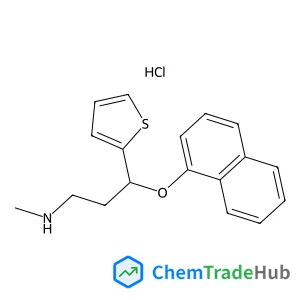
N-Methyl-3-(1-naphthyloxy)-3-(2-thienyl)-1-propanamine hydrochloride (1:1)
CAS番号:
1188266-11-6
分子式:
C18H20ClNOS
おすすめサプライヤー




免責事項
このページに表示される学術雑誌情報は、参考および研究目的のみを目的としています。当社は雑誌出版社とは提携しておらず、投稿の取り扱いも行っておりません。出版に関するお問い合わせは、各雑誌出版社に直接ご連絡ください。
表示されている情報に誤りがある場合は、support@chemtradehub.com までご連絡ください。迅速に確認し、対応いたします。