













![2-Methylbenzo[h]quinoline structure](https://static.chemtradehub.com/structs/605/605-88-9-ac43.webp "2-Methylbenzo[h]quinoline structure")
Salt screening analysis for reverse electrodialysis
文献情報
出版日
2021-11-02
DOI
10.1039/D1SE01447A
インパクトファクター
6.367
著者
Jamie Hestekin
原文を見る
要旨
As a renewable energy conversion technology, reverse electrodialysis (RED) can be employed for generating electricity, where two solutions with different salt concentrations are mixed together from membrane-separated streams. In addition to the concentration gradient of streams and membrane characterization, the type and nature of the components dissolved in the streams play an important role in electricity generation by RED. Although studies on the effect of salt type on the performance of RED are available, there is a lack of comprehensive analysis related to salt selection for RED applications. In this paper, a model for screening salt solutions, including 174 monovalent and multivalent ions, is developed. Salts for RED were screened using theoretical open-circuit voltage (OCVth) calculations and compared with a reference salt (NaCl). The activity coefficients of salts in different concentration ranges were calculated using the Bromley model. The effects of membrane properties, including permselectivity and membrane resistance, on the performance of a RED cell, were analyzed. Furthermore, a model for hazard assessment of salts was employed to provide an analysis for the selection of salts with minimum environmental, health, and physicals hazards. Moreover, the effects of ionic properties, including charge density, ionic radius, and hydration energy, on the theoretical OCV were investigated. Between the investigated salts, potassium formate (KHCO2), sodium bromide (NaBr), potassium acetate (KC2H3O2), and sodium acetate (NaC2H3O2) were found to be promising salts for RED applications due to high theoretical OCV, low hazard potential, and low cost compared to NaCl.
関連文献
Non-phase-separated 2D B–C–N alloys via molecule-like carbon doping in 2D BN: atomic structures and optoelectronic properties
Xiang-Yang Ren, Sha Xia, Nian-Ke Chen, Xue-Peng Wang, Dan Wang, Zhan-Guo Chen
2018-08-20
Paper
DOI: 10.1039/C8CP03028F
Chiral effects on the final step of an octahedron-shaped coordination capsule self-assembly
Y. Matsumura, S. Iuchi, S. Hiraoka
2018-01-25
Communication
DOI: 10.1039/C7CP08237A
B3@Si12+: strong stabilizing effects of a triatomic cyclic boron unit on tubular silicon clusters
Hung Tan Pham, Thi Tuyet Mai Dang, Long Van Duong
2018-02-19
Paper
DOI: 10.1039/C8CP00380G
Mechanisms of reinforcement in polymer nanocomposites
N. Molinari, A. P. Sutton
2018-08-31
Paper
DOI: 10.1039/C8CP03281E
Solvation of Al3+ cations in bulk and confined protic ionic liquids: a computational study
Víctor Gómez-González, Borja Docampo-Álvarez, Hadrián Montes-Campos, Juan Carlos Otero, Elena López Lago, Oscar Cabeza, Luis J. Gallego, Luis M. Varela
2018-07-04
Paper
DOI: 10.1039/C8CP02933D
From ligand exchange to reaction intermediates: what does really happen during the synthesis of emissive complexes?‡
P. Polzin, I. V. Eliani, J. Ströh, M. Braun, N. Ruser, P. Rönfeldt, F. Bertram, C. Näther, S. Wöhlbrandt, M. Suta, H. Terraschke
2017-12-20
Paper
DOI: 10.1039/C7CP07142F
Investigation of copper precursors in the synthesis of higher alcohols from syngas over CuZnAl catalysts without promoters
Yong-Jun Liu, Lei Jia, Wei Huang
2018-06-26
Paper
DOI: 10.1039/C8CP02296H
Comment on “Methanol dimer formation drastically enhances hydrogen abstraction from methanol by OH at low temperature” by W. Siebrand, Z. Smedarchina, E. Martínez-Núñez and A. Fernández-Ramos, Phys. Chem. Chem. Phys., 2016, 18, 22712
R. J. Shannon, J. C. Gómez Martín, R. L. Caravan, M. Agúndez, A. Canosa, G. El Dib, J. Cernicharo
2018-02-26
Comment
DOI: 10.1039/C7CP04561A
Theoretical characterization of sulfur-to-selenium substitution in an emissive RNA alphabet: impact on H-bonding potential and photophysical properties
Mohit Chawla, Pau Besalú-Sala, Kanav Kalra, Romina Oliva, Luigi Cavallo
2018-02-23
Paper
DOI: 10.1039/C7CP07656H
A first-principles study of the electrically tunable band gap in few-layer penta-graphene
Jinjin Wang, Zhanyu Wang, R. J. Zhang, Y. X. Zheng, L. Y. Chen, Chia-Chin Tsoo, Hung-Ji Huang
2018-06-12
Paper
DOI: 10.1039/C8CP02624F
こちらもおすすめ
化合物よくある質問
2-メトキシ-4-(メチルスルフィニル)アミンの主な用途は何ですか?
2-メトキシ-4-(メチルスルフィニル)アミンは、主に医薬品および農薬の製造に使用されます。また、合成化学の一部として研究用材料としても利用されます。
41608-73-52-Methoxy-4-(methyls...
118684-13-24-(Bromomethyl)-3-me...
化合物よくある質問
4,6-二氯-N-甲基ピラミジンアミンの代替品はありますか?
代替品としては、4,6-二クロロピラミジンアミンや他のピラミジン系化合物が考えられます。ただし、目的と用途によって最適な代替品は異なります。
10397-15-64,6-Dichloro-N-methy...
化合物よくある質問
6-氯-4-甲基-1H-吲哚を含む廃棄物はどのように処理すべきですか?
6-氯-4-甲基-1H-吲哚の廃棄物は、適切な容器に収集し、密閉して保管します。温度は常温、湿度は低く、直射日光を避けて保管することを推奨します。廃棄処理は専門...
885520-84-36-chloro-4-methyl-1H...
化合物よくある質問
2-フローユロ-4-(トリフルオロメチル)ベンゾイドについて「に適用される法規ガイドラインは何ですか」
2-フローユロ-4-(トリフルオロメチル)ベンゾイドのCAS番号は207974-08-1です。この化合物はGHS分類で毒性物質と有害な反応物質として分類されます...
207974-08-1[2-Fluoro-4-(trifluo...
化合物よくある質問
4-ニトロフェニルN-[(ベンゼルオキシルカーボンイル]グリシングリシングリシン酸はどのように保存すればよいですか?
4-ニトロフェニルN-[(ベンゼルオキシルカーボンイル]グリシングリシングリシン酸は、室温で暗所に保管し、乾燥した環境で保存することを推奨します。容器は密閉性の...
19811-64-44-Nitrophenyl N-[(be...
化合物よくある質問
イソデスロラタドリンの代替品はありますか?
イソデスロラタドリンの代替品としては、デスロラタドリンや他の抗ヒスタミン薬が挙げられます。具体的には、デスロラタドリン、ラセカミド、フェルタドリンなどが、症状や...
183198-49-4Iso Desloratadine
化合物よくある質問
5-甲氧基-1,2,3,4-四氢异喹啉盐酸盐はどのように合成されますか?
5-甲氧基-1,2,3,4-四氢异喹啉盐酸盐の一般的な合成方法は、メタノール中で5-メトキシ-1,2,3,4-四ヒュドロイソキシンを塩酸で塩化します。この反応で...
103030-69-95-Methoxy-1,2,3,4-te...
化合物よくある質問
4-アミノ-5-メトキシ-2-トルエンサルホニック酸についての法規ガイドラインは何ですか?
CAS番号6471-78-9の4-アミノ-5-メトキシ-2-トルエンサルホニック酸は、GHS分類では corrosive(腐食性)と識別されます。EUのREAC...
6471-78-94-Amino-5-Methoxy-2-...
化合物よくある質問
甲基孕酮を取り扱う際の実験室安全事項は何ですか?
甲基孕酮の取り扱いは、PPE(個人保護具)の使用が必要な重要な安全事項を伴います。防塵マスク、ゴーグル、手袋を着用することが推奨されます。ドラフトチャンバーを使...
204063-33-22-[(Diphenylmethyl)a...
掲載誌
おすすめ化合物
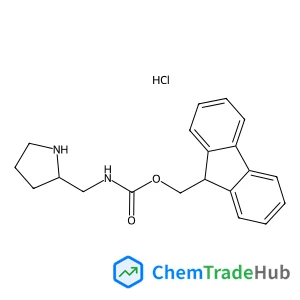
(S)-(9H-Fluoren-9-yl)methyl (pyrrolidin-2-ylmethyl)carbamate hydrochloride
CAS番号:
1217813-15-4
分子式:
C20H23ClN2O2
おすすめサプライヤー





免責事項
このページに表示される学術雑誌情報は、参考および研究目的のみを目的としています。当社は雑誌出版社とは提携しておらず、投稿の取り扱いも行っておりません。出版に関するお問い合わせは、各雑誌出版社に直接ご連絡ください。
表示されている情報に誤りがある場合は、support@chemtradehub.com までご連絡ください。迅速に確認し、対応いたします。