












![5,10-Dihydroindeno[2,1-a]indene structure](https://static.chemtradehub.com/structs/654/6543-29-9-71ca.webp "5,10-Dihydroindeno[2,1-a]indene structure")
One-pot three-step mechanically assisted synthesis and catalytic performance of tripodal metallic complexes
文献情報
出版日
2021-07-20
DOI
10.1039/D1RE00194A
インパクトファクター
4.239
著者
Raquel Viveiros, Teresa Casimiro
原文を見る
要旨
Mechanosynthesis is an emergent green technology that can be applied under solventless or vestigial solvent conditions. Major advantages lie in waste reduction and lower energy consumption, without compromising or enhancing reaction conversion. In this work, we reported for the first time a one-pot three-step, ligand to catalysis, mechanically assisted synthesis. Tripodal nitrogen-based ligands were complexed with different metals, and these new metallic complexes, produced in high yield, were further investigated in the mechanically assisted oxidation of (R)-limonene. Using m-chloroperbenzoic acid as the oxidant and the iron complex, under solventless conditions at room temperature, (R)-limonene was selectively oxidized (77.5%) to dihydrocarvone in quantitative yield for short reaction time.
関連文献
Synthesis of a monophosphoryl lipid A derivative and its conjugation to a modified form of a tumor-associated carbohydrateantigen GM3
Qianli Wang, Jie Xue, Zhongwu Guo
2009-08-27
Communication
DOI: 10.1039/B907351E
The solid-state Ag/AgCl process as a highly sensitive detection mechanism for an electrochemical immunosensor
Boon Ping Ting, Jie Zhang, Majad Khan, Yi Yan Yang, Jackie Y. Ying
2009-09-01
Communication
DOI: 10.1039/B910730D
Metal-catalyzed rearrangement of enantiomerically pure alkylidenecyclopropane derivatives as a new access to cyclobutenes possessing quaternary stereocenters‡
Ahmad Masarwa, Alois Fürstner, Ilan Marek
2009-09-02
Communication
DOI: 10.1039/B910465H
Polyoxometalate-based {MnIII2}–Schiff base composite materials exhibiting single-molecule magnet behaviour
Qiong Wu, Yang-Guang Li, Yong-Hui Wang, Ying Lu, En-Bo Wang
2009-09-03
Communication
DOI: 10.1039/B909246C
The effect of DNA aptamer configuration on the sensitivity of detection thrombin at surface by acoustic method
Tibor Hianik, Igor Grman, Ivana Karpisova
2009-09-08
Communication
DOI: 10.1039/B910981A
Barriers to enantiocontrol in Lewis acid catalyzed hetero-Diels–Alder reactions‡
Xiaochen Wang, Zhuoyan Li, Michael P. Doyle
2009-08-26
Communication
DOI: 10.1039/B913019E
Electrical control of cell density gradients on a conducting polymer surface
Alwin M. D. Wan, Daniel J. Brooks, Abdurrahman Gumus, Claudia Fischbach, George G. Malliaras
2009-07-21
Communication
DOI: 10.1039/B911130A
Efficient synthesis of dendrimersvia a thiol–yne and esterification process and their potential application in the delivery of platinum anti-cancer drugs
Gaojian Chen, Jatin Kumar, Andrew Gregory, Martina H. Stenzel
2009-09-04
Communication
DOI: 10.1039/B910340F
Modulation of nanotube packing through the controlled self-assembly of tris-p-carboxylatocalix[4]arenes
Stuart Kennedy, Scott J. Dalgarno
2009-07-21
Communication
DOI: 10.1039/B909456C
New enantiopure NHCs derived from camphor
Peddiahgari Vasu Govardhana Reddy, Sobia Tabassum, Amélie Blanrue, René Wilhelm
2009-08-18
Communication
DOI: 10.1039/B911476A
こちらもおすすめ
化合物よくある質問
2,3-スチオエポキシマドルを取り扱う際の実験室安全事項は何ですか?
取り扱いにはPPE(プロテクティブ・パーソナル・エイド)が必要で、防ぐ手袋と保護眼鏡を着用してください。ドラフトチャンバーの使用を推奨します。漏洩した場合は、適...
4267-80-52,3-Thioepoxy Madol
53981-25-22-Amino-6-fluorophen...
化合物よくある質問
BOC-S-3-アミニ-4-(4-メチオキシベンチル)-ブタン酸の代替品はありますか?
この化合物の代替品としては、BOC保護基を有さないアミノ酸やその他の保護基化合物が考えられます。また、メチオキシ基を有しない他の芳香族アミノ酸も代替品として挙げ...
126800-59-7(3S)-4-(4-Methoxyphe...
化合物よくある質問
Methyl 2-(chloromethyl)-3-nitrobenzoate(1218910-61-2)の代替品はありますか?
Methyl 2-(chloromethyl)-3-nitrobenzoate(1218910-61-2)の代替品としては、化学組成を変えることで効果を達成する...
1218910-61-2Methyl 2-(chlorometh...
化合物よくある質問
(2R)-2-アミノ-N-ベンジル-3-ヒドロキシプロパナミドを含む廃棄物はどのように処理すべきですか?
(2R)-2-アミノ-N-ベンジル-3-ヒドロキシプロパナミドを含む廃棄物は、適切な廃棄物管理ガイドラインに基づき処理する必要があります。まず、廃棄物を適切に収...
175481-39-7(2R)-2-amino-N-benzy...
化合物よくある質問
6,7-二氢-咪唑並[1,2-a]ピリドイン-8(5h)-酮はどのように合成されますか?
6,7-二氢-咪唑並[1,2-a]ピリドイン-8(5h)-酮は、2-ブロモフェニルアセトインとリン酸ハロゲン化物を反応させることで合成できます。この反応は高温で...
457949-09-66,7-Dihydroimidazo[1...
化合物よくある質問
エチル(3R)-3-ピロリジニル酢酸水和塩とは何ですか?
エチル(3R)-3-ピロリジニル酢酸水和塩は、CAS番号1332459-32-1の化合物で、(R)-乙基2-(ピロリジン-3-基)酢酸塩水和塩と呼ばれます。この...
1332459-32-1Ethyl (3R)-3-pyrroli...
化合物よくある質問
(2S)-{[(2-メチルエチルオキシ]カルボニル}アミノ)[2-(トリアフルオロメチルフェニル]エチカシック酸の物理化学的性質は何ですか?
(2S)-{[(2-メチルエチルオキシ]カルボニル}アミノ)[2-(トリアフルオロメチルフェニル]エチカシック酸のCAS番号は1203454-45-8です。この...
1203454-45-8(2S)-({[(2-Methyl-2-...
化合物よくある質問
2-ブロモ-1-(2-メチル-2-プロパニル)-4-ニトロベンゼンはどのように保存すればよいですか?
2-ブロモ-1-(2-メチル-2-プロパニル)-4-ニトロベンゼンは、直射日光を避けて暗所で、室温(約15℃〜25℃)、乾燥した場所に保存する必要があります。ま...
6310-17-42-Bromo-1-(2-methyl-...
化合物よくある質問
1-[(4-硝基フェニル)スルホニル]-1H-1,2,4-三唑の市場動向や研究トレンドはどうですか?
市場動向としては、1-[(4-硝基フェニル)スルホニル]-1H-1,2,4-三唑は主に農業用除草剤や合成化学製品の原料として利用されています。研究トレンドとして...
57777-84-11-[(4-Nitrophenyl)su...
掲載誌
Reaction Chemistry & Engineering

CiteScore:
0
自己引用率:
8.8%
年間論文数:
284
Reaction Chemistry & Engineering is an interdisciplinary journal reporting cutting-edge research focused on enhancing the understanding and efficiency of reactions. Reaction engineering leverages the interface where fundamental molecular chemistry meets chemical engineering and technology. Challenges in chemistry can be overcome by the application of new technologies, while engineers may find improved solutions for process development from the latest developments in reaction chemistry. Reaction Chemistry & Engineering is a unique forum for researchers whose interests span the broad areas of chemical engineering and chemical sciences to come together in solving problems of importance to wider society. All papers should be written to be approachable by readers across the engineering and chemical sciences. Papers that consider multiple scales, from the laboratory up to and including plant scale, are particularly encouraged.
おすすめ化合物
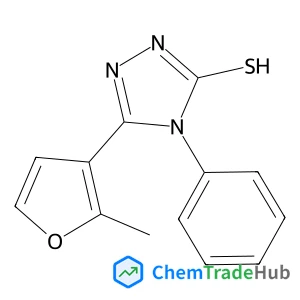
5-(2-Methyl-3-furyl)-4-phenyl-2,4-dihydro-3H-1,2,4-triazole-3-thione
CAS番号:
346464-59-3
分子式:
C13H11N3OS
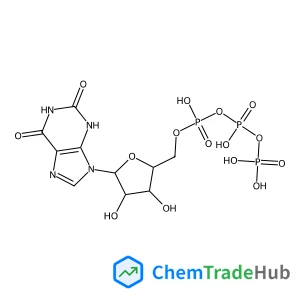
![6-(Benzyloxy)-8-(2-bromoacetyl)-2H-benzo[b][1,4]oxazin-3(4H)-one structure](https://static.chemtradehub.com/structs/926/926319-53-1-2287.webp "6-(Benzyloxy)-8-(2-bromoacetyl)-2H-benzo[b][1,4]oxazin-3(4H)-one structure")
おすすめサプライヤー



免責事項
このページに表示される学術雑誌情報は、参考および研究目的のみを目的としています。当社は雑誌出版社とは提携しておらず、投稿の取り扱いも行っておりません。出版に関するお問い合わせは、各雑誌出版社に直接ご連絡ください。
表示されている情報に誤りがある場合は、support@chemtradehub.com までご連絡ください。迅速に確認し、対応いたします。