












![1-[(4-Methylphenyl)sulfonyl]-3-(4,4,5,5-tetramethyl-1,3,2-dioxaborolan-2-yl)-1H-pyrrolo[2,3-b]pyridine-5-carbonitrile structure](https://static.chemtradehub.com/structs/143/1434747-57-5-fc0d.webp "1-[(4-Methylphenyl)sulfonyl]-3-(4,4,5,5-tetramethyl-1,3,2-dioxaborolan-2-yl)-1H-pyrrolo[2,3-b]pyridine-5-carbonitrile structure")
Tandem isonitrile insertion/azacyclopropylidene-annulated cyclohexenone–tropone rearrangement of p-QMs and TosMIC: de novo synthesis of pyrrolotropones with anti-cancer activity
文献情報
出版日
2021-09-22
DOI
10.1039/D1QO01256H
インパクトファクター
5.281
著者
Chuan-Hua Qu, Gui-Ting Song, Jiu-Hong Huang, Run Huang, Yuan Chen, Tong Liu, Dian-Yong Tang, Zhi-Gang Xu, Zhong-Zhu Chen
原文を見る
要旨
A new and general strategy for the rapid construction of pyrrolotropones via a domino process involving 1,6-nucleophilic addition, isonitrile insertion, azacyclopropylidene-annulated cyclohexenone to tropone rearrangement, and subsequent aromatization, from the reaction of para-quinone methides (p-QMs) with p-toluenesulfonylmethyl isocyanide (TosMIC) has been proposed. The reaction does not require transition metals or stoichiometric oxidants and can be performed through one-step operation promoted by a base. This method uses easy-to-synthesize p-QMs and commercially abundant TosMIC and shows excellent scalability and broad substrate scope. Furthermore, the screening of these pyrrolotropone compounds in several human cancer cell lines shows excellent anticancer activity, which validates the feasibility of this protocol for generating bioactive compounds.
関連文献
Synthesis of the DEF-bis-spiroacetal of spirastrellolide A exploiting a double asymmetric dihydroxylation/spiroacetalisation strategy
Ian Paterson, Edward A. Anderson, Stephen M. Dalby, Jong Ho Lim, Philip Maltas, Christian Moessner
2006-09-20
Communication
DOI: 10.1039/B612697A
Amylose-wrapped luminescent conjugated polymers
Michael J. Frampton, Timothy D. W. Claridge, Gianluca Latini, Sergio Brovelli, Franco Cacialli, Harry L. Anderson
2008-05-01
Communication
DOI: 10.1039/B803335H
Gold(i)-catalyzed intramolecular hydroamination of unactivated CC bonds with alkylammonium salts
Christopher F. Bender, Ross A. Widenhoefer
2008-05-19
Communication
DOI: 10.1039/B804081H
Electrochemical parameters and techniques in drug development, with an emphasis on quinones and related compounds
Elizabeth Anne Hillard, Fabiane Caxico de Abreu, Danielle Cristhina Melo Ferreira, Gérard Jaouen, Marília Oliveira Fonseca Goulart, Christian Amatore
2008-04-10
Feature Article
DOI: 10.1039/B718116G
Controlled synthesis of mesoporous SiO2/Ni3Si2O5(OH)4 core–shell microspheres with tunable chamber structures via a self-template method
Zhiyan Guo, Fanglin Du, Guicun Li, Zuolin Cui
2008-04-11
Communication
DOI: 10.1039/B719500A
Facile intramolecular C(sp3)–H bond activation with PdII
Martin Bröring, Christian Kleeberg
2008-04-08
Communication
DOI: 10.1039/B802185F
Gold nanocomposites with rigid fully conjugated heteroditopic ligands shell as nanobuilding blocks for coordination chemistry
Cédric R. Mayer, Eddy Dumas, Aude Michel, Francis Sécheresse
2006-09-21
Communication
DOI: 10.1039/B610631E
A new heteroleptic ruthenium sensitizer enhances the absorptivity of mesoporous titania film for a high efficiency dye-sensitized solar cell
Feifei Gao, Yuan Wang, Jing Zhang, Dong Shi, Mingkui Wang, Robin Humphry-Baker, Peng Wang, Shaik M. Zakeeruddin, Michael Grätzel
2008-04-04
Communication
DOI: 10.1039/B802909A
Self-assembly of carbon nanotube polyhedrons inside microchannels
Jiangying Qu, Zongbin Zhao, Jieshan Qiu, Yury Gogotsi
2008-05-20
Communication
DOI: 10.1039/B805622F
こちらもおすすめ
28770-01-62-(2-Isopropyl-1,3-o...
化合物よくある質問
「邻羟基阿托伐他汀内酯标准品」に適用される法規ガイドelinesは何ですか?
CAS番号163217-74-1の「邻羟基阿托伐他汀内酯标准品」は、GHS分類では危険物に分類されず、主にREACH規則とFDA/EPAの管理対象となります。R...
163217-74-1ortho-Hydroxy Atorva...
化合物よくある質問
メチル(3R)-3-アミノ-2,3-ジヒドロ-1-ベンゾファンラニン-5-カルボイル酸塩塩酸塩の主な用途は何ですか?
メチル(3R)-3-アミノ-2,3-ジヒドロ-1-ベンゾファンラニン-5-カルボイル酸塩塩酸塩は、医薬品や合成化学の研究に広く用いられます。また、特定の薬物の前...
2241594-15-8Methyl (3R)-3-amino-...
化合物よくある質問
トランス-4-メチルピロリジン-3-オール塩酸塩はどのように合成されますか?
トランス-4-メチルピロリジン-3-オール塩酸塩は、4-メチルピロリジンの塩酸塩化によって合成されます。一般的な合成方法では、4-メチルピロリジンを塩酸に加えて...
265108-42-7trans-4-Methylpyrrol...
化合物よくある質問
硫雜環丁烷-1,1-二氧化物は安全ですか?
硫雜環丁烷-1,1-二氧化物は安全ではありません。毒性は報告されていませんが、高温下で分解し、可燃性があるため、高圧ガスは注意が必要です。密閉した容器で保管し、...
5687-92-3Thietane 1,1-dioxide
6054-10-02H, 8H-Benzo[1,2-b
化合物よくある質問
9-ヒドロキシエリプチシネ塩酸塩はどのように合成されますか?
9-ヒドロキシエリプチシネ塩酸塩は、エリプチシネから塩酸を添加することで合成されます。選択性は高いですが、収率は約70%です。
52238-35-49-Hydroxyellipticine...
化合物よくある質問
5-塩素-2-(メチルアミノ)フェニル-(2-塩素フェニル)メタン酮の物理化学的性質は何ですか?
5-塩素-2-(メチルアミノ)フェニル-(2-塩素フェニル)メタン酮のCAS番号は5621-86-3です。この化合物は白色の結晶性粉末で、分子量は415.03で...
5621-86-3[5-Chloro-2-(methyla...
化合物よくある質問
1-[2-(4-甲氧基-苯氧基)-乙基]-哌嗪はどのように保存すればよいですか?
1-[2-(4-甲氧基-苯氧基)-乙基]-哌嗪は、直射日光を避けて暗所に、室温(15-25℃)で保管し、密閉容器に入れることで安定性を保つことができます。
117132-44-21-[2-(4-Methoxy-phen...
化合物よくある質問
2-[3-(4-甲氧基フェニル)プロピル]-4,4,5,5-四メチル-1,3,2-ドイボロロールアンの主な用途は何ですか?
2-[3-(4-甲氧基フェニル)プロピル]-4,4,5,5-四メチル-1,3,2-ドイボロロールアンは、医薬品の合成、有機合成化学、および新材料の研究で使用され...
1073371-72-82-[3-(4-Methoxypheny...
掲載誌
Organic Chemistry Frontiers

CiteScore:
7.8
自己引用率:
8.7%
年間論文数:
724
Organic Chemistry Frontiers publishes high-quality research from across organic chemistry. Emphases are placed on studies that make significant contributions to the field of organic chemistry by reporting either new or significantly improved protocols or methodologies. Topics include, but are not limited to the following: Organic synthesis Development of synthetic methodologies Catalysis Natural products Functional organic materials Supramolecular and macromolecular chemistry Physical and computational organic chemistry
おすすめ化合物
phosphoryl}methyl 4-methylbenzenesulfonate structure](https://static.chemtradehub.com/structs/864/864068-45-1-ba7c.webp "{[3-(Hexadecyloxy)propoxy](hydroxy)phosphoryl}methyl 4-methylbenzenesulfonate structure")
{[3-(Hexadecyloxy)propoxy](hydroxy)phosphoryl}methyl 4-methylbenzenesulfonate
CAS番号:
864068-45-1
分子式:
C27H49O7PS
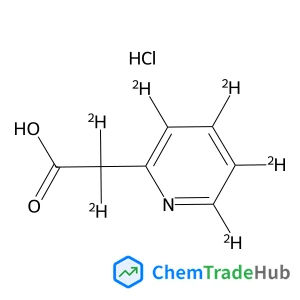
2,2-dideuterio-2-(3,4,5,6-tetradeuterio-2-pyridyl)acetic acid;hydrochloride
CAS番号:
1329799-67-8
分子式:
C7H2ClD6NO2
おすすめサプライヤー





免責事項
このページに表示される学術雑誌情報は、参考および研究目的のみを目的としています。当社は雑誌出版社とは提携しておらず、投稿の取り扱いも行っておりません。出版に関するお問い合わせは、各雑誌出版社に直接ご連絡ください。
表示されている情報に誤りがある場合は、support@chemtradehub.com までご連絡ください。迅速に確認し、対応いたします。