












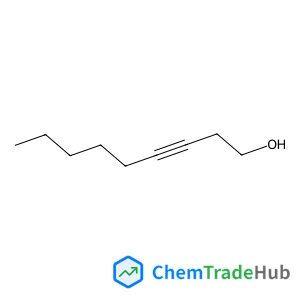
Recent advances of Ritter reaction and its synthetic applications
文献情報
出版日
2021-05-12
DOI
10.1039/D1QO00496D
インパクトファクター
5.281
著者
Meng-En Chen, Xiao-Wei Chen, Yue-Hong Hu, Rui Ye, Jian-Wei Lv, Baosheng Li, Fu-Min Zhang
原文を見る
要旨
In comparison to previous reviews, the present review article provides a comprehensive survey of Ritter reactions from 2014 to 2020, mainly aiming to discuss diverse Ritter reactions and their widely synthetic applications. Notably, the oxidative Ritter-type reactions are presented for the first time, and tandem Ritter reactions and asymmetric Ritter reactions are also highlighted. Furthermore, the systematic summary of the application of Ritter reactions in the total synthesis of natural products and the preparation of drugs, bioactive compounds, and functional molecules is introduced.
関連文献
Rapid, selective and stable HaloTag-LbADH immobilization directly from crude cell extract for the continuous biocatalytic production of chiral alcohols and epoxides
M. Pohl, S. V. Ley, B. Musio
2018-01-17
Communication
DOI: 10.1039/C7RE00173H
Measuring ROS and redox markers in plant cells
Edward N. Smith, Emily Flashman
2021-06-29
Review Article
DOI: 10.1039/D1CB00071C
Cyclic peptide scaffold with ability to stabilize and deliver a helical cell-impermeable cargo across membranes of cultured cancer cells
Nicole Lawrence, Grégoire J.-B. Philippe, Peta J. Harvey, Nicholas D. Condon, Olivier Cheneval, David J. Craik
2020-10-20
Paper
DOI: 10.1039/D0CB00099J
Intermediary conformations linked to the directionality of the aminoacylation pathway of nonribosomal peptide synthetases
Florian Mayerthaler, Anna-Lena Feldberg, Jonas Alfermann, Xun Sun, Wieland Steinchen, Haw Yang, Henning D. Mootz
2021-03-04
Paper
DOI: 10.1039/D0CB00220H
Combining bacteriophage engineering and linear dichroism spectroscopy to produce a DNA hybridisation assay
Haydn A. Little, Jake G. Carter, Craig Douglas, Matthew R. Hicks, David M. Kenyon, Christophe Lacomme, Richard T. Logan, Timothy R. Dafforn, James H. R. Tucker
2020-10-23
Paper
DOI: 10.1039/D0CB00135J
Inhibition of SC4MOL and HSD17B7 shifts cellular sterol composition and promotes oligodendrocyte formation
Matthew J Pleshinger, Ryan M. Friedrich, Zita Hubler, Adrianna M. Rivera-León, Farrah Gao, David Yan, Joel L. Sax, Ramya Srinivasan, Ilya Bederman, H. Elizabeth Shick, Paul J. Tesar, Drew J. Adams
2021-10-21
Paper
DOI: 10.1039/D1CB00145K
In silico peptide-directed ligand design complements experimental peptide-directed binding for protein–protein interaction modulator discovery
Lesley Ann Howell, Andrew Michael Beekman
2020-11-19
Paper
DOI: 10.1039/D0CB00148A
Hyaluronan (HA)-inspired glycopolymers as molecular tools for studying HA functions
Dominic W. P. Collis, Yichen Yuan, Guy Ochbaum, Yejiao Shi, Veselina Uzunova, Richard Napier, Ronit Bitton
2021-01-28
Paper
DOI: 10.1039/D0CB00223B
Xanthine-based photoaffinity probes allow assessment of ligand engagement by TRPC5 channels
Claudia C. Bauer, Katie J. Simmons, Eulashini Chuntharpursat-Bon, Matthew P. Burnham, Nikil Kapur, David J. Beech
2020-09-18
Paper
DOI: 10.1039/D0CB00126K
こちらもおすすめ
化合物よくある質問
2-メトキシ-4-(メチルスルフィニル)アミンの主な用途は何ですか?
2-メトキシ-4-(メチルスルフィニル)アミンは、主に医薬品および農薬の製造に使用されます。また、合成化学の一部として研究用材料としても利用されます。
41608-73-52-Methoxy-4-(methyls...
118684-13-24-(Bromomethyl)-3-me...
化合物よくある質問
4,6-二氯-N-甲基ピラミジンアミンの代替品はありますか?
代替品としては、4,6-二クロロピラミジンアミンや他のピラミジン系化合物が考えられます。ただし、目的と用途によって最適な代替品は異なります。
10397-15-64,6-Dichloro-N-methy...
化合物よくある質問
6-氯-4-甲基-1H-吲哚を含む廃棄物はどのように処理すべきですか?
6-氯-4-甲基-1H-吲哚の廃棄物は、適切な容器に収集し、密閉して保管します。温度は常温、湿度は低く、直射日光を避けて保管することを推奨します。廃棄処理は専門...
885520-84-36-chloro-4-methyl-1H...
化合物よくある質問
2-フローユロ-4-(トリフルオロメチル)ベンゾイドについて「に適用される法規ガイドラインは何ですか」
2-フローユロ-4-(トリフルオロメチル)ベンゾイドのCAS番号は207974-08-1です。この化合物はGHS分類で毒性物質と有害な反応物質として分類されます...
207974-08-1[2-Fluoro-4-(trifluo...
化合物よくある質問
4-ニトロフェニルN-[(ベンゼルオキシルカーボンイル]グリシングリシングリシン酸はどのように保存すればよいですか?
4-ニトロフェニルN-[(ベンゼルオキシルカーボンイル]グリシングリシングリシン酸は、室温で暗所に保管し、乾燥した環境で保存することを推奨します。容器は密閉性の...
19811-64-44-Nitrophenyl N-[(be...
化合物よくある質問
イソデスロラタドリンの代替品はありますか?
イソデスロラタドリンの代替品としては、デスロラタドリンや他の抗ヒスタミン薬が挙げられます。具体的には、デスロラタドリン、ラセカミド、フェルタドリンなどが、症状や...
183198-49-4Iso Desloratadine
化合物よくある質問
5-甲氧基-1,2,3,4-四氢异喹啉盐酸盐はどのように合成されますか?
5-甲氧基-1,2,3,4-四氢异喹啉盐酸盐の一般的な合成方法は、メタノール中で5-メトキシ-1,2,3,4-四ヒュドロイソキシンを塩酸で塩化します。この反応で...
103030-69-95-Methoxy-1,2,3,4-te...
化合物よくある質問
4-アミノ-5-メトキシ-2-トルエンサルホニック酸についての法規ガイドラインは何ですか?
CAS番号6471-78-9の4-アミノ-5-メトキシ-2-トルエンサルホニック酸は、GHS分類では corrosive(腐食性)と識別されます。EUのREAC...
6471-78-94-Amino-5-Methoxy-2-...
化合物よくある質問
甲基孕酮を取り扱う際の実験室安全事項は何ですか?
甲基孕酮の取り扱いは、PPE(個人保護具)の使用が必要な重要な安全事項を伴います。防塵マスク、ゴーグル、手袋を着用することが推奨されます。ドラフトチャンバーを使...
204063-33-22-[(Diphenylmethyl)a...
掲載誌
Organic Chemistry Frontiers

CiteScore:
7.8
自己引用率:
8.7%
年間論文数:
724
Organic Chemistry Frontiers publishes high-quality research from across organic chemistry. Emphases are placed on studies that make significant contributions to the field of organic chemistry by reporting either new or significantly improved protocols or methodologies. Topics include, but are not limited to the following: Organic synthesis Development of synthetic methodologies Catalysis Natural products Functional organic materials Supramolecular and macromolecular chemistry Physical and computational organic chemistry
おすすめ化合物

おすすめサプライヤー




免責事項
このページに表示される学術雑誌情報は、参考および研究目的のみを目的としています。当社は雑誌出版社とは提携しておらず、投稿の取り扱いも行っておりません。出版に関するお問い合わせは、各雑誌出版社に直接ご連絡ください。
表示されている情報に誤りがある場合は、support@chemtradehub.com までご連絡ください。迅速に確認し、対応いたします。