


![4-Chloro-3-(trifluoromethyl)-1H-pyrrolo[2,3-b]pyridine structure](https://static.chemtradehub.com/structs/869/869335-75-1-a9d0.webp "4-Chloro-3-(trifluoromethyl)-1H-pyrrolo[2,3-b]pyridine structure")
Star polymer networks: a toolbox for cross-linked polymers with controlled structure
文献情報
出版日
2022-03-30
DOI
10.1039/D1PY01547H
インパクトファクター
5.582
著者
Shintaro Nakagawa, Naoko Yoshie
原文を見る
要旨
The synthesis of precisely controlled polymer networks has been a long-cherished dream of polymer scientists. Traditional random cross-linking strategies often lead to uncontrolled networks with various kinds of defects. Recent advances in polymer synthesis have yielded a concept that could solve these problems, namely, star polymer networks. Polymer networks constructed by end-linking multiarm polymers with a narrow molecular weight distribution have been shown to be much more homogeneous than the conventional networks. Thus, this type of polymer network has been employed as a convenient tool in various fields, from exploration of fundamental physics of polymer networks to development of functional soft materials. For efficient use of this strategy, the user needs to be familiar with two key elements: the end-linking reaction and the type of polymer. Here, we comprehensively review the chemistries of star polymer networks, with particular focus on these two points.
おすすめジャーナル

Current Opinion in Colloid & Interface Science

Russian Journal of Coordination Chemistry

Current Opinion in Solid State & Materials Science

Chemical Communications

Journal of Saudi Chemical Society

Journal of Natural Medicines

Russian Journal of Organic Chemistry

Nature Medicine

Saudi Pharmaceutical Journal

Russian Journal of General Chemistry
関連文献
Bimetallic Rh–Fe catalysts for N2O decomposition: effects of surface structures on catalytic activity
Hao Chen, Qinghua Lu, Chunhai Yi, Bolun Yang, Suitao Qi
2018-01-16
Paper
DOI: 10.1039/C7CP08562A
Multi-scale theoretical approach to X-ray absorption spectra in disordered systems: an application to the study of Zn(ii) in water
Francesco Stellato, Matteo Calandra, Francesco D'Acapito, Emiliano De Santis
2018-09-12
Paper
DOI: 10.1039/C8CP04355H
Liquid crystals of hard rectangles on flat and cylindrical manifolds
2018-01-19
Paper
DOI: 10.1039/C7CP07026H
Activation of Kagome lattice-structured Cu3V2O7(OH)2·2H2O volborthite via hydrothermal crystallization for boosting visible light-driven water oxidation
Hengyan Yang, Ding Wang, AiYing Chen, Wei-Lin Dai, Xianglong Zhao
2018-07-09
Paper
DOI: 10.1039/C8CP03530J
Development and utility of a new 3-D magnetron source for high rate deposition of highly conductive ITO thin films near room temperature
Long Wen, Bibhuti Bhusan Sahu, Jeon Geon Han
2018-01-31
Paper
DOI: 10.1039/C7CP07318F
Investigations on the charge transfer mechanism at donor/acceptor interfaces in the quest for descriptors of organic solar cell performance
Kenji Mishima, Hiroki Matsunaga
2018-04-04
Paper
DOI: 10.1039/C8CP01253A
Structural stability and electronic properties of alkaline-earth metal induced Si(111)-(3 × 2) surfaces
Li-Fang Xu
2018-09-10
Paper
DOI: 10.1039/C8CP04323J
Water desalination using graphene nanopores: influence of the water models used in simulations
Vishnu Prasad K., Remco Hartkamp, Sarith P. Sathian
2018-05-21
Paper
DOI: 10.1039/C8CP00919H
Atomistic insights into the nanofluid transport through an ultra-confined capillary
Xiao Wang, Zhiliang Zhang, Jianying He
2018-01-12
Paper
DOI: 10.1039/C7CP08140E
Cyclic trimers of phosphinic acids in polar aprotic solvent: symmetry, chirality and H/D isotope effects on NMR chemical shifts
V. V. Mulloyarova, M. A. Kostin, G. S. Denisov, I. G. Shenderovich, P. M. Tolstoy
2018-01-23
Paper
DOI: 10.1039/C7CP08130H
こちらもおすすめ
化合物よくある質問
2-ヒドロキシ-5-ニトロベンジンブロモイドの代替品はありますか?
2-ヒドロキシ-5-ニトロベンジンブロモイドは特定の化学反応に適しているため、代替品は限られています。しかし、同様の構造を持つ2-ヒドロキシ-4-ニトロベンジン...
772-33-82-(Bromomethyl)-4-ni...
化合物よくある質問
N-(2-ブロモフェニル)-1-チロール-3-オキソ-3-(ピペリジニル)プロペン-2-イル)ベンゼンアミドを取り扱う際の実験室安全事項は何ですか?
N-(2-ブロモフェニル)-1-チロール-3-オキソ-3-(ピペリジニル)プロペン-2-イル)ベンゼンアミドは有毒で、皮膚や粘膜に刺激を与える可能性があります。...
1800044-77-2N-[(1Z)-1-(2-Bromoph...
化合物よくある質問
1,3プロパンジオール,2-[2-(2アミノ-6クロロ-9Hピリミジン-9-イル)エチル-1,1,2,2-D4]-2,3-ジアセタートの市場動向や研究トレンドはどうですか?
この化合物は、新規治療薬の開発に注目されています。市場では、その有効性と安全性が評価され、研究分野では、分子生物学と医薬化学の新たな発見が期待されています。
1020718-81-31,3-Propanediol, 2-[...
579-44-2Ethanone, 2-hydroxy-...
化合物よくある質問
Succinimidyl-alanyl-phenylalanyl-prolyl-phenylalanine 4-nitroanilide はどの業界で使用されていますか?
Succinimidyl-alanyl-phenylalanyl-prolyl-phenylalanine 4-nitroanilide は主に医薬品開発やポ...
128802-73-3succinimidyl-alanyl-...
化合物よくある質問
メチル6-アミノ-5-クロロピリジン-2-カーボイル酸について、適用される法規ガイドラインは何ですか?
メチル6-アミノ-5-クロロピリジン-2-カーボイル酸(CAS番号: 1256794-05-4)の使用には、GHS( Globally Harmonized S...
1256794-05-4Methyl 6-amino-5-chl...
化合物よくある質問
エチル4-(シクロ Pentagonyl)アミノ-2-メチル硫化基ピリミジン-5-カルボキシレートを取り扱う際の実験室安全事項は何ですか?
取り扱いには、耐薬品性の容器を使用し、通気性の良い場所で操作することを推奨します。漏れ時は、SDS(安全データシート)を参照して適切な措置を取ること。手洗いと洗...
211245-62-4ethyl 4-(cyclopentyl...
化合物よくある質問
(S)-3-ベンZYルピペリジン塩酸塩とは何ですか?
(S)-3-ベンZYルピペリジン塩酸塩は、CAS番号1258940-00-9で表される化合物です。これは、(S)-3-苯基哌啶的盐酸盐であり、主に医薬品の原料と...
1258940-00-9(S)-3-Phenylpiperidi...
化合物よくある質問
3,5-二甲基金剛胺の主な用途は何ですか?
3,5-二甲基金剛胺は、主に医薬品の原料として使用され、また抗うつ薬や抗アルツハイマー薬の開発に利用されます。さらに、化粧品や食品添加物の製造でも重要な役割を果...
19988-45-52-(2,3-Dihydroxyphen...
化合物よくある質問
ビス(4-メチル-2-ペンチル)フェニルカルボン酸エステルの代替品はありますか?
ビス(4-メチル-2-ペンチル)フェニルカルボン酸エステル (CAS番号: 1398066-13-1) の代替品には、ビス(2-エチルヘキシル)フェノールカルボ...
1398066-13-1Bis(4-methyl-2-penty...
掲載誌
Polymer Chemistry

CiteScore:
8.6
自己引用率:
7.3%
年間論文数:
457
Polymer Chemistry welcomes submissions in all areas of polymer science that have a strong focus on macromolecular chemistry. Manuscripts may cover a broad range of fields, yet no direct application focus is required.
おすすめ化合物
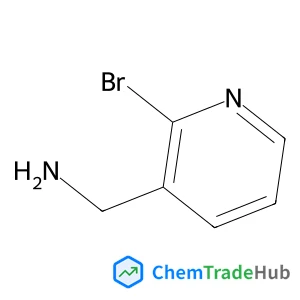


N,N-Diethyl-4-(4,4,5,5-tetramethyl-1,3,2-dioxaborolan-2-yl)benzamide
CAS番号:
325142-99-2
分子式:
C17H26BNO3
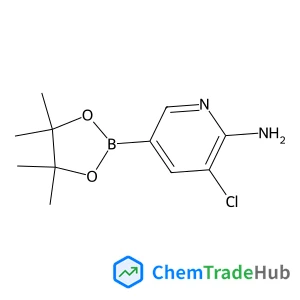
3-Chloro-5-(4,4,5,5-tetramethyl-1,3,2-dioxaborolan-2-yl)-2-pyridinamine
CAS番号:
1032758-99-8
分子式:
C11H16BClN2O2
おすすめサプライヤー




免責事項
このページに表示される学術雑誌情報は、参考および研究目的のみを目的としています。当社は雑誌出版社とは提携しておらず、投稿の取り扱いも行っておりません。出版に関するお問い合わせは、各雑誌出版社に直接ご連絡ください。
表示されている情報に誤りがある場合は、support@chemtradehub.com までご連絡ください。迅速に確認し、対応いたします。