












Oxidative esterification of aliphatic α,ω-diols, an alternative route to polyester precursors for the synthesis of polyurethanes
文献情報
出版日
2021-11-22
DOI
10.1039/D1PY01265G
インパクトファクター
5.582
著者
Mateusz Gosecki, Monika Gosecka, Malgorzata Urbaniak
原文を見る
要旨
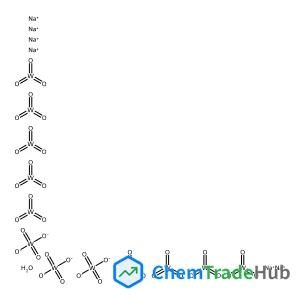
Polyester polyols synthesized via a polycondensation reaction of diols with diacids or their diesters are commonly used as polyurethane building blocks. Herein, we demonstrate an alternative route to polyester polyols via oxidative esterification of aliphatic α,ω-diols. Unlike the polycondensation reaction, this process is carried out in aqueous media at 30 °C under atmospheric pressure. In situ generated hypobromous acid from the mixture of NaBr, NaBrO3 and H2SO4 is used to trigger the reaction. The reaction progress can be conveniently controlled with the Br/OH molar ratio. The properties of the obtained polyesters are determined by the applied diol and can be tailored using a mixture of diols. The composition of polymers is determined with GPC, NMR, and MALDI-TOF MS. It is shown that polyesters obtained with this method can be used as precursors for polyurethane synthesis. This work provides a quick and convenient route to polyester polyol synthesis, feasible in any laboratory.
関連文献
Structural changes in supercooled Al2O3–Y2O3 liquids
Mark Wilson, Chris J. Benmore, J. K. R. Weber, Paul F. McMillan
2013-04-17
Paper
DOI: 10.1039/C3CP51209F
Investigation by two-color IR dissociation spectroscopy of Hoogsteen-type binding in a metalated nucleobase pair mimic
2013-04-05
Paper
DOI: 10.1039/C3CP44283G
Low-density nanoporous phases of group-III nitrides built from sodalite cage clusters
Zhifeng Liu, Xinqiang Wang, Gaobin Liu, Jian Sui, Xuefang Wang, Hengjiang Zhu, Zhilin Hou
2013-04-03
Paper
DOI: 10.1039/C3CP50814E
K-edge XANES investigation of octakis(DMSO)lanthanoid(iii) complexes in DMSO solution and solid iodides
Paola D'Angelo, Valentina Migliorati, Riccardo Spezia, Simone De Panfilis, Ingmar Persson, Andrea Zitolo
2013-04-17
Paper
DOI: 10.1039/C3CP50842K
Nonlinear length dependent electrical resistance of a single crystal zinc oxide micro/nanobelt
Chaolong Tang, Chengming Jiang, Wenqiang Lu, Jinhui Song
2013-04-05
Paper
DOI: 10.1039/C3CP50679G
A time resolved high energy X-ray diffraction study of cooling liquid SiO2
C. J. Benmore, M. C. Wilding, S. K. Tumber
2013-04-05
Paper
DOI: 10.1039/C3CP44347G
Synthesis and acid catalysis of zeolite-templated microporous carbons with SO3H groups
Kiichi Fukuhara, Masaaki Kitano, Shigenobu Hayashi, Michikazu Hara
2013-04-26
Paper
DOI: 10.1039/C3CP43853H
Morphology dependent oxygen reduction activity of titanium carbide: bulk vs. nanowires
Vankayala Kiran, Kancharlapalli Srinivasu, Srinivasan Sampath
2013-04-03
Paper
DOI: 10.1039/C3CP50731A
Controlled electrochemical deposition and transformation of hetero-nanoarchitectured electrodes for energy storage
Jonathon Duay, Eleanor Gillette, Junkai Hu
2013-04-17
Perspective
DOI: 10.1039/C3CP50724F
こちらもおすすめ
化合物よくある質問
3-(5-フェニル-2-ファイル)-プロパン酸の市場動向や研究トレンドはどうですか?
この化合物の市場動向は不明ですが、類似化合物の需要は化学繊維、医薬品、農薬分野で安定しています。研究トレンドとしては、該当化合物の生物学的活性の評価や、その他の...
3465-61-03-(5-Phenyl-2-furyl)...
化合物よくある質問
3- Chloro-1H-indazol-5-olはどのように保存すればよいですか?
3- チロロ-1H-吲唑-5-醇は遮光し、直射日光を避けて、温度は室温を推奨し、密閉容器に保存してください。
885519-34-63-Chloro-1H-indazol-...
849924-76-11,2,3,4,5-Cyclopenta...
化合物よくある質問
L-(1-~13~C)メチオニンの市場動向や研究トレンドはどうですか?
L-(1-~13~C)メチオニンは、医薬品やバイオテクノロジー分野での研究が増加しており、その価格は安定しています。新興研究分野では、代謝解析や遺伝子機能解析で...
81202-04-2L-(1-~13~C)Methionin...
化合物よくある質問
1,3-フェニレンビスメチレンビスアクリレートは安全ですか?
1,3-フェニレンビスメチレンビスアクリレートは一般的に安全ですが、直接皮膚に触れる場合は保護用具を使用することを推奨します。高濃度の蒸気が吸入された場合は呼吸...
22757-16-01,3-Phenylenebis(met...
化合物よくある質問
丹参醇Aはどのように保存すればよいですか?
丹参醇Aは、直射日光を避けて室温で保存し、密栓容器に入れることをお勧めします。適切な保存条件は、安定性を保ち、安全性を確保する上で重要です。
189308-08-5Danshenol A
化合物よくある質問
4-メチル-2-(1,1,1-三フロロ-2-メチルプロパニル)ピリドインとは何ですか?
CAS番号1378865-93-0の4-メチル-2-(1,1,1-三フロロ-2-メチルプロパニル)ピリドインは、合成化学分野で用いられる有機化合物の一種です。こ...
1378865-93-04-Methyl-2-(1,1,1-tr...
化合物よくある質問
N-フェニルベンジル-2-クロロ酢氨を取り扱う際の実験室安全事項は何ですか?
N-フェニルベンジル-2-クロロ酢氨は毒性があり、皮膚や粘膜に刺激を与えます。取り扱う際には、保護眼鏡、手袋、ゴーグルを着用することを強く推奨します。ドラフトチ...
2653-14-7N-benzyl-2-chloro-N-...
化合物よくある質問
UCN-02を取り扱う際の実験室安全事項は何ですか?
UCN-02は毒性は低いですが、人体への直接的な接触は避けるべきです。PPE要件はグローブと顔面保護具を着用することです。ドラフトチャンバーを使用して漏洩を処理...
121569-61-7UCN-02
化合物よくある質問
N-[3-[2-(二甲基氨基)乙氧基]-4-甲氧基苯基]-2'-甲基-4'-(5-甲基-1,2,4-恶二唑-3-基)-[1,1'-联苯]-4-甲酰胺を取り扱う際の実験室安全事項は何ですか?
手袋と保護眼鏡を着用し、漏洩時には吸気防止装置を使用してください。室温、乾燥した場所に保管し、直日光から隔離してください。SDS(安全データシート)を参照してく...
170230-39-4N-{3-[2-(Dimethylami...
掲載誌
Polymer Chemistry

CiteScore:
8.6
自己引用率:
7.3%
年間論文数:
457
Polymer Chemistry welcomes submissions in all areas of polymer science that have a strong focus on macromolecular chemistry. Manuscripts may cover a broad range of fields, yet no direct application focus is required.
おすすめ化合物
おすすめサプライヤー




免責事項
このページに表示される学術雑誌情報は、参考および研究目的のみを目的としています。当社は雑誌出版社とは提携しておらず、投稿の取り扱いも行っておりません。出版に関するお問い合わせは、各雑誌出版社に直接ご連絡ください。
表示されている情報に誤りがある場合は、support@chemtradehub.com までご連絡ください。迅速に確認し、対応いたします。