


![N-[(9H-Fluoren-9-ylmethoxy)carbonyl]-beta-phenyl-L-phenylalanine structure](https://static.chemtradehub.com/structs/201/201484-50-6-c2fc.webp "N-[(9H-Fluoren-9-ylmethoxy)carbonyl]-beta-phenyl-L-phenylalanine structure")
A crystallization driven thermoresponsive transition in a liquid crystalline polymer
文献情報
出版日
2021-09-13
DOI
10.1039/D1PY00996F
インパクトファクター
5.582
著者
Yuewen Yu, Guangran Shao
原文を見る
要旨
For a general responsive polymer exhibiting a thermoresponsive transition in a solvent at the upper critical solution temperature (UCST), the interaction between polymer chains and solvent molecules and the interaction among polymer chains are of vital importance. Here, a new thermoresponsive transition in liquid crystalline poly(11-(4-((E)-4-butylstyryl)phenoxy)undecyl methacrylate) (PMAS) is found. The liquid crystalline PMAS containing mesogen moieties of stilbene in the side chains with a controlled molecular weight and narrow molecular weight distribution is synthesized by reversible addition–fragmentation chain transfer (RAFT) polymerization, and it can undergo a sharp and reversible insoluble-to-soluble transition in the solvents toluene, 1,2,4-triethylbenzene, and 1,4-dioxane at an UCST ranging from 26.3 °C to 52.3 °C. Why and how PMAS undergoes a thermoresponsive solubility transition in solvents are revealed, and the conclusion that crystallization drives the thermoresponsive solubility transition is made. It is believed that the crystallization strategy may be utilized to design new thermoresponsive polymers.
おすすめジャーナル

Current Opinion in Colloid & Interface Science

Russian Journal of Bioorganic Chemistry

New Journal of Chemistry

Nature Medicine

Drug Discovery Today

Russian Journal of Coordination Chemistry

Russian Journal of General Chemistry

Journal of Peptide Science

Current Opinion in Solid State & Materials Science

Russian Journal of Applied Chemistry
関連文献
Self-assembled arrays of zinc oxide nanoparticles from monolayer films of diblock copolymer micelles
Seong Il Yoo, Byeong-Hyeok Sohn, Wang-Cheol Zin, Sung-Jin An, Gyu-Chul Yi
2004-11-05
Communication
DOI: 10.1039/B409934F
Highly efficient bromination of aromatic compounds using 3-methylimidazolium tribromide as reagent/solvent
Cinzia Chiappe, Elsa Leandri, Daniela Pieraccini
2004-09-30
Communication
DOI: 10.1039/B410796A
A new route to fullerene substituted phenylalanine derivatives
Jianzhong Yang, Andrew R. Barron
2004-10-25
Communication
DOI: 10.1039/B411118D
Zeolitenanoparticles with immobilized metal ions: isolation and MALDI-TOF-MS/MS identification of phosphopeptides
Yahong Zhang, Xijuan Yu, Xiaoyan Wang, Wei Shan, Pengyuan Yang, Yi Tang
2004-10-25
Communication
DOI: 10.1039/B411336E
Supramolecular control of complexation-induced fluorescence change of water-soluble, β-cyclodextrin-modified CdS quantum dots
Kumaranand Palaniappan, Stephen A. Hackney, Jian Liu
2004-10-11
Communication
DOI: 10.1039/B409075F
A sequential highly stereoselective hydroboration and Suzuki–Miyaura cross-coupling reaction of fluoroalkylated internal acetylenes: a practical one-pot synthesis of fluoroalkylated trisubstituted alkenes
Tsutomu Konno, Jungha Chae, Tomoo Tanaka, Takashi Ishihara, Hiroki Yamanaka
2004-02-12
Communication
DOI: 10.1039/B316065C
A two-step field-induced magnetic transition in a novel layered cobalt diphosphonate
Ping Yin, Song Gao, Li-Min Zheng, Zheming Wang, Xin-Quan Xin
2003-03-31
Communication
DOI: 10.1039/B212674E
Highly enantioselective hydrolysis of alicyclic meso-epoxides with a bacterial epoxide hydrolase from Sphingomonas sp. HXN-200: simple syntheses of alicyclic vicinal trans-diols
Dongliang Chang, Zunsheng Wang, Maarten F. Heringa, Renato Wirthner, Bernard Witholt, Zhi Li
2003-03-18
Communication
DOI: 10.1039/B300435J
Synthesis of novel starburst and dendritic polyhedral oligosilsesquioxanes
Kenji Wada, Naoki Watanabe, Koichi Yamada, Teruyuki Kondo, Take-aki Mitsudo
2004-11-29
Communication
DOI: 10.1039/B413921F
Direct intramolecular arylation of unactivated arenes: application to the synthesis of aporphine alkaloids
Marc Lafrance, Nicole Blaquière, Keith Fagnou
2004-10-25
Communication
DOI: 10.1039/B410394G
こちらもおすすめ
化合物よくある質問
環戊烷-1,3-二甲酸甲酯はどのように合成されますか?
環戊烷-1,3-二甲酸甲酯は、環戊烷と塩酸によるヒンデンブルク反応を経由して合成されます。この反応では、環戊烷が塩酸と作用し、1,3-ジカルボキシ基が導入されま...
2435-36-1Dimethyl 1,3-cyclope...
化合物よくある質問
4-メトキシ-1,2,3-スチアゼ-3,5-ジオンとは何ですか?
4-メトキシ-1,2,3-スチアゼ-3,5-ジオンは、CAS番号107843-77-6の化合物で、(E)-ベンジル3-(3,4-ジヒドロキシフェニル) acry...
107843-77-6(E)-Benzyl 3-(3,4-di...
化合物よくある質問
プロスタグランジンA2について「に適用される法規ガイドラインは何ですか?'
プロスタグランジンA2 (CAS番号: 41691-92-3) は、化学物質の安全管理に関する規制として、GHS (危険物質の国際的ハザード分類・ラベル付けシス...
41691-92-316,16-DIMETHYL PROST...
化合物よくある質問
4-アミノ-1-ナフタレン sulfonic 酸についての物理化学的性質は何ですか?
4-アミノ-1-ナフタレン sulfonic 酸のCAS番号は84-86-6です。この化合物は結晶性で、分子量は212.15 g/molです。アルコールや水など...
84-86-64-Amino-1-naphthalen...
化合物よくある質問
N-GlcNAc-生物素を取り扱う際の実験室安全事項は何ですか?
N-GlcNAc-生物素は吸収性があり、皮膚や目への接触を避けることが重要です。PPE(個体保護具)は使用し、ドラフトチャンバーは必要に応じて使用します。漏洩時...
1272755-69-72-Acetamido-2-deoxy-...
化合物よくある質問
3-アミノメチルフローラノピペリジン-1-カルボニル酸テルブチルエステルとは何ですか?
CAS番号1209781-11-2の3-アミノメチルフローラノピペリジン-1-カルボニル酸テルブチルエステルは、有機化合物の一種で、化学式はC10H17FNO3...
1209781-11-22-Methyl-2-propanyl ...
化合物よくある質問
6-溴-1-甲基-1H-ベンゾ[d][1,2,3]三氮唑はどのように合成されますか?
6- bromo-1-methyl-1H-benzotriazoleは、ブロモフリオリンと1-メチル-1H-ベンゾ[d][1,2,3]三氮唑の反応により合成され...
944718-32-56-Bromo-1-methyl-1H-...
化合物よくある質問
4-硫代尿苷はどのように合成されますか?
4-硫代尿苷は、尿素とD-リボシルヒドロキシアルデヒドを用いてスルホン化反応を経て合成されます。通常は塩酸ヒドロキシチオニルスルホン酸などの触媒を使用し、選択性...
6741-73-71-(4-thio-beta-D-rib...
化合物よくある質問
ブレインナトリユリックペプチド32ラットとは何ですか?
ブレインナトリユリックペプチド32ラット(CAS番号: 133448-20-1)は、心臓で作られるホルモンの一つで、心不全の診断や予後評価に使用されます。
133448-20-1Brain Natriuretic Pe...
化合物よくある質問
1-(3-氮杂啶)-4-羟基哌啶双盐酸盐の物理化学的性質は何ですか?
CAS番号810680-60-5の1-(3-氮杂啶)-4-羟基哌啶双盐酸盐は、白色の結晶性粉末である。分子量は360.84 g/molで、水に溶けやすい。反応活...
810680-60-51-(3-Azetidinyl)-4-p...
掲載誌
Polymer Chemistry

CiteScore:
8.6
自己引用率:
7.3%
年間論文数:
457
Polymer Chemistry welcomes submissions in all areas of polymer science that have a strong focus on macromolecular chemistry. Manuscripts may cover a broad range of fields, yet no direct application focus is required.
おすすめ化合物
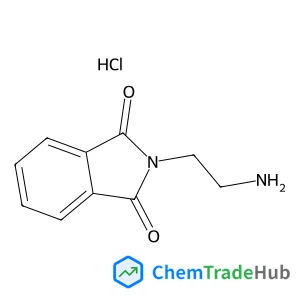
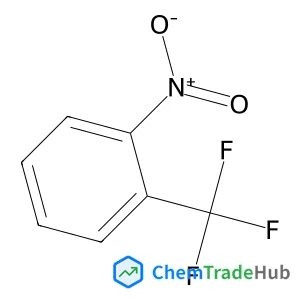
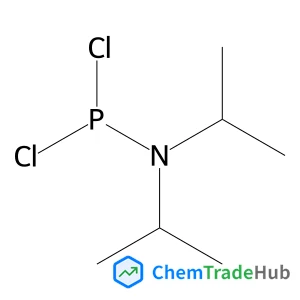
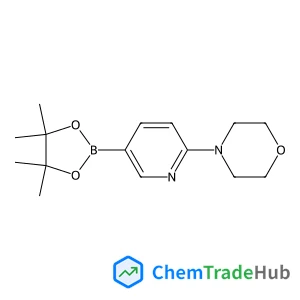
4-(5-(4,4,5,5-tetramethyl-1,3,2-dioxaborolan-2-yl)pyridin-2-yl)morpholine
CAS番号:
485799-04-0
分子式:
C15H23BN2O3
おすすめサプライヤー






免責事項
このページに表示される学術雑誌情報は、参考および研究目的のみを目的としています。当社は雑誌出版社とは提携しておらず、投稿の取り扱いも行っておりません。出版に関するお問い合わせは、各雑誌出版社に直接ご連絡ください。
表示されている情報に誤りがある場合は、support@chemtradehub.com までご連絡ください。迅速に確認し、対応いたします。