


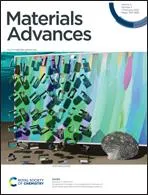
Nanoparticle-infused-biodegradable-microneedles as drug-delivery systems: preparation and characterisation
文献情報
出版日
2021-07-08
DOI
10.1039/D1MA00135C
インパクトファクター
0
著者
Rachel E. Sully, Hemda Garelick, Eriketi Z. Loizidou, Adrian G. Podoleanu, Vladimir Gubala
原文を見る
要旨
For almost two decades, scientists have been exploring the use of nanoparticles as drug vesicles capable of protecting their cargo and deliver it to the target site while evading detection by the body. However, their translation to clinical use has been slower than expected. To a large degree, this is due to the difficulty to formulate the nanomaterial into a usable form, in which they retain their unique, size-dependent properties without aggregating into a bulk material. In this work, we describe a simple methodology for synthesising novel biodegradable microneedle systems infused with silica nanoparticles (SiNP). SiNP were doped with small library of model anti-cancer drugs or drug surrogates before being characterised and encapsulated into biodegradable microneedles. Detailed preparation and characterisation methods for both the nanoparticles and the microneedles-infused with nanoparticles are presented here. We demonstrated the distribution of the nanoparticles within the microneedle matrix in a uniform, un-aggregated form, which enabled the release of the nanoparticles in a sustained manner. Formulating nanomaterial into biodegradable, hydrogel-like microneedles was shown to be effective in preserving their colloidal properties, whilst simultaneously enabling the transdermal delivery of the nanomaterial into the body. Although the concepts of nanoparticles and biodegradable microneedles have been researched individually, the combination of the two, to the best of our knowledge, offers a new pathway to nanomedicine-related applications.
おすすめジャーナル

Science Progress

Journal of Organometallic Chemistry

Journal of Physics and Chemistry of Solids

Journal of Medicinal Chemistry

Organic Preparations and Procedures International

Journal of Catalysis

Proceedings of the National Academy of Sciences of the United States of America

Fibre Chemistry

Molecular Pharmacology

Kinetics and Catalysis
関連文献
Dipole reorientation and local density of optical states influence the emission of light-emitting electrochemical cells
Alberto Jiménez-Solano, Laura Martínez-Sarti, Antonio Pertegás, Gabriel Lozano, Henk J. Bolink, Hernán Míguez
2019-11-05
Paper
DOI: 10.1039/C9CP05505C
Heteroleptic [Os(Cl)(CO)(P^P)(pbi)] complexes bearing bidentate phosphine and 2-(2-pyridyl)benzimidazolate ligands: impact of isomerism on their luminescence properties
Anna Kamecka, Kinga Suwińska, Andrzej Kapturkiewicz
2019-08-01
Paper
DOI: 10.1039/C9CP03416A
The dual-defective SnS2 monolayers: promising 2D photocatalysts for overall water splitting
2019-11-08
Paper
DOI: 10.1039/C9CP04649F
Sandwich-type Na6B7− and Na8B7+ clusters: charge-transfer complexes, four-fold π/σ aromaticity, and dynamic fluxionality
Lin-Yan Feng, Hua-Jin Zhai
2019-07-29
Paper
DOI: 10.1039/C9CP03611C
Implicit solvent effects in the determination of Brønsted–Evans–Polanyi relationships for heterogeneously catalyzed reactions
José R. B. Gomes, Francesc Viñes, Francesc Illas, José L. C. Fajín
2019-07-17
Paper
DOI: 10.1039/C9CP02817J
Mn 2p resonant X-ray emission clarifies the redox reaction and charge-transfer effects in LiMn2O4
Yusuke Nanba, Masashi Okubo, Hisao Kiuchi
2019-07-31
Paper
DOI: 10.1039/C9CP02604E
Strain-engineering the in-plane electrical anisotropy of GeSe monolayers
Zongbao Li, Xinsheng Liu, Xia Wang, Yusi Yang, Wei Shi, Yong Li, Xiaobo Xing
2019-12-10
Paper
DOI: 10.1039/C9CP05058B
Spontaneous proton transfer in a series of amphoteric molecules under hydrostatic pressure
Binhong Yu, Yi Wang, Lingrui Wang, Xiao Tan, Yu-Mo Zhang, Minjie Li, Bo Zou, Sean Xiao-An Zhang
2019-07-17
Paper
DOI: 10.1039/C9CP02445J
Electronic structure modifications induced by increased molecular complexity: from triphenylamine to m-MTDATA
C. Grazioli, A. Guarnaccio, F. O. L. Johansson, M. Coreno, M. de Simone, A. Santagata, B. Brena, C. Puglia
2019-07-26
Paper
DOI: 10.1039/C9CP02423A
こちらもおすすめ
化合物よくある質問
4-アミノフェノール酸ナトリウム水和物とは何ですか?
4-アミノフェノール酸ナトリウム水和物は、CAS番号206557-08-6の化合物で、4-アミノフェノールとナトリウムが結合した塩と水和物です。この化合物は、白...
206557-08-64-Aminobenzoic acid ...
化合物よくある質問
Methyl 3-methyl-N-{[(2-methyl-2-propanyl)oxy]carbonyl}-L-histidinateの代替品はありますか?
この化合物は特定の合成プロセスに使用される可能性がありますが、代替品として、他の类似的な化合物、例えばMethyl 3-methyl-N-{[(2-methyl...
72212-51-2Methyl 3-methyl-N-{[...
化合物よくある質問
4-Boc-2-哌嗪甲酸の市場動向や研究トレンドはどうですか?
4-Boc-2-哌嗪甲酸は、薬品開発や合成化学分野で広く使用されており、その需要は継続的に推移しています。特に、新薬開発における合成化学分野での需要が高まってい...
192330-11-3(2R)-4-[(tert-butoxy...
化合物よくある質問
4,4'-二羟甲基联苯の物理化学的性質は何ですか?
4,4'-二羟甲基联苯のCAS番号は1667-12-5です。この化合物は白色の結晶粉末で、分子量は154.20です。水にわずかに溶けますが、アルコールや有機溶媒...
1667-12-54,4'-Biphenyldiyldim...
化合物よくある質問
5-甲硫基戊腈はどの業界で使用されていますか?
5-甲硫基戊腈は医薬品産業で使用される可能性があります。また、ポリマー合成の触媒として、センサー製造の一部として、半導体製造のプロセス改善に使用される可能性があ...
59121-25-45-(Methylsulfanyl)pe...
化合物よくある質問
CAS番号1311961-50-8の化合物はどのように合成されますか?
この化合物は、1-abieta-8,11,13-trien-19-イルと6'-メトキシシンコナナン-9-基を含有する窒素含有化合物から合成されます。一般的な合成...
1311961-50-81-Abieta-8,11,13-tri...
化合物よくある質問
6-ブロモベンジジミダゾール-2-カルビルデオキシドはどのように保存すればよいですか?
6-ブロモベンジジミダゾール-2-カルビルデオキシドは、避光・乾燥した容器(密閉容器)で-20℃~4℃の低温で保存してください。高温や直射日光、湿気は避けてくだ...
885280-26-25-Bromo-1H-benzimida...
化合物よくある質問
Boc-N-甲基氨甲环酸とは何ですか?
621-65-8のCAS番号を持つBoc-N-甲基氨甲环酸は、化学式C7H13NO5を有する化合物です。この化合物は白色の結晶性粉末で、吸湿性があります。
621-65-83-Hydroxy-1,2-propan...
化合物よくある質問
乙基三氟硼酸钾はどのように合成されますか?
乙基三氟硼酸钾は、トリフLUオール酸カリウムとエチルブロミドを反応させて合成されます。この反応は高い選択性と収率を持ち、触媒を用いることで効率的に進行します。
882871-21-8Potassium ethyltrifl...
化合物よくある質問
2-フロウロ-5-クロロ-4-アミノフェノールはどのように保存すればよいですか?
2-フロウロ-5-クロロ-4-アミノフェノールは、直射日光を避けて冷却された暗所で保存し、密閉容器に保管してください。温度は常温か低温が適しています。
847872-10-04-Amino-5-chloro-2-f...
掲載誌
おすすめ化合物

おすすめサプライヤー



免責事項
このページに表示される学術雑誌情報は、参考および研究目的のみを目的としています。当社は雑誌出版社とは提携しておらず、投稿の取り扱いも行っておりません。出版に関するお問い合わせは、各雑誌出版社に直接ご連絡ください。
表示されている情報に誤りがある場合は、support@chemtradehub.com までご連絡ください。迅速に確認し、対応いたします。