












Highly efficient and durable solar thermal energy harvesting via scalable hierarchical coatings inspired by stony corals
文献情報
出版日
2022-03-28
DOI
10.1039/D1EE03028K
インパクトファクター
38.532
著者
Juan F. Torres, Kaoru Tsuda, Yasushi Murakami, Yifan Guo, Sahar Hosseini, Charles-Alexis Asselineau, Mahdiar Taheri, Kurt Drewes, Wojciech Lipiński, Joe Coventry
原文を見る
要旨
Concentrating solar thermal (CST) is an efficient renewable energy technology with low-cost thermal energy storage. CST relies on wide-spectrum solar thermal absorbers that must withstand high temperatures (>600 °C) for many years, but state-of-the-art coatings have poor optical stability. Here, we show that the largely overlooked macro-scale morphology is key to enhancing both optical resilience and light trapping. Inspired by stony-coral morphology, we developed a hierarchical coating with three tuneable length-scale morphologies: nano- (∼120 nm), micro- (∼3 μm) and macro-scales (>50 μm). Our coating exhibits outstanding, stable solar absorptance of >97.75 ± 0.04% after ageing at 850 °C for more than 2000 hours. The scalability of our coating is demonstrated on a commercial solar thermal receiver, paving the way for more reliable high-performance solar thermal systems.
関連文献
Modelling the influence of hydrogen bond network on chemical shielding tensors description. GIAO-DFT study of WALP23 transmembrane α-helix as a test case
2010-05-12
Paper
DOI: 10.1039/B923883B
Accurate determination of the dielectric parameters of spherical shells in suspension
Niloofar Asgharian, Zoltan A. Schelly
2010-06-08
Paper
DOI: 10.1039/B922123A
A detailed TPD study of H2O and pre-adsorbed O on the stepped Pt(553) surface
Maria J. T. C. van der Niet, Angela den Dunnen, Ludo B. F. Juurlink, Marc T. M. Koper
2010-12-01
Paper
DOI: 10.1039/C0CP01162B
Hydrogen-bond strengths by magnetically induced currents
Heike Fliegl, Olli Lehtonen, Dage Sundholm
2010-11-12
Communication
DOI: 10.1039/C0CP00622J
Drainage of the air–water–quartz film: experiments and theory
Rogerio Manica
2010-12-09
Paper
DOI: 10.1039/C0CP00677G
Theoretical studies on the coupling interactions in H2SO4⋯HOO˙⋯(H2O)n (n = 0–2) clusters: toward understanding the role of water molecules in the uptake of HOO˙ radical by sulfuric acid aerosols
Zhiying Ma, Weihua Wang, Yazhou Zhai, Haitao Sun, Siwei Bi
2010-11-05
Paper
DOI: 10.1039/C0CP00908C
Reactivity of 2-ethyl-1-hexanol in the atmosphere
María Paz Gallego-Iniesta García, Alberto Moreno Sanroma, María Pilar Martín Porrero, Araceli Tapia Valle, Beatriz Cabañas Galán, María Sagrario Salgado Muñoz
2010-02-19
Paper
DOI: 10.1039/B923899A
In vitro hydrogen production—using energy from the sun
Henning Krassen, Sascha Ott, Joachim Heberle
2010-11-23
Perspective
DOI: 10.1039/C0CP01163K
2D IRphoton echo of azido-probes for biomolecular dynamics
Matthew J. Tucker, Xin Sonia Gai, Edward E. Fenlon, Scott H. Brewer, Robin M. Hochstrasser
2010-12-02
Paper
DOI: 10.1039/C0CP01625J
こちらもおすすめ
化合物よくある質問
3-(5-フェニル-2-ファイル)-プロパン酸の市場動向や研究トレンドはどうですか?
この化合物の市場動向は不明ですが、類似化合物の需要は化学繊維、医薬品、農薬分野で安定しています。研究トレンドとしては、該当化合物の生物学的活性の評価や、その他の...
3465-61-03-(5-Phenyl-2-furyl)...
化合物よくある質問
3- Chloro-1H-indazol-5-olはどのように保存すればよいですか?
3- チロロ-1H-吲唑-5-醇は遮光し、直射日光を避けて、温度は室温を推奨し、密閉容器に保存してください。
885519-34-63-Chloro-1H-indazol-...
849924-76-11,2,3,4,5-Cyclopenta...
化合物よくある質問
L-(1-~13~C)メチオニンの市場動向や研究トレンドはどうですか?
L-(1-~13~C)メチオニンは、医薬品やバイオテクノロジー分野での研究が増加しており、その価格は安定しています。新興研究分野では、代謝解析や遺伝子機能解析で...
81202-04-2L-(1-~13~C)Methionin...
化合物よくある質問
1,3-フェニレンビスメチレンビスアクリレートは安全ですか?
1,3-フェニレンビスメチレンビスアクリレートは一般的に安全ですが、直接皮膚に触れる場合は保護用具を使用することを推奨します。高濃度の蒸気が吸入された場合は呼吸...
22757-16-01,3-Phenylenebis(met...
化合物よくある質問
丹参醇Aはどのように保存すればよいですか?
丹参醇Aは、直射日光を避けて室温で保存し、密栓容器に入れることをお勧めします。適切な保存条件は、安定性を保ち、安全性を確保する上で重要です。
189308-08-5Danshenol A
化合物よくある質問
4-メチル-2-(1,1,1-三フロロ-2-メチルプロパニル)ピリドインとは何ですか?
CAS番号1378865-93-0の4-メチル-2-(1,1,1-三フロロ-2-メチルプロパニル)ピリドインは、合成化学分野で用いられる有機化合物の一種です。こ...
1378865-93-04-Methyl-2-(1,1,1-tr...
化合物よくある質問
N-フェニルベンジル-2-クロロ酢氨を取り扱う際の実験室安全事項は何ですか?
N-フェニルベンジル-2-クロロ酢氨は毒性があり、皮膚や粘膜に刺激を与えます。取り扱う際には、保護眼鏡、手袋、ゴーグルを着用することを強く推奨します。ドラフトチ...
2653-14-7N-benzyl-2-chloro-N-...
化合物よくある質問
UCN-02を取り扱う際の実験室安全事項は何ですか?
UCN-02は毒性は低いですが、人体への直接的な接触は避けるべきです。PPE要件はグローブと顔面保護具を着用することです。ドラフトチャンバーを使用して漏洩を処理...
121569-61-7UCN-02
化合物よくある質問
N-[3-[2-(二甲基氨基)乙氧基]-4-甲氧基苯基]-2'-甲基-4'-(5-甲基-1,2,4-恶二唑-3-基)-[1,1'-联苯]-4-甲酰胺を取り扱う際の実験室安全事項は何ですか?
手袋と保護眼鏡を着用し、漏洩時には吸気防止装置を使用してください。室温、乾燥した場所に保管し、直日光から隔離してください。SDS(安全データシート)を参照してく...
170230-39-4N-{3-[2-(Dimethylami...
掲載誌
Energy & Environmental Science
CiteScore:
32.34
自己引用率:
3.4%
年間論文数:
481
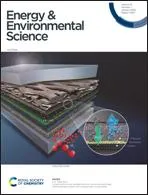
Energy & Environmental Science is an international journal dedicated to publishing exceptionally important and high quality, agenda-setting research tackling the key global and societal challenges of ensuring the provision of energy and protecting our environment for the future. The scope is intentionally broad and the journal recognises the complexity of issues and challenges relating to energy conversion and storage, alternative fuel technologies and environmental science. For work to be published it must be linked to the energy-environment nexus and be of significant general interest to our community-spanning readership. All scales of studies and analysis, from impactful fundamental advances, to interdisciplinary research across the (bio)chemical, (bio/geo)physical sciences and chemical engineering disciplines are welcomed. Topics include, but are not limited to, the following: Solar energy conversion and photovoltaics Solar fuels and artificial photosynthesis Fuel cells Hydrogen storage and (bio) hydrogen production Materials for energy systems Capture, storage and fate of CO2, including chemicals and fuels from CO2 Catalysis for a variety of feedstocks (for example, oil, gas, coal, biomass and synthesis gas) Biofuels and biorefineries Materials in extreme environments Environmental impacts of energy technologies Global atmospheric chemistry and climate change as related to energy systems Water-energy nexus Energy systems and networks Globally applicable principles of energy policy and techno-economics
おすすめ化合物
![10-(1-Azabicyclo[2.2.2]oct-3-ylmethyl)-10H-phenothiazine structure](https://static.chemtradehub.com/structs/292/29216-28-2-1d81.webp "10-(1-Azabicyclo[2.2.2]oct-3-ylmethyl)-10H-phenothiazine structure")
![(2S)-2-({[(2-Methyl-2-propanyl)oxy]carbonyl}amino)-4-pentynoic acid structure](https://static.chemtradehub.com/structs/630/63039-48-5-b66d.webp "(2S)-2-({[(2-Methyl-2-propanyl)oxy]carbonyl}amino)-4-pentynoic acid structure")
おすすめサプライヤー






免責事項
このページに表示される学術雑誌情報は、参考および研究目的のみを目的としています。当社は雑誌出版社とは提携しておらず、投稿の取り扱いも行っておりません。出版に関するお問い合わせは、各雑誌出版社に直接ご連絡ください。
表示されている情報に誤りがある場合は、support@chemtradehub.com までご連絡ください。迅速に確認し、対応いたします。