


Radiation-induced transformations of acetaldehyde molecules at cryogenic temperatures: a matrix isolation study
文献情報
出版日
2021-12-06
DOI
10.1039/D1CP03999G
インパクトファクター
3.676
著者
Pavel V. Zasimov, Elizaveta V. Sanochkina, Vladimir I. Feldman
原文を見る
要旨
Acetaldehyde is one of the key small organic molecules involved in astrochemical and atmospheric processes occurring under the action of ionizing and UV radiation. While the UV photochemistry of acetaldehyde is well studied, little is known about the mechanism of processes induced by high-energy radiation. This paper reports the first systematic study on the chemical transformations of CH3CHO molecules resulting from X-ray irradiation under the conditions of matrix isolation in different solid noble gases (Ne, Ar, Kr, and Xe) at 5 K. CO, CH4, H2CCO, H2CCO–H2, C2H2⋯H2O, CH2CHOH, CH3CO˙, CH3˙, HCCO˙, and CCO were identified as the main radiolysis products. The dominant pathway of acetaldehyde degradation involves C–C bond cleavage leading to the formation of carbon monoxide and methane. The second important channel is dehydrogenation resulting in the formation of ketene, a potentially highly reactive species. It was found that the matrix significantly affected both the decomposition efficiency and distribution of the reaction channels. Based on these observations, it was suggested that the formation of the methyl radical as well as vinyl alcohol and the C2H2⋯H2O complex presumably included a significant contribution of ionic pathways. The decomposition of acetyl radicals under photolysis with visible light leading to the CH3˙–CO radical-molecule pair was observed in all matrices, while the recovery of CH3CO˙ in the dark at 5 K was found only in Xe. This finding represents a prominent example of matrix-dependent chemical dynamics (probably, involving tunnelling), which deserves further theoretical studies. Probable mechanisms of acetaldehyde radiolysis and their implications for astrochemistry, atmospheric chemistry and low-temperature chemistry are discussed.
おすすめジャーナル

Chinese Journal of Chemistry

Bioorganic & Medicinal Chemistry Letters

Journal of Asian Natural Products Research

Journal of Chemical Sciences

Heteroatom Chemistry

Biocatalysis and Biotransformation

Bioorganic & Medicinal Chemistry

Main Group Chemistry

Herald of the Russian Academy of Sciences

Journal of the Indian Institute of Science
関連文献
Mixed LiCo0.6M0.4PO4 (M = Mn, Fe, Ni) phosphates: cycling mechanism and thermal stability
Dmytro M. Trots, Heiko J. Hofmann, Helmut Ehrenberg
2009-03-09
Paper
DOI: 10.1039/B901319A
Direct calorimetric measurement of grain boundary and surface enthalpies in yttria-stabilized zirconia
Hugo J. Avila-Paredes, Jinfeng Zhao, Zuhair A. Munir
2009-01-12
Communication
DOI: 10.1039/B819740G
Density functional calculations of the electronic structure of 3-phenylamino-4-phenyl-1,2,4-triazole-5-thione
Ali Hussain Reshak, Dalibor Stys, S. Auluck, I. V. Kityk
2010-02-03
Paper
DOI: 10.1039/B920743K
Impact of vibrational excitation on the kinetics of a nascent ketene
Thomas Schmierer, Wolfgang J. Schreier, Florian O. Koller, Tobias E. Schrader
2009-11-05
Paper
DOI: 10.1039/B915451E
Changes in the crystal and electronic structure of LiCoO2 and LiNiO2 upon Li intercalation and de-intercalation
Sonja Laubach, Stefan Laubach, Peter C. Schmidt, David Ensling, Stefan Schmid, Wolfram Jaegermann, Andreas Thißen, Kristian Nikolowski, Helmut Ehrenberg
2009-03-25
Paper
DOI: 10.1039/B901200A
Carbohydrate–aromatic π interactions: a test of density functionals and the DFT-D method
Rajesh K. Raju, Anitha Ramraj, Ian H. Hillier, Mark A. Vincent, Neil A. Burton
2009-03-02
Paper
DOI: 10.1039/B822877A
Relationships between center atom species (N, P) and ionic conductivity, viscosity, density, self-diffusion coefficient of quaternary cation room-temperature ionic liquids
Shiro Seki, Kikuko Hayamizu, Seiji Tsuzuki, Kenta Fujii, Yasuhiro Umebayashi, Takushi Mitsugi, Takeshi Kobayashi, Yasutaka Ohno, Yo Kobayashi, Yuichi Mita, Hajime Miyashiro, Shin-ichi Ishiguro
2009-02-26
Paper
DOI: 10.1039/B820343A
Theoretical analysis of carbon nanotube wetting in polystyrene nanocomposites
Gregory Van Lier, Guy Van Assche, Hans E. Miltner, Nadia Grossiord, Cor E. Koning, Paul Geerlings, Bruno Van Mele
2009-10-16
Paper
DOI: 10.1039/B912991J
Dynamics on the microsecond timescale in hydrous silicates studied by solid-state 2H NMR spectroscopy
John M. Griffin, Andrew J. Miller, Andrew J. Berry, Stephen Wimperis, Sharon E. Ashbrook
2010-02-03
Paper
DOI: 10.1039/B924666E
こちらもおすすめ
化合物よくある質問
2-氟-4-イオドベンzo酸エチルエステルを取り扱う際の実験室安全事項は何ですか?
2-氟-4-イオドベンzo酸エチルエステルは有機溶媒を用いた反応であり、ドラフトチャンバーでの操作が必要です。漏洩時にはSDS参照の安全措置を講じ、PPE(防護...
205750-82-9Benzoic acid, 2-fluo...
化合物よくある質問
血根碱の主な用途は何ですか?
血根碱は主に医薬分野で利用され、抗炎症や抗がん剤としての潜在的な効果が研究されています。また、化学研究や薬物開発において、新しい薬剤設計の参考となる化合物として...
2447-54-313-Methyl[1,3]benzod...
化合物よくある質問
Methyl 3-methoxythiophene-2-carboxylateの主な用途は何ですか?
Methyl 3-メトキシスチフェン-2-カルボン酸メチルエステルは、薬品合成、染料製造、以及合成中間体としての用途が広がっています。
62353-75-7Methyl 3-methoxythio...
化合物よくある質問
丹磺酰-L-亮氨酸はどのように保存すればよいですか?
丹磺酰-L-亮氨酸は乾燥した場所で、直射日光から保護し、低温(室温以下)で保存してください。密閉容器に入れて保管することをおすすめします。
1100-22-7N-{[5-(Dimethylamino...
化合物よくある質問
5-(苄氧基)ピラミジン-4-アミンの代替品はありますか?
5-(苄氧基)ピラミジン-4-アミンの代替品として、6-メトキシピラミジンや5-フェニルピラミジンなどが挙げられます。これらの化合物は、5-(苄氧基)ピラミジン...
92289-50-45-benzyloxypyrimidin...
化合物よくある質問
8-ヒドロキシノルデコペントアセートの物理化学的性質は何ですか?
8-ヒドロキシノルデコペントアセートはCAS番号84807-87-4の化合物で、分子量は750.02 uです。これは油溶性で、水に溶けにくい特徴があります。反応...
84807-87-4(5Z,8Z,11Z,13E,15S)-...
化合物よくある質問
tert-ブチル(エス)-1-ヒドロキシペンタ-4-エン-2-イルカルバamateの主な用途は何ですか?
tert-ブチル(エス)-1-ヒドロキシペンタ-4-エン-2-イルカルバamateは主に医薬品の合成材料や分析化学の試薬として使用されます。
116613-81-12-Methyl-2-propanyl ...
化合物よくある質問
ブコール-L-2-フローヨルブリンについて適切な法規ガイドラインは何ですか?
ブコール-L-2-フローヨルブリン(CAS番号: 1196107-73-9)は、GHS(グローバルハザードアサessmentシステム)に基づく危害分類と表示が求...
1196107-73-92-Bromo-13,13-dimeth...
化合物よくある質問
6-ブロモ-N-環丙基-2-ピリジニニメタンの市場動向や研究トレンドはどうですか
6-ブロモ-N-環丙基-2-ピリジニニメタンは、薬理学研究や合成化学に使用される化合物であり、特に抗ウイルス薬や抗がん薬の開発に注目されています。市場では、薬物...
959237-20-86-Bromo-N-cyclopropy...
化合物よくある質問
RS-AMPÀはどのように保存すればよいですか?
RS-AMPÀは、遮光容器に保存し、室温(15〜25℃)で保管することが推奨されます。高湿や熱は物質を劣化させるため、湿度は50%以下に保つことが重要です。また...
74341-63-2(RS)-AMPA
掲載誌
Physical Chemistry Chemical Physics

CiteScore:
5.5
自己引用率:
10.3%
年間論文数:
3036
Physical Chemistry Chemical Physics (PCCP) is an international journal co-owned by 19 physical chemistry and physics societies from around the world. This journal publishes original, cutting-edge research in physical chemistry, chemical physics and biophysical chemistry. To be suitable for publication in PCCP, articles must include significant innovation and/or insight into physical chemistry; this is the most important criterion that reviewers and Editors will judge against when evaluating submissions. The journal has a broad scope and welcomes contributions spanning experiment, theory, computation and data science. Topical coverage includes spectroscopy, dynamics, kinetics, statistical mechanics, thermodynamics, electrochemistry, catalysis, surface science, quantum mechanics, quantum computing and machine learning. Interdisciplinary research areas such as polymers and soft matter, materials, nanoscience, energy, surfaces/interfaces, and biophysical chemistry are welcomed if they demonstrate significant innovation and/or insight into physical chemistry. Joined experimental/theoretical studies are particularly appreciated when complementary and based on up-to-date approaches.
おすすめ化合物
![4-[2-(Trichlorosilyl)ethyl]benzenesulfonyl chloride structure](https://static.chemtradehub.com/structs/797/79793-00-3-de16.webp "4-[2-(Trichlorosilyl)ethyl]benzenesulfonyl chloride structure")
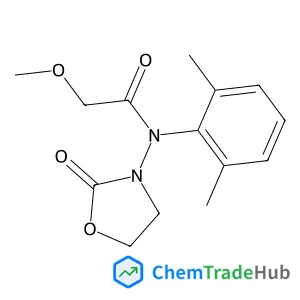
N-(2,6-Dimethylphenyl)-2-methoxy-N-(2-oxo-1,3-oxazolidin-3-yl)acetamide
CAS番号:
77732-09-3
分子式:
C14H18N2O4
おすすめサプライヤー




免責事項
このページに表示される学術雑誌情報は、参考および研究目的のみを目的としています。当社は雑誌出版社とは提携しておらず、投稿の取り扱いも行っておりません。出版に関するお問い合わせは、各雑誌出版社に直接ご連絡ください。
表示されている情報に誤りがある場合は、support@chemtradehub.com までご連絡ください。迅速に確認し、対応いたします。