












Decay of hydrogen bonding in mixtures of aliphatic heptanols and bistriflimide ionic liquids
文献情報
出版日
2021-11-08
DOI
10.1039/D1CP03717J
インパクトファクター
3.676
著者
Václav Pokorný, Vojtěch Štejfa, Květoslav Růžička, Ctirad Červinka
原文を見る
要旨
Hydrogen bonding in liquids of the constitution isomers of heptan-1-ol mixed with 1-alkyl-3-methylimidazolium bis(trifluoromethylsulfonyl)imide ionic liquids (ILs), [Cnmim][NTf2], is investigated using both computational and experimental techniques. All-atom non-polarizable molecular-dynamics (MD) simulations predict that the hydrogen bonds gradually decay with increasing temperature. This decay is more pronounced for the branched alcohols and in the presence of the ionic liquids. The primary and linear isomer, heptan-1-ol, and its tertiary and bulky analogue 3-ethylpentan-3-ol are identified as the opposite extremes of the spectrum of hydrogen bonding stability in the bulk liquid. While neat heptan-1-ol exhibits strong hydrogen bonding at 350 K, 3-ethylpentan-3-ol is prone to hydrogen bonding decay already at 300 K. The presence of ionic liquids is found to affect the hydrogen bonding comparably as a 50 K temperature increase. Since the heat capacities of the associating liquids are very sensitive to any variation in hydrogen bonding strength and to the character of the hydrogen-bonded clusters in the bulk liquid, the calorimetric effort provides useful experimental data to confirm the results predicted by MD simulations. In this work, excess heat capacity is measured for equimolar single-phase mixtures of alcohols and ILs, and it differs largely in its sign and magnitude for individual heptanol isomers. Temperature trends of the excess heat capacities suggest that the stability of hydrogen bonding for individual heptanol isomers is temperature-shifted, based on their capability of hydrogen bonding. The predicted hierarchy of hydrogen bonding in individual alcohols and its impact on the excess heat capacity trends are qualitatively confirmed via thermodynamic modelling of the associative contribution to the excess heat capacities. These terms are found to predetermine the observed non-monotonous excess heat capacity trends.
関連文献
Investigation of interfacial thermal transport across graphene and an organic semiconductor using molecular dynamics simulations
Xinyu Wang, Jingchao Zhang, Yue Chen, Paddy K. L. Chan
2017-05-19
Paper
DOI: 10.1039/C7CP01958K
Naphthodifuran-based zigzag-type polycyclic arene with conjugated side chains for efficient photovoltaics
Hongjian Peng, Xiangfeng Luan, Liuliu Feng, Jun Yuan, Zhi-Guo Zhang, Yongfang Li, Yingping Zou
2017-05-09
Paper
DOI: 10.1039/C7CP02283B
Effects of temperature, concentration, and isomer on the hydration structure in monosaccharide solutions
Katsufumi Tomobe, Eiji Yamamoto, Masato Yasui, Kenji Yasuoka
2017-05-12
Paper
DOI: 10.1039/C7CP02392H
Interface passivation and electron transport improvement of polymer solar cells through embedding a polyfluorene layer
Shujun Li, Zhiqi Li, Chunyu Liu, Xinyuan Zhang, Zhihui Zhang, Wenbin Guo, Liang Shen, Shengping Ruan, Liu Zhang
2017-05-15
Paper
DOI: 10.1039/C7CP01326D
Understanding the adsorptive interactions of arsenate–iron nanoparticles with curved fullerene-like sheets in activated carbon using a quantum mechanics/molecular mechanics computational approach
Le Minh Cam, Nguyen Thi Thu Ha, Bee-Min Goh, Martin Saunders, Zhong-Tao Jiang, Mohammednoor Altarawneh, Bogdan Z. Dlugogorski, Mohanad El-Harbawi, Chun-Yang Yin
2017-05-08
Paper
DOI: 10.1039/C7CP02006F
Factors affecting bubble size in ionic liquids
Stuart A. Brittle, Pratik Desai, William A. Zimmerman
2017-05-16
Paper
DOI: 10.1039/C7CP01725A
Ultrafast IR spectroscopy of photo-induced electron transfer in self-assembled donor–acceptor coordination cages
J. Ahrens, M. Frank, G. H. Clever, D. Schwarzer
2017-05-12
Paper
DOI: 10.1039/C7CP02253K
Prediction of the glass transition temperature and design of phase diagrams of butadiene rubber and styrene–butadiene rubber via molecular dynamics simulations
Myung Shin Ryu, Hyoung Gyu Kim, Hyun You Kim, Kyung-Shin Min, Hak Joo Kim, Hyuck Mo Lee
2017-05-25
Paper
DOI: 10.1039/C7CP00080D
Correction: Preparation of Mo nanopowders through electroreduction of solid MoS2 in molten KCl–NaCl
Haiping Gao, Mingsheng Tan, Liangbin Rong, Zhiyong Wang, Junjun Peng, Xianbo Jin
2017-06-13
Correction
DOI: 10.1039/C7CP90125A
Correction: Eu2+–Eu3+ valence transition in double, Eu-, and Na-doped PbSe from transport, magnetic, and electronic structure studies
SunPhil Kim, Yeseul Lee, Bin He, Gloria Lehr, Mercouri G. Kanatzidis, Donald T. Morelli
2017-06-12
Correction
DOI: 10.1039/C7CP90127E
こちらもおすすめ
化合物よくある質問
2-ヒドロキシ-5-ニトロベンジンブロモイドの代替品はありますか?
2-ヒドロキシ-5-ニトロベンジンブロモイドは特定の化学反応に適しているため、代替品は限られています。しかし、同様の構造を持つ2-ヒドロキシ-4-ニトロベンジン...
772-33-82-(Bromomethyl)-4-ni...
化合物よくある質問
N-(2-ブロモフェニル)-1-チロール-3-オキソ-3-(ピペリジニル)プロペン-2-イル)ベンゼンアミドを取り扱う際の実験室安全事項は何ですか?
N-(2-ブロモフェニル)-1-チロール-3-オキソ-3-(ピペリジニル)プロペン-2-イル)ベンゼンアミドは有毒で、皮膚や粘膜に刺激を与える可能性があります。...
1800044-77-2N-[(1Z)-1-(2-Bromoph...
化合物よくある質問
1,3プロパンジオール,2-[2-(2アミノ-6クロロ-9Hピリミジン-9-イル)エチル-1,1,2,2-D4]-2,3-ジアセタートの市場動向や研究トレンドはどうですか?
この化合物は、新規治療薬の開発に注目されています。市場では、その有効性と安全性が評価され、研究分野では、分子生物学と医薬化学の新たな発見が期待されています。
1020718-81-31,3-Propanediol, 2-[...
579-44-2Ethanone, 2-hydroxy-...
化合物よくある質問
Succinimidyl-alanyl-phenylalanyl-prolyl-phenylalanine 4-nitroanilide はどの業界で使用されていますか?
Succinimidyl-alanyl-phenylalanyl-prolyl-phenylalanine 4-nitroanilide は主に医薬品開発やポ...
128802-73-3succinimidyl-alanyl-...
化合物よくある質問
メチル6-アミノ-5-クロロピリジン-2-カーボイル酸について、適用される法規ガイドラインは何ですか?
メチル6-アミノ-5-クロロピリジン-2-カーボイル酸(CAS番号: 1256794-05-4)の使用には、GHS( Globally Harmonized S...
1256794-05-4Methyl 6-amino-5-chl...
化合物よくある質問
エチル4-(シクロ Pentagonyl)アミノ-2-メチル硫化基ピリミジン-5-カルボキシレートを取り扱う際の実験室安全事項は何ですか?
取り扱いには、耐薬品性の容器を使用し、通気性の良い場所で操作することを推奨します。漏れ時は、SDS(安全データシート)を参照して適切な措置を取ること。手洗いと洗...
211245-62-4ethyl 4-(cyclopentyl...
化合物よくある質問
(S)-3-ベンZYルピペリジン塩酸塩とは何ですか?
(S)-3-ベンZYルピペリジン塩酸塩は、CAS番号1258940-00-9で表される化合物です。これは、(S)-3-苯基哌啶的盐酸盐であり、主に医薬品の原料と...
1258940-00-9(S)-3-Phenylpiperidi...
化合物よくある質問
3,5-二甲基金剛胺の主な用途は何ですか?
3,5-二甲基金剛胺は、主に医薬品の原料として使用され、また抗うつ薬や抗アルツハイマー薬の開発に利用されます。さらに、化粧品や食品添加物の製造でも重要な役割を果...
19988-45-52-(2,3-Dihydroxyphen...
化合物よくある質問
ビス(4-メチル-2-ペンチル)フェニルカルボン酸エステルの代替品はありますか?
ビス(4-メチル-2-ペンチル)フェニルカルボン酸エステル (CAS番号: 1398066-13-1) の代替品には、ビス(2-エチルヘキシル)フェノールカルボ...
1398066-13-1Bis(4-methyl-2-penty...
掲載誌
Physical Chemistry Chemical Physics

CiteScore:
5.5
自己引用率:
10.3%
年間論文数:
3036
Physical Chemistry Chemical Physics (PCCP) is an international journal co-owned by 19 physical chemistry and physics societies from around the world. This journal publishes original, cutting-edge research in physical chemistry, chemical physics and biophysical chemistry. To be suitable for publication in PCCP, articles must include significant innovation and/or insight into physical chemistry; this is the most important criterion that reviewers and Editors will judge against when evaluating submissions. The journal has a broad scope and welcomes contributions spanning experiment, theory, computation and data science. Topical coverage includes spectroscopy, dynamics, kinetics, statistical mechanics, thermodynamics, electrochemistry, catalysis, surface science, quantum mechanics, quantum computing and machine learning. Interdisciplinary research areas such as polymers and soft matter, materials, nanoscience, energy, surfaces/interfaces, and biophysical chemistry are welcomed if they demonstrate significant innovation and/or insight into physical chemistry. Joined experimental/theoretical studies are particularly appreciated when complementary and based on up-to-date approaches.
おすすめ化合物
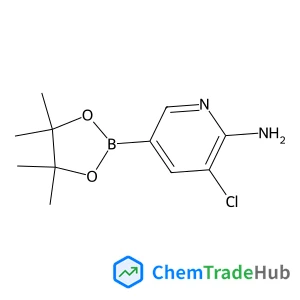
3-Chloro-5-(4,4,5,5-tetramethyl-1,3,2-dioxaborolan-2-yl)-2-pyridinamine
CAS番号:
1032758-99-8
分子式:
C11H16BClN2O2
おすすめサプライヤー





免責事項
このページに表示される学術雑誌情報は、参考および研究目的のみを目的としています。当社は雑誌出版社とは提携しておらず、投稿の取り扱いも行っておりません。出版に関するお問い合わせは、各雑誌出版社に直接ご連絡ください。
表示されている情報に誤りがある場合は、support@chemtradehub.com までご連絡ください。迅速に確認し、対応いたします。