












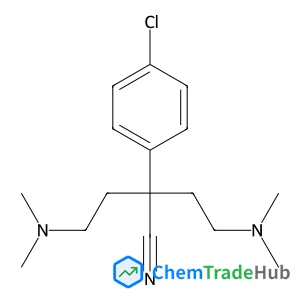
2-(4-Chlorophenyl)-4-(dimethylamino)-2-(2-(dimethylamino)ethyl)butanenitrile
CAS番号:
1246816-57-8
分子式:
C16H24ClN3
A. Martín Pendás, E. Francisco
The prevailing magnetic spin coupling paradigm is based on a one-electron picture, and is therefore orbital dependent and unsatisfactory from a physical point of view. We examine it under a truly invariant real space perspective, focusing on the role of electron delocalization. We show that this view, compatible with orbital thinking, overcomes its limitations. By examining simple model systems we show that it is electron delocalization that drives any singlet–triplet gap, and that delocalization and ionic mixing are two sides of the same reality. It is in the end delocalization, fostered or hindered by the specific structure of a system, that lies behind its preferred magnetic coupling mode. In the case of superexchange-mediated coupling through atomic bridges, we also point out the non-essential role of the bridge's electrons in setting up singlet–triplet preferences. We show that the use of real space thinking allows for tuning singlet–triplet gaps using knobs that are not easily grasped from the orbital standpoint, opening new avenues in the design and control of molecular magnets.
Karolina Anna Haupa, Alexander Godfried Gerardus Maria Tielens
DOI: 10.1039/C7CP02621H
Guimei Gao, Junjun Zhang, Ruiping Liu, Ruicheng Fan, Ming Zhao, Yongwang Wang, Shucai Gan
DOI: 10.1039/C7CP02136D
Daisuke Asakura, Yusuke Nanba, Yuki Makinose, Hirofumi Matsuda, Eiji Hosono
DOI: 10.1039/C7CP02070H
Johan O. Nilsson, Mikael Leetmaa, Sergei I. Simak
DOI: 10.1039/C6CP06460D
Aurellia Galliot, Adrià Gil, Maria José Calhorda
DOI: 10.1039/C7CP00532F
Hongbao Li, Jun Jiang
DOI: 10.1039/C7CP01997A
Donglin Li, Yonggang Yang, Chaozheng Li, Yufang Liu
DOI: 10.1039/C7CP02268A
Misaki Kinoshita, Erina Kakimoto, Yuxi Lin, Masatomo So, Toshihiko Sugiki, Yuji Goto, Young-Ho Lee
DOI: 10.1039/C6CP07774A
Antoine Hinaut, Baran Eren, Roland Steiner, Sara Freund, Res Jöhr, Thilo Glatzel, Laurent Marot, Ernst Meyer
DOI: 10.1039/C7CP02592K
2-ヒドロキシ-5-ニトロベンジンブロモイドは特定の化学反応に適しているため、代替品は限られています。しかし、同様の構造を持つ2-ヒドロキシ-4-ニトロベンジン...
N-(2-ブロモフェニル)-1-チロール-3-オキソ-3-(ピペリジニル)プロペン-2-イル)ベンゼンアミドは有毒で、皮膚や粘膜に刺激を与える可能性があります。...
この化合物は、新規治療薬の開発に注目されています。市場では、その有効性と安全性が評価され、研究分野では、分子生物学と医薬化学の新たな発見が期待されています。
Succinimidyl-alanyl-phenylalanyl-prolyl-phenylalanine 4-nitroanilide は主に医薬品開発やポ...
メチル6-アミノ-5-クロロピリジン-2-カーボイル酸(CAS番号: 1256794-05-4)の使用には、GHS( Globally Harmonized S...
取り扱いには、耐薬品性の容器を使用し、通気性の良い場所で操作することを推奨します。漏れ時は、SDS(安全データシート)を参照して適切な措置を取ること。手洗いと洗...
(S)-3-ベンZYルピペリジン塩酸塩は、CAS番号1258940-00-9で表される化合物です。これは、(S)-3-苯基哌啶的盐酸盐であり、主に医薬品の原料と...
3,5-二甲基金剛胺は、主に医薬品の原料として使用され、また抗うつ薬や抗アルツハイマー薬の開発に利用されます。さらに、化粧品や食品添加物の製造でも重要な役割を果...
ビス(4-メチル-2-ペンチル)フェニルカルボン酸エステル (CAS番号: 1398066-13-1) の代替品には、ビス(2-エチルヘキシル)フェノールカルボ...

Physical Chemistry Chemical Physics (PCCP) is an international journal co-owned by 19 physical chemistry and physics societies from around the world. This journal publishes original, cutting-edge research in physical chemistry, chemical physics and biophysical chemistry. To be suitable for publication in PCCP, articles must include significant innovation and/or insight into physical chemistry; this is the most important criterion that reviewers and Editors will judge against when evaluating submissions. The journal has a broad scope and welcomes contributions spanning experiment, theory, computation and data science. Topical coverage includes spectroscopy, dynamics, kinetics, statistical mechanics, thermodynamics, electrochemistry, catalysis, surface science, quantum mechanics, quantum computing and machine learning. Interdisciplinary research areas such as polymers and soft matter, materials, nanoscience, energy, surfaces/interfaces, and biophysical chemistry are welcomed if they demonstrate significant innovation and/or insight into physical chemistry. Joined experimental/theoretical studies are particularly appreciated when complementary and based on up-to-date approaches.


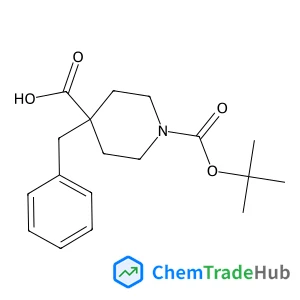
![4-Chloro-3-(trifluoromethyl)-1H-pyrrolo[2,3-b]pyridine structure](https://static.chemtradehub.com/structs/869/869335-75-1-a9d0.webp "4-Chloro-3-(trifluoromethyl)-1H-pyrrolo[2,3-b]pyridine structure")



