












Modelling of high-temperature order–disorder phase transitions of non-stoichiometric Mo2C and Ti2C from first principles
文献情報
出版日
2021-09-30
DOI
10.1039/D1CP02935E
インパクトファクター
3.676
著者
Ignacio Borge-Durán, Denial Aias, Ilya Grinberg
原文を見る
要旨
High-temperature order–disorder phase transitions play an important role in determining the structure and physical and chemical properties of non-stoichiometric transition metal carbides. Due to the large number of possible carbon vacancy arrangements, it is difficult to study these systems with first-principles calculations. Here, we construct a simple atomistic potential capable of accurately reproducing the energetics of the carbon vacancy arrangements in cubic Mo2C and Ti2C obtained from density functional theory calculations. We show that this potential can be applied to correctly predict the transition temperatures between the ordered and disordered states in Monte Carlo simulations on large supercells and reveal the extend of local order in the disordered phases of Mo2C and Ti2C that show interesting physical and chemical properties. We find that even the high-temperature disordered phase exhibit a relatively high degree of local order as indicated by the relatively small change in the root mean square number of C atom neighbours of Mo/Ti compared to the ordered phase (from 3.0 to 3.1–3.2). This atomistic potential enables the study of how the structure of these carbides can be tuned through the synthesis temperature to control the properties of carbide materials that are related to the degree of disorder in the system such as catalytic activity and electrical conductivity and play an important role in applications of these carbides. Fundamentally, the successful modelling of these carbides suggests that despite the presence of metallic, covalent and ionic interactions, bonding in carbides can be modelled by simple and physically intuitive interatomic potentials.
関連文献
Enhanced catalytic and supercapacitor activities of DNA encapsulated β-MnO2 nanomaterials
Sivasankara Rao Ede, Ananthakumar Ramadoss, S. Anantharaj, U. Nithiyanantham, Subrata Kundu
2014-09-09
Paper
DOI: 10.1039/C4CP02884H
Microkinetics of oxygenate formation in the Fischer–Tropsch reaction
Emiel M. J. Hensen
2014-01-29
Paper
DOI: 10.1039/C3CP54950J
Ab initio and semi-empirical Molecular Dynamics simulations of chemical reactions in isolated molecules and in clusters
D. Shemesh, M. E. Varner, J. Kalinowski, B. Hirshberg
2014-02-10
Perspective
DOI: 10.1039/C3CP55239J
ωB97X-V: A 10-parameter, range-separated hybrid, generalized gradient approximation density functional with nonlocal correlation, designed by a survival-of-the-fittest strategy
Narbe Mardirossian, Martin Head-Gordon
2013-12-18
Paper
DOI: 10.1039/C3CP54374A
Sensitivity of local hydration behaviour and conformational preferences of peptides to choice of water model
Divya Nayar, Charusita Chakravarty
2014-02-10
Paper
DOI: 10.1039/C3CP55147D
Charge generation in polymer–fullerene bulk-heterojunction solar cells
Feng Gao, Olle Inganäs
2014-07-04
Perspective
DOI: 10.1039/C4CP01814A
The effect of pump-2 laser on Autler–Townes splitting in photoelectron spectra of K2 molecule
Wei Guo, Xingqiang Lu, Xinlin Wang, Hongbin Yao
2014-07-16
Paper
DOI: 10.1039/C4CP02258K
Correction: Relative contributions of quantum and double layer capacitance to the supercapacitor performance of carbon nanotubes in an ionic liquid
Alexander J. Pak, Eunsu Paek, Gyeong S. Hwang
2014-08-20
Correction
DOI: 10.1039/C4CP90113D
Specific ion effects on membrane potential and the permselectivity of ion exchange membranes
Harrison J. Cassady, Donald R. Paul
2014-08-26
Paper
DOI: 10.1039/C4CP03076A
こちらもおすすめ
化合物よくある質問
6-(三氟甲基)喹啉二甲酸とは何ですか?
6-(三氟甲基)喹啉二甲酸は、CAS番号849818-58-2の化合物です。これは6位に三氟甲基が置換された2-quinolinecarboxylic酸と呼ばれ...
849818-58-26-(Trifluoromethyl)-...
化合物よくある質問
tert-butyl 4-ヒドロキシ-4-メチルázepane-1-カーボキセイランを含む廃棄物はどのように処理すべきですか?
この化合物の廃棄物は、適切な容器で密封し、避光し、低温かつ乾燥した環境で保管してください。処理には専門の廃棄処理会社のサービスを活用するか、地元の環境保護法に従...
878631-04-02-Methyl-2-propanyl ...
化合物よくある質問
TIPAを取り扱う際の実験室安全事項は何ですか?
TIPAは揮発性が低く、毒性は低いですが、操作中の注意が必要です。PPE(個人防護具)を着用し、ドラフトチャンバー内で取り扱い、漏洩した場合は即座にSDS(安全...
144970-30-9TIPA
62451-84-7Methyl 2-(3-(trifluo...
化合物よくある質問
3-甲硫基苯硼酸频呐酯とは何ですか?
3-甲硫基苯硼酸频呐酯は、CAS番号710348-63-3の化合物で、化学式はC14H19BO2Sです。これは2-[3-(メチルサルファニル)フェニル]-4,4...
710348-63-34,4,5,5-Tetramethyl-...
化合物よくある質問
N-[2-(二甲氨基)乙基]-N-甲基甲酰胺は安全ですか?
N-[2-(二甲氨基)乙基]-N-甲基甲酰胺は安全ではありません。吸入、皮膚接触、目接触は避けてください。稀な過剰反応やアレルギー反応がある可能性があります。適...
105669-53-2N-[2-(Dimethylamino)...
化合物よくある質問
甲基丙烯酸甲瓦龙酸内酯とは何ですか?
CAS番号177080-66-9の化合物、4-メチル-2-オキトテトラヒドロ-2H-ピラノ-4-イルメタクリレートは、甲基丙烯酸の一種です。この化合物は透明な液...
177080-66-94-Methyl-2-oxotetrah...
化合物よくある質問
2-メチルフェンチアルデヒドを取り扱う際の実験室安全事項は何ですか?
2-メチルフェンチアルデヒドは易燃物質であり、火気の使用や高温に注意が必要です。PPE(個人保護具)として、ゴーグルや手袋を使用し、ドラフトチャンバーを使用して...
51234-09-42-Methylveratraldehy...
化合物よくある質問
2,4,6-三氯-5-氟嘧啶はどの業界で使用されていますか?
2,4,6-三氯-5-氟嘧啶は医薬品産業で広く使用されており、抗真菌薬や抗ウイルス薬の前駆体として機能します。また、高次元材料やセンサー技術の分野でも応用されて...
6693-08-92,4,6-Trichloro-5-fl...
化合物よくある質問
(S)-2-((叔丁氧基羰基)氨基)-3-(((2-苯基乙酰胺基)甲基)硫基)丙酸とは何ですか?
CAS番号57084-73-8の(S)-2-((叔丁氧基羰基)氨基)-3-(((2-苯基乙酰胺基)甲基)硫基)丙酸は、特定の構造を持つ無機化合物で、主に医薬品や...
57084-73-8(S)-2-((tert-Butoxyc...
掲載誌
Physical Chemistry Chemical Physics

CiteScore:
5.5
自己引用率:
10.3%
年間論文数:
3036
Physical Chemistry Chemical Physics (PCCP) is an international journal co-owned by 19 physical chemistry and physics societies from around the world. This journal publishes original, cutting-edge research in physical chemistry, chemical physics and biophysical chemistry. To be suitable for publication in PCCP, articles must include significant innovation and/or insight into physical chemistry; this is the most important criterion that reviewers and Editors will judge against when evaluating submissions. The journal has a broad scope and welcomes contributions spanning experiment, theory, computation and data science. Topical coverage includes spectroscopy, dynamics, kinetics, statistical mechanics, thermodynamics, electrochemistry, catalysis, surface science, quantum mechanics, quantum computing and machine learning. Interdisciplinary research areas such as polymers and soft matter, materials, nanoscience, energy, surfaces/interfaces, and biophysical chemistry are welcomed if they demonstrate significant innovation and/or insight into physical chemistry. Joined experimental/theoretical studies are particularly appreciated when complementary and based on up-to-date approaches.
おすすめ化合物
![4-{2-[(9H-Fluoren-9-ylmethoxy)carbonyl]hydrazino}benzoic acid structure](https://static.chemtradehub.com/structs/214/214475-53-3-bf36.webp "4-{2-[(9H-Fluoren-9-ylmethoxy)carbonyl]hydrazino}benzoic acid structure")
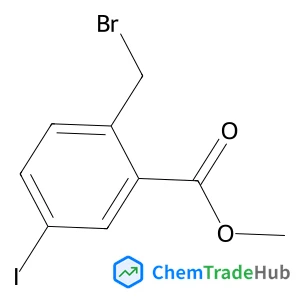
![N-[(1R,2R)-2-Amino-1,2-diphenylethyl]-1,1,1-trifluoromethanesulfonamide structure](https://static.chemtradehub.com/structs/852/852212-89-6-5ef9.webp "N-[(1R,2R)-2-Amino-1,2-diphenylethyl]-1,1,1-trifluoromethanesulfonamide structure")
N-[(1R,2R)-2-Amino-1,2-diphenylethyl]-1,1,1-trifluoromethanesulfonamide
CAS番号:
852212-89-6
分子式:
C15H15F3N2O2S
![9-Ethyl-3-{(E)-[ethyl(2-methylphenyl)hydrazono]methyl}-9H-carbazole structure](https://static.chemtradehub.com/structs/127/1274948-12-7-301f.webp "9-Ethyl-3-{(E)-[ethyl(2-methylphenyl)hydrazono]methyl}-9H-carbazole structure")
おすすめサプライヤー




免責事項
このページに表示される学術雑誌情報は、参考および研究目的のみを目的としています。当社は雑誌出版社とは提携しておらず、投稿の取り扱いも行っておりません。出版に関するお問い合わせは、各雑誌出版社に直接ご連絡ください。
表示されている情報に誤りがある場合は、support@chemtradehub.com までご連絡ください。迅速に確認し、対応いたします。