












A quantitative multiscale perspective on primary olefin formation from methanol
文献情報
出版日
2021-08-18
DOI
10.1039/D1CP02551A
インパクトファクター
3.676
著者
Andrew J. Logsdail, André C. van Veen, Stefan Adrian F. Nastase
原文を見る
要旨
The formation of the first C–C bond and primary olefins from methanol over zeolite and zeotype catalysts has been studied for over 40 years. Over 20 mechanisms have been proposed for the formation of the first C–C bond. In this quantitative multiscale perspective, we decouple the adsorption, desorption, mobility, and surface reactions of early species through a combination of vacuum and sub-vacuum studies using temporal analysis of products (TAP) reactor systems, and through studies with atmospheric fixed bed reactors. These results are supplemented with density functional theory calculations and data-driven physical models, using partial differential equations, that describe the temporal and spatial evolution of species. We consider the effects of steam, early degradation species, and product masking due to the inherent autocatalytic nature of the process, which all complicate the observation of the primary olefin(s). Although quantitative spectroscopic determination of the lifetimes, surface mobility, and reactivity of adspecies is still lacking in the literature, we observe that reaction barriers are competitive with adsorption enthalpies and/or activation energies of desorption, while facile diffusion occurs in the porous structures of the zeolite/zeotype catalysts. Understanding the various processes allows for quantitative evaluation of their competing energetics, which leads to molecular insights as to what governs the catalytic activity during the conversion of methanol to primary olefins over zeolite/zeotype catalysts.
関連文献
Carbon nanohorns as nanocontainers for cisplatin: insight into their interaction with the plasma membranes of normal and breast cancer cells
Eduardo R. Almeida, Hélio F. Dos Santos, Priscila V. S. Z. Capriles
2021-07-05
Paper
DOI: 10.1039/D1CP02015C
Phenolic compounds alter the ion permeability of phospholipid bilayers via specific lipid interactions
Sheikh I. Hossain, Suvash C. Saha
2021-09-27
Paper
DOI: 10.1039/D1CP03250J
Dissociation kinetics of propane–methane and butane–methane hydrates below the melting point of ice
Satoshi Takeya, Akihiro Hachikubo
2021-05-28
Paper
DOI: 10.1039/D1CP01381E
Dynamics of aqueous peptide solutions in folded and disordered states examined by dynamic light scattering and dielectric spectroscopy
Jorge H. Melillo, Florian Pabst, Thomas Blochowicz
2021-06-24
Paper
DOI: 10.1039/D1CP01893K
Tunable ionic conductivity and photoluminescence in quasi-2D CH3NH3PbBr3 thin films incorporating sulphur doped graphene quantum dots
Ramesh Kumar, Jitendra Kumar, Priya Srivastava, Gaurav Manik
2021-09-20
Paper
DOI: 10.1039/D1CP03621A
The physical nature of the interaction in DMSO extraction separation of C8H10 isomer/n-decane systems
Chen Liu, Haiyong Zhang, Yonggang Wang, Hongcun Bai, Di Zhao, Qian Liu
2021-09-14
Paper
DOI: 10.1039/D1CP03128G
Dissociative photodetachment of H3O2−: a full-dimensional quantum dynamics study
Hongwei Song, Yongfa Zhu
2021-09-13
Paper
DOI: 10.1039/D1CP03495B
The tug of war between Al3+ and Na+ for order–disorder transitions in lipid-A membranes
Andresa Messias, Denys E. S. Santos, Frederico J. S. Pontes
2021-06-22
Paper
DOI: 10.1039/D1CP02173G
Phonon, plasmon and electronic properties of surfaces and interfaces of periodic W/Si and Si/W multilayers
Niranjan Kumar, Alexey T. Kozakov, Aleksey V. Nezhdanov, Sergey A. Garakhin, Vladimir N. Polkovnikov, Nikolay I. Chkhalo, Aleksandr I. Mashin, Anatolay V. Nikolskii, Anton A. Scrjabin
2021-06-17
Paper
DOI: 10.1039/D1CP01986D
Enhanced out-of-plane electromechanical response of Janus ZrSeO
Thi Hue Pham, Hamid Ullah, Aamir Shafique, Hye Jung Kim, Young-Han Shin
2021-06-30
Paper
DOI: 10.1039/D1CP00119A
こちらもおすすめ
化合物よくある質問
6-(三氟甲基)喹啉二甲酸とは何ですか?
6-(三氟甲基)喹啉二甲酸は、CAS番号849818-58-2の化合物です。これは6位に三氟甲基が置換された2-quinolinecarboxylic酸と呼ばれ...
849818-58-26-(Trifluoromethyl)-...
化合物よくある質問
tert-butyl 4-ヒドロキシ-4-メチルázepane-1-カーボキセイランを含む廃棄物はどのように処理すべきですか?
この化合物の廃棄物は、適切な容器で密封し、避光し、低温かつ乾燥した環境で保管してください。処理には専門の廃棄処理会社のサービスを活用するか、地元の環境保護法に従...
878631-04-02-Methyl-2-propanyl ...
化合物よくある質問
TIPAを取り扱う際の実験室安全事項は何ですか?
TIPAは揮発性が低く、毒性は低いですが、操作中の注意が必要です。PPE(個人防護具)を着用し、ドラフトチャンバー内で取り扱い、漏洩した場合は即座にSDS(安全...
144970-30-9TIPA
62451-84-7Methyl 2-(3-(trifluo...
化合物よくある質問
3-甲硫基苯硼酸频呐酯とは何ですか?
3-甲硫基苯硼酸频呐酯は、CAS番号710348-63-3の化合物で、化学式はC14H19BO2Sです。これは2-[3-(メチルサルファニル)フェニル]-4,4...
710348-63-34,4,5,5-Tetramethyl-...
化合物よくある質問
N-[2-(二甲氨基)乙基]-N-甲基甲酰胺は安全ですか?
N-[2-(二甲氨基)乙基]-N-甲基甲酰胺は安全ではありません。吸入、皮膚接触、目接触は避けてください。稀な過剰反応やアレルギー反応がある可能性があります。適...
105669-53-2N-[2-(Dimethylamino)...
化合物よくある質問
甲基丙烯酸甲瓦龙酸内酯とは何ですか?
CAS番号177080-66-9の化合物、4-メチル-2-オキトテトラヒドロ-2H-ピラノ-4-イルメタクリレートは、甲基丙烯酸の一種です。この化合物は透明な液...
177080-66-94-Methyl-2-oxotetrah...
化合物よくある質問
2-メチルフェンチアルデヒドを取り扱う際の実験室安全事項は何ですか?
2-メチルフェンチアルデヒドは易燃物質であり、火気の使用や高温に注意が必要です。PPE(個人保護具)として、ゴーグルや手袋を使用し、ドラフトチャンバーを使用して...
51234-09-42-Methylveratraldehy...
化合物よくある質問
2,4,6-三氯-5-氟嘧啶はどの業界で使用されていますか?
2,4,6-三氯-5-氟嘧啶は医薬品産業で広く使用されており、抗真菌薬や抗ウイルス薬の前駆体として機能します。また、高次元材料やセンサー技術の分野でも応用されて...
6693-08-92,4,6-Trichloro-5-fl...
化合物よくある質問
(S)-2-((叔丁氧基羰基)氨基)-3-(((2-苯基乙酰胺基)甲基)硫基)丙酸とは何ですか?
CAS番号57084-73-8の(S)-2-((叔丁氧基羰基)氨基)-3-(((2-苯基乙酰胺基)甲基)硫基)丙酸は、特定の構造を持つ無機化合物で、主に医薬品や...
57084-73-8(S)-2-((tert-Butoxyc...
掲載誌
Physical Chemistry Chemical Physics

CiteScore:
5.5
自己引用率:
10.3%
年間論文数:
3036
Physical Chemistry Chemical Physics (PCCP) is an international journal co-owned by 19 physical chemistry and physics societies from around the world. This journal publishes original, cutting-edge research in physical chemistry, chemical physics and biophysical chemistry. To be suitable for publication in PCCP, articles must include significant innovation and/or insight into physical chemistry; this is the most important criterion that reviewers and Editors will judge against when evaluating submissions. The journal has a broad scope and welcomes contributions spanning experiment, theory, computation and data science. Topical coverage includes spectroscopy, dynamics, kinetics, statistical mechanics, thermodynamics, electrochemistry, catalysis, surface science, quantum mechanics, quantum computing and machine learning. Interdisciplinary research areas such as polymers and soft matter, materials, nanoscience, energy, surfaces/interfaces, and biophysical chemistry are welcomed if they demonstrate significant innovation and/or insight into physical chemistry. Joined experimental/theoretical studies are particularly appreciated when complementary and based on up-to-date approaches.
おすすめ化合物
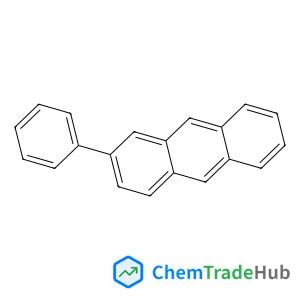
![Ethyl 5-[({[(2-methyl-2-propanyl)oxy]carbonyl}amino)methyl]-1,2-oxazole-3-carboxylate structure](https://static.chemtradehub.com/structs/253/253196-37-1-8450.webp "Ethyl 5-[({[(2-methyl-2-propanyl)oxy]carbonyl}amino)methyl]-1,2-oxazole-3-carboxylate structure")
![4-[(2-Fluoro-4-methylphenyl)amino]-6-[4-(2-hydroxyethyl)-1-piperazinyl]-7-methoxy-3-cinnolinecarboxamide structure](https://static.chemtradehub.com/structs/104/1041852-85-0-fb1c.webp "4-[(2-Fluoro-4-methylphenyl)amino]-6-[4-(2-hydroxyethyl)-1-piperazinyl]-7-methoxy-3-cinnolinecarboxamide structure")
おすすめサプライヤー





免責事項
このページに表示される学術雑誌情報は、参考および研究目的のみを目的としています。当社は雑誌出版社とは提携しておらず、投稿の取り扱いも行っておりません。出版に関するお問い合わせは、各雑誌出版社に直接ご連絡ください。
表示されている情報に誤りがある場合は、support@chemtradehub.com までご連絡ください。迅速に確認し、対応いたします。