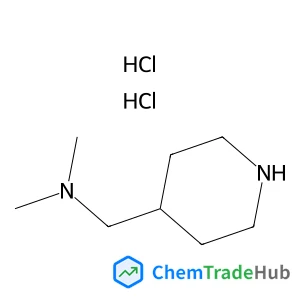
![9H-Fluoren-9-ylmethyl [(2S)-1-hydroxy-3-(1H-indol-3-yl)-2-propanyl]carbamate structure](https://static.chemtradehub.com/structs/153/153815-60-2-a67d.webp "9H-Fluoren-9-ylmethyl [(2S)-1-hydroxy-3-(1H-indol-3-yl)-2-propanyl]carbamate structure")
9H-Fluoren-9-ylmethyl [(2S)-1-hydroxy-3-(1H-indol-3-yl)-2-propanyl]carbamate
CAS番号:
153815-60-2
分子式:
C26H24N2O3
Cristina Cantarutti, M. Cristina Vargas, Mireille Dumoulin, Sara La Manna, Daniela Marasco, Carlo Santambrogio, Rita Grandori, Giacinto Scoles, Alessandra Corazza
Herein, we compared the ability of linear and cyclic peptides generated in silico to target different protein sites: internal pockets and solvent-exposed sites. We selected human lysozyme (HuL) as a model target protein combined with the computational evolution of linear and cyclic peptides. The sequence evolution of these peptides was based on the PARCE algorithm. The generated peptides were screened based on their aqueous solubility and HuL binding affinity. The latter was evaluated by means of scoring functions and atomistic molecular dynamics (MD) trajectories in water, which allowed prediction of the structural features of the protein–peptide complexes. The computational results demonstrated that cyclic peptides constitute the optimal choice for solvent exposed sites, while both linear and cyclic peptides are capable of targeting the HuL pocket effectively. The most promising binders found in silico were investigated experimentally by surface plasmon resonance (SPR), nuclear magnetic resonance (NMR), and electrospray ionization mass spectrometry (ESI-MS) techniques. All tested peptides displayed dissociation constants in the micromolar range, as assessed by SPR; however, both NMR and ESI-MS suggested multiple binding modes, at least for the pocket binding peptides. A detailed NMR analysis confirmed that both linear and cyclic pocket peptides correctly target the binding site they were designed for.
C. J. Burnham, G. F. Reiter, J. Mayers, T. Abdul-Redah, H. Reichert, H. Dosch
DOI: 10.1039/B605410B
T. Liang, T. R. Walsh
DOI: 10.1039/B608672A
Samuel Rentsch, Ramon Pericet-Camara, Georg Papastavrou, Michal Borkovec
DOI: 10.1039/B602145J
M. Abu-samha, K. J. Børve, L. J. Sæthre, G. Öhrwall, H. Bergersen, T. Rander, O. Björneholm, M. Tchaplyguine
DOI: 10.1039/B516905D
DOI: 10.1039/B606478G
Wolfgang Preis
DOI: 10.1039/B600033A
Sule Atahan, Jacek Kłos, Piotr S. Żuchowski
DOI: 10.1039/B608871F
CAS番号168395-26-4の(S)-四氢呋喃-3-羧酸は、白色の結晶が特徴的な性質を持ちます。分子量は128.08であり、水に溶けやすく、アルコールなど...
塩基性硫黄化合物1,3-ジメチル-1-[5-(三氟甲基)-1,3,4-硫杂环己二酮-2-基]尿素を含む廃棄物は、専門的な廃棄処理施設で焼却処理を行うべきです。ま...
インドリジン-2-カルボン酸は一般的に安全ですが、過度に濃い状態では刺激性があります。取り扱いには適切な防護具を使用し、直接触れや吸入を避ける必要があります。
5-甲基-2-(3-ピリジニル)-1,3-テイゾール-4-オールは、医薬品や農薬、および合成化学の分野において研究が進められています。市場動向としては、化学物質...
4,4',4''-(嘧啶-2,4,6-三基)三苯甲醛は、密閉容器に保管し、避けておくことが重要です。室温で保管し、直射日光を避けてください。
(3aR)-1,3,3-トリフェニルテトラヒドロ-3H-ピロロ[1,2-c][1,3,2]-オキザボロロールは、GHS(国際危険物識別ルール)の分類が適用されま...
6-(4-氯苯氧基)吡啶-3-胺の代替品としては、他の芳香族アミン化合物や類似の除草剤が考えられます。ただし、他の化合物と同様に、代替品の選択には安全性と効果性...
3-フェニル-3,4-ジヒドロ-2H-1,4-ベンゾキサジンを取り扱う際は、防塵マスク、ゴーグル、ゴム手袋を使用し、ドラフトチャンバー内で作業することを推奨しま...

Physical Chemistry Chemical Physics (PCCP) is an international journal co-owned by 19 physical chemistry and physics societies from around the world. This journal publishes original, cutting-edge research in physical chemistry, chemical physics and biophysical chemistry. To be suitable for publication in PCCP, articles must include significant innovation and/or insight into physical chemistry; this is the most important criterion that reviewers and Editors will judge against when evaluating submissions. The journal has a broad scope and welcomes contributions spanning experiment, theory, computation and data science. Topical coverage includes spectroscopy, dynamics, kinetics, statistical mechanics, thermodynamics, electrochemistry, catalysis, surface science, quantum mechanics, quantum computing and machine learning. Interdisciplinary research areas such as polymers and soft matter, materials, nanoscience, energy, surfaces/interfaces, and biophysical chemistry are welcomed if they demonstrate significant innovation and/or insight into physical chemistry. Joined experimental/theoretical studies are particularly appreciated when complementary and based on up-to-date approaches.

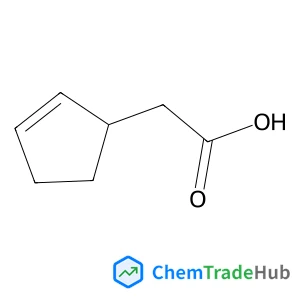
![4-[(1-Methyl-1H-pyrrol-2-yl)methylene]-1,3(2H,4H)-isoquinolinedione structure](https://static.chemtradehub.com/structs/110/1104546-89-5-a600.webp "4-[(1-Methyl-1H-pyrrol-2-yl)methylene]-1,3(2H,4H)-isoquinolinedione structure")