












Atmospheric oxidation of fluoroalcohols initiated by ˙OH radicals in the presence of water and mineral dusts: mechanism, kinetics, and risk assessment
文献情報
出版日
2021-04-29
DOI
10.1039/D1CP01324F
インパクトファクター
3.676
著者
Feng-Yang Bai, Ming-Shuai Deng, Mei-Yan Chen, Lian Kong, Shuang Ni, Xiu-Mei Pan
原文を見る
要旨
The transport and formation of fluorinated compounds are greatly significant due to their possible environmental risks. In this work, the ˙OH-mediated degradation of CF3CF2CF2CH2OH and CF3CHFCF2CH2OH in the presence of O2/NO/NO2 was studied by using density functional theory and the direct kinetic method. The formation mechanisms of perfluorocarboxylic/hydroperfluorocarboxylic acids (PFCAs/H-PFCAs), which were produced from the reactions of α-hydroxyperoxy radicals with NO/NO2 and the ensuing oxidation of α-hydroxyalkoxy radicals, were clarified and discussed. The roles of water and silica particles in the rate constants and ˙OH reaction mechanism with fluoroalcohols were investigated theoretically. The results showed that water and silica particles do not alter the reaction mechanism but obviously change the kinetic properties. Water could retard fluoroalcohol degradation by decreasing the rate constants by 3–5 orders of magnitude. However, the heterogeneous ˙OH-rate coefficients on the silica particle surfaces, including H4SiO4, H6Si2O7, and H12Si6O18, are larger than that of the naked reaction by 1.20–24.50 times. This finding suggested that these heterogeneous reactions may be responsible for the atmospheric loss of fluoroalcohols and the burden of PFCAs. In addition, fluoroalcohols could be exothermically trapped by H12Si6O18, H6Si2O7, and H4SiO4, in which the chemisorption on H12Si6O18 is stronger than that on H6Si2O7 or H4SiO4. The global warming potentials and radiative forcing of CF3CF2CF2CH2OH/CF3CHFCF2CH2OH were calculated to assess their contributions to the greenhouse effect. The toxicities of individual species were also estimated via the ECOSAR program and experimental measurements. This work enhances the understanding of the environmental formation of PFCAs and the transformation of fluoroalcohols.
関連文献
A well-tempered density functional theory of electrons in molecules
Ester Livshits, Roi Baer
2007-03-01
Invited Article
DOI: 10.1039/B617919C
Inelastic insights for molecular tunneling pathways: Bypassing the terminal groups
Alessandro Troisi, Mark A. Ratner
2007-03-21
Paper
DOI: 10.1039/B702377D
Formation of mesoscopic water networks in aqueous systems
Lívia B. Pártay, Pál Jedlovszky, Ivan Brovchenko, Alla Oleinikova
2007-01-25
Paper
DOI: 10.1039/B617042K
Low energy 13C+ and 13C2+ ion irradiation of water ice
Anita Dawes, Adam Hunniford, Philip D. Holtom, Robin J. Mukerji, Robert W. McCullough, Nigel J. Mason
2007-04-13
Paper
DOI: 10.1039/B618026D
Charge distribution in metal organic framework materials: transferability to a preliminary molecular simulation study of the CO2 adsorption in the MIL-53 (Al) system
N. A. Ramsahye, G. Maurin, S. Bourrelly, P. Llewellyn, T Loiseau, G. Ferey
2006-11-15
Paper
DOI: 10.1039/B613378A
Prospects of transition interface sampling simulations for the theoretical study of zeolite synthesis
Titus S. Van Erp, Tom P. Caremans, Christine E. A. Kirschhock, Johan A. Martens
2007-01-25
Invited Article
DOI: 10.1039/B614980D
Similarities and differences on the molecular mechanism of CO oxidation on Rh(111) and bimetallic RhCu(111) surfaces
Silvia González, Carmen Sousa, Francesc Illas
2007-04-10
Paper
DOI: 10.1039/B701024A
Semiconductor and ceramic nanoparticle films deposited by chemical bath deposition
2007-02-09
Invited Article
DOI: 10.1039/B616684A
こちらもおすすめ
化合物よくある質問
3-イチチルビフェニルはどのように合成されますか?
3-イチチルビフェニルは、ビフェニルとイチプロピオニトリルを回収率約90%で反応させて合成されます。触媒は通常、亜リチウムホウ素を用います。
5668-93-93-Ethylbiphenyl
化合物よくある質問
8-溴-5-三氟甲基喹啉はどのように合成されますか?
8-溴-5-三氟甲基喹啉は、5-トリフルオロメチル-2-メチル-1,3-ベンゼンジオールをブロモエタノールと反応させて生成します。この反応は塩基性条件下で行われ...
917251-92-48-Bromo-5-(trifluoro...
化合物よくある質問
ジメチル4-(4,4,5,5-テトラメチル-1,3,2-ドioxaborolan-2-基)-2,6-ピリジンジカルボイル酸フェニルアミニドの代替品はありますか?
ジメチル4-(4,4,5,5-テトラメチル-1,3,2-ドioxaborolan-2-基)-2,6-ピリジンジカルボイル酸フェニルアミニドの代替品としては、4-...
741709-66-0Dimethyl 4-(4,4,5,5-...
化合物よくある質問
N-(3,5-ヘキサクロロ-4-ピリドインイル)-8-メチオキシ-5-キノリンカーボン酸の市場動向や研究トレンドはどのようなものでしょうか?
N-(3,5-ヘキサクロロ-4-ピリドインイル)-8-メチオキシ-5-キノリンカーボン酸の市場動向は、主に産業用途での需要により影響を受けます。研究トレンドとし...
199871-63-1N-(3,5-Dichloro-4-py...
化合物よくある質問
イソステアロイルグリセリルは安全ですか?
イソステアロイルグリセリルは一般的に安全性が高いとされていますが、過度な使用や個人差により皮�owsん炎などの反応が起こる可能性があります。使用前に医師に相談す...
222723-55-92-[(5Z,8Z,11Z,14Z)-5...
化合物よくある質問
1-(二苯甲基)-3,3-二氟-氮杂环丁烷の市場動向や研究トレンドはどうですか?
1-(二苯甲基)-3,3-二氟-氮杂环丁烷の市場動向は、医薬品や合成化学の研究分野で注目を集めています。新興研究は、該当化合物の合成改良と生体内での作用メカニズ...
288315-02-61-Benzhydryl-3,3-dif...
化合物よくある質問
3-チオフェンスチオールの物理化学的性質は何ですか?
3-チオフェンスチオールのCAS番号は7774-73-4です。結晶性の白色粉末で、分子量は122.17です。この化合物は水に微溶解し、エタノールやジクロロメタン...
7774-73-43-Thiophenethiol
化合物よくある質問
2-Methyl-2-propanyl (2S)-2-(aminomethyl)-1-piperidinecarboxylateは安全ですか?
2-Methyl-2-propanyl (2S)-2-(aminomethyl)-1-piperidinecarboxylateは一定の安全性基準を満たしていま...
475105-35-22-Methyl-2-propanyl ...
化合物よくある質問
CAS番号1316822-90-8の化合物は安全ですか?
CAS番号1316822-90-8の化合物は安全性に関しては評価が不足していますが、一般的には生物学的に活性な物質であり、取り扱いには適切な安全防護措置が必要で...
1316822-90-8Gal beta(1-3)[Neu5Ac...
化合物よくある質問
Tert-butyl 2-(2-羟基乙基)哌嗪-1-羧酸はどのように保存すればよいですか?
Tert-butyl 2-(2-羟基乙基)哌嗪-1-羧酸は、冷暗所で保存し、直射日光から遠ざけてください。容器は密閉し、高湿度や高温を避けて保管してください。
517866-79-4Tert-butyl 2-(2-hydr...
掲載誌
Physical Chemistry Chemical Physics

CiteScore:
5.5
自己引用率:
10.3%
年間論文数:
3036
Physical Chemistry Chemical Physics (PCCP) is an international journal co-owned by 19 physical chemistry and physics societies from around the world. This journal publishes original, cutting-edge research in physical chemistry, chemical physics and biophysical chemistry. To be suitable for publication in PCCP, articles must include significant innovation and/or insight into physical chemistry; this is the most important criterion that reviewers and Editors will judge against when evaluating submissions. The journal has a broad scope and welcomes contributions spanning experiment, theory, computation and data science. Topical coverage includes spectroscopy, dynamics, kinetics, statistical mechanics, thermodynamics, electrochemistry, catalysis, surface science, quantum mechanics, quantum computing and machine learning. Interdisciplinary research areas such as polymers and soft matter, materials, nanoscience, energy, surfaces/interfaces, and biophysical chemistry are welcomed if they demonstrate significant innovation and/or insight into physical chemistry. Joined experimental/theoretical studies are particularly appreciated when complementary and based on up-to-date approaches.
おすすめ化合物
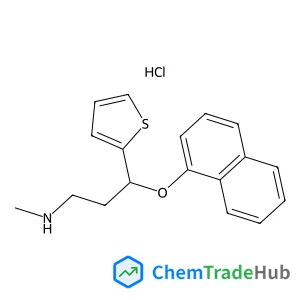
N-Methyl-3-(1-naphthyloxy)-3-(2-thienyl)-1-propanamine hydrochloride (1:1)
CAS番号:
1188266-11-6
分子式:
C18H20ClNOS
![1-(1-Benzyl-1,2,3,6-tetrahydropyridin-4-yl)-1H-benzo[d]imidazol-2(3H)-one structure](https://static.chemtradehub.com/structs/603/60373-71-9-7dfb.webp "1-(1-Benzyl-1,2,3,6-tetrahydropyridin-4-yl)-1H-benzo[d]imidazol-2(3H)-one structure")
1-(1-Benzyl-1,2,3,6-tetrahydropyridin-4-yl)-1H-benzo[d]imidazol-2(3H)-one
CAS番号:
60373-71-9
分子式:
C19H19N3O
おすすめサプライヤー





免責事項
このページに表示される学術雑誌情報は、参考および研究目的のみを目的としています。当社は雑誌出版社とは提携しておらず、投稿の取り扱いも行っておりません。出版に関するお問い合わせは、各雑誌出版社に直接ご連絡ください。
表示されている情報に誤りがある場合は、support@chemtradehub.com までご連絡ください。迅速に確認し、対応いたします。