


An evaluation of solvent effects and ethanol oxidation
文献情報
出版日
2021-07-19
DOI
10.1039/D1CP00630D
インパクトファクター
3.676
著者
Yuhan Mei, N. Aaron Deskins
原文を見る
要旨
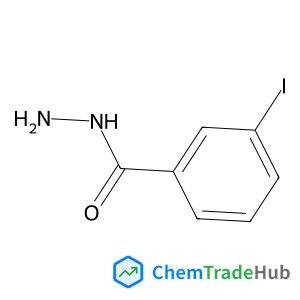
Understanding liquid–metal interfaces in catalysis is important, as the liquid can speed up surface reactions, increase the selectivity of products, and open up new favorable reaction pathways. In this work we modeled using density functional theory various steps in ethanol oxidation/decomposition over Rh(111). We considered implicit (continuum), explicit, and hybrid (implicit combined with explicit) solvation approaches, as well as two solvents, water and ethanol. We focused on modeling adsorption steps, as well as C–C/C–H bond scission and C–O bond formation reactions. Implicit solvation had very little effect on adsorption and reaction free energies. However, using the explicit and hybrid models, some free energies changed significantly. Furthermore, ethanol solvent had a more considerable impact than water solvent. We observed that preferred reaction pathways for C–C scission changed depending on the solvation model and solvent choice (ethanol or water). We also applied the bond-additivity solvation method to calculate heats of adsorption. Heats of adsorption and reaction using the bond-additivity model followed the same trends as the other solvation models, but were ∼1.1 eV more endothermic. Our work highlights how different solvation approaches can influence analysis of the oxidation/decomposition of organic surface species.
おすすめジャーナル

Nature Reviews Drug Discovery

Journal of Medical Biochemistry

Physical Chemistry Chemical Physics

Foundations of Chemistry

Coloration Technology

CrystEngComm

Angewandte Chemie International Edition

Mini-Reviews in Medicinal Chemistry

Photochemical & Photobiological Sciences

Current Pharmaceutical Biotechnology
関連文献
Photoionization-induced large-amplitude pendular motion in phenol+–Kr
Mitsuhiko Miyazaki, Akihiro Takeda, Shun-ichi Ishiuchi, Makoto Sakai, Otto Dopfer, Masaaki Fujii
2010-12-10
Paper
DOI: 10.1039/C0CP01961E
Unfolding and refolding details of lysozyme in the presence of β-casein micelles
Fu-Gen Wu, Jun-Jie Luo, Zhi-Wu Yu
2011-01-24
Paper
DOI: 10.1039/C0CP01184C
Catalytic activity of a ζ-class zinc and cadmium containing carbonic anhydrase. Compared work mechanisms
Orazio Amata, Tiziana Marino, Nino Russo, Marirosa Toscano
2011-01-07
Paper
DOI: 10.1039/C0CP01053G
A facile route to ordered mesoporous-alumina-supported catalysts, and their catalytic activities for CO oxidation
Zhen-Xing Li, Fu-Bo Shi, Le-Le Li, Tao Zhang, Chun-Hua Yan
2010-11-19
Communication
DOI: 10.1039/C0CP01309A
Molecular dynamics simulations of ionic liquid–vapour interfaces: effect of cation symmetry on structure at the interface
S. S. Sarangi, S. G. Raju, S. Balasubramanian
2010-12-13
Paper
DOI: 10.1039/C0CP01272F
Ammonia IRMS-TPD measurements on Brønsted acidity of proton-formed SAPO-34
Katsuki Suzuki, Takuma Nishio, Naonobu Katada, German Sastre, Miki Niwa
2010-12-20
Paper
DOI: 10.1039/C0CP00961J
A novel lyotropic liquid crystal formed by triphilic star-polyphiles: hydrophilic/oleophilic/fluorophilic rods arranged in a 12.6.4. tiling‡
Liliana de Campo, Trond Varslot, Minoo J. Moghaddam, Jacob J. K. Kirkensgaard, Kell Mortensen, Stephen T. Hyde
2010-11-22
Paper
DOI: 10.1039/C0CP01201G
Design of optimally switchable molecules by genetic algorithms
Niss Ole Carstensen, Johannes M. Dieterich, Bernd Hartke
2010-12-15
Paper
DOI: 10.1039/C0CP01065K
こちらもおすすめ
化合物よくある質問
(S)-四氢呋喃-3-羧酸の物理化学的性質は何ですか?
CAS番号168395-26-4の(S)-四氢呋喃-3-羧酸は、白色の結晶が特徴的な性質を持ちます。分子量は128.08であり、水に溶けやすく、アルコールなど...
168395-26-4(3S)-Tetrahydro-3-fu...
化合物よくある質問
塩基性硫黄化合物1,3-ジメチル-1-[5-(三氟甲基)-1,3,4-硫杂环己二酮-2-基]尿素を含む廃棄物はどのように処理すべきですか?
塩基性硫黄化合物1,3-ジメチル-1-[5-(三氟甲基)-1,3,4-硫杂环己二酮-2-基]尿素を含む廃棄物は、専門的な廃棄処理施設で焼却処理を行うべきです。ま...
25366-23-81,3-Dimethyl-1-[5-(t...
化合物よくある質問
インドリジン-2-カルボン酸は安全ですか?
インドリジン-2-カルボン酸は一般的に安全ですが、過度に濃い状態では刺激性があります。取り扱いには適切な防護具を使用し、直接触れや吸入を避ける必要があります。
3189-48-8Indolizine-2-carboxy...
化合物よくある質問
5-甲基-2-(3-ピリジニル)-1,3-テイゾール-4-オールの市場動向や研究トレンドはどうですか?
5-甲基-2-(3-ピリジニル)-1,3-テイゾール-4-オールは、医薬品や農薬、および合成化学の分野において研究が進められています。市場動向としては、化学物質...
131786-48-65-Methyl-2-(3-pyridi...
化合物よくある質問
4,4',4''-(嘧啶-2,4,6-三基)三苯甲醛はどのように保存すればよいですか?
4,4',4''-(嘧啶-2,4,6-三基)三苯甲醛は、密閉容器に保管し、避けておくことが重要です。室温で保管し、直射日光を避けてください。
2230887-23-54,4',4''-(2,4,6-Pyri...
化合物よくある質問
(3aR)-1,3,3-トリフェニルテトラヒドロ-3H-ピロロ[1,2-c][1,3,2]-オキザボロロールについて、適用される法規ガイドラインは何ですか?
(3aR)-1,3,3-トリフェニルテトラヒドロ-3H-ピロロ[1,2-c][1,3,2]-オキザボロロールは、GHS(国際危険物識別ルール)の分類が適用されま...
145238-45-5(3aR)-1,3,3-Tripheny...
102-83-0N,N-Dibutyl-1,3-prop...
化合物よくある質問
6-(4-氯苯氧基)吡啶-3-胺の代替品はありますか?
6-(4-氯苯氧基)吡啶-3-胺の代替品としては、他の芳香族アミン化合物や類似の除草剤が考えられます。ただし、他の化合物と同様に、代替品の選択には安全性と効果性...
75926-64-66-(4-Chlorophenoxy)-...
79408-85-84-Methyl-2-oxo-2H-ch...
化合物よくある質問
3-フェニル-3,4-ジヒドロ-2H-1,4-ベンゾキサジンを取り扱う際の実験室安全事項は何ですか?
3-フェニル-3,4-ジヒドロ-2H-1,4-ベンゾキサジンを取り扱う際は、防塵マスク、ゴーグル、ゴム手袋を使用し、ドラフトチャンバー内で作業することを推奨しま...
70310-30-43-Phenyl-3,4-dihydro...
掲載誌
Physical Chemistry Chemical Physics
CiteScore:
5.5
自己引用率:
10.3%
年間論文数:
3036
Physical Chemistry Chemical Physics (PCCP) is an international journal co-owned by 19 physical chemistry and physics societies from around the world. This journal publishes original, cutting-edge research in physical chemistry, chemical physics and biophysical chemistry. To be suitable for publication in PCCP, articles must include significant innovation and/or insight into physical chemistry; this is the most important criterion that reviewers and Editors will judge against when evaluating submissions. The journal has a broad scope and welcomes contributions spanning experiment, theory, computation and data science. Topical coverage includes spectroscopy, dynamics, kinetics, statistical mechanics, thermodynamics, electrochemistry, catalysis, surface science, quantum mechanics, quantum computing and machine learning. Interdisciplinary research areas such as polymers and soft matter, materials, nanoscience, energy, surfaces/interfaces, and biophysical chemistry are welcomed if they demonstrate significant innovation and/or insight into physical chemistry. Joined experimental/theoretical studies are particularly appreciated when complementary and based on up-to-date approaches.
おすすめ化合物

おすすめサプライヤー





免責事項
このページに表示される学術雑誌情報は、参考および研究目的のみを目的としています。当社は雑誌出版社とは提携しておらず、投稿の取り扱いも行っておりません。出版に関するお問い合わせは、各雑誌出版社に直接ご連絡ください。
表示されている情報に誤りがある場合は、support@chemtradehub.com までご連絡ください。迅速に確認し、対応いたします。