


Accurate and rapid microfluidic ELISA to monitor Infliximab titers in patients with inflammatory bowel diseases
文献情報
出版日
2021-12-30
DOI
10.1039/D1AN01810H
インパクトファクター
4.616
著者
Virginia Chu, João Gonçalves
原文を見る
要旨
Inflammatory bowel disease (IBD) is a term used to describe disorders that involve chronic inflammation in the gastrointestinal tract, affecting more than 6.8 million people worldwide. Biological therapy is used in the most severe cases of IBD where anti-tumour necrosis factor-alpha (TNF-α) antibodies are the first choice for a biological treatment. When administrated to patients, these antibodies interact with TNF-α, usually overexpressed in these diseases, neutralizing its biological activity. Because of the chronic nature of these diseases, a recurring administration of the therapeutic antibodies is required, thus making therapy monitorization essential for the correct management of these diseases. The aim of this work is the development of an enzyme-linked immunosorbent assay (ELISA) microfluidic biosensor to quantify the therapeutic antibodies in IBD patient plasma samples, where the commercial monoclonal antibody Infliximab (IFX) is used as a model target. By providing a faster and more accurate measurement of IFX, the proposed method leads to improved therapy scheduling and a reduced risk of endogenous anti-drug antibodies (ADAs) reducing the efficacy of the treatment. The time needed between sample insertion and result output for the microfluidic ELISA (mELISA) is 24 minutes, drastically shorter than the time required by the conventional ELISA (cELISA). The mELISA presented in this work has a LoD of 0.026 μg mL−1, while commercially available solutions provide a LoD of 0.15 μg mL−1. Results acquired by the mELISA are highly correlated with the results obtained from the cELISA (r = 0.998; R2 = 0.996; p < 0.0001), demonstrating the validity of the microfluidic approach for the quantification of IFX from patient plasma and its potential for use at the point-of-care (POC).
おすすめジャーナル

Kinetics and Catalysis

European Journal of Wood and Wood Products

Journal of Medicinal Chemistry

Molecular Pharmacology

Organic Preparations and Procedures International

Planta Medica

Proceedings of the National Academy of Sciences of the United States of America

Israel Journal of Chemistry

Helvetica Chimica Acta

Pharmacological Reviews
関連文献
Carbonate and oxalate dianions as prolific hydrogen-bond acceptors in supramolecular assembly‡
Chi-Keung Lam, Thomas C. W. Mak
2003-10-08
Communication
DOI: 10.1039/B306649E
A new class of C1-symmetric monosulfoximine ligands for enantioselective hetero Diels–Alder reactions
Carsten Bolm, Marinella Verrucci, Oliver Simic, Pier Giorgio Cozzi, Gerhard Raabe, Hiroaki Okamura
2003-10-13
Communication
DOI: 10.1039/B309556H
Ring selectivity and migratory aptitude of Cp*Ru+ complexation to acecorannulene
T. Jon Seiders, Joseph M. O'Connor
2004-03-12
Communication
DOI: 10.1039/B316061K
Using two photonmicroscopy to quantify enzymatic reaction rates on polymer beads
Annie Y. Bosma, Gail McConnell, John Girkin, Peter J. Halling, Sabine L. Flitsch
2003-10-13
Communication
DOI: 10.1039/B308078A
Total synthesis of the thiopeptide amythiamicin D
Rachael A. Hughes, Stewart P. Thompson, Lilian Alcaraz, Christopher J. Moody
2004-03-16
Communication
DOI: 10.1039/B401580K
Efficient electrophilic catalysis of 1,5-anhydrocellobiitol hydrolysis by AlIII; implications for the conservation of “rosin-alum” sized paper
John Baty, Michael L. Sinnott
2004-02-27
Communication
DOI: 10.1039/B316417A
Coordinative and electrostatic forces in action: from the design of differential chromogenic anion sensors to selective carboxylate recognition
Beatriz García-Acosta, Xavier Albiach-Martí, Eduardo García, Luis Gil, Ramón Martínez-Máñez, Knut Rurack, Félix Sancenón, Juan Soto
2004-02-26
Communication
DOI: 10.1039/B314997H
An efficient method to perform milliliter-scale PCR utilizing highly controlled microwave thermocycling
Kristina Orrling, Peter Nilsson, Mats Gullberg, Mats Larhed
2004-03-08
Communication
DOI: 10.1039/B317049G
Luminescent Ln3+ nitrobenzoato complexes: first examples of sensitization of green and red emission
Ana de Bettencourt Dias, Subha Viswanathan
2004-03-23
Communication
DOI: 10.1039/B402038C
こちらもおすすめ
化合物よくある質問
3-イチチルビフェニルはどのように合成されますか?
3-イチチルビフェニルは、ビフェニルとイチプロピオニトリルを回収率約90%で反応させて合成されます。触媒は通常、亜リチウムホウ素を用います。
5668-93-93-Ethylbiphenyl
化合物よくある質問
8-溴-5-三氟甲基喹啉はどのように合成されますか?
8-溴-5-三氟甲基喹啉は、5-トリフルオロメチル-2-メチル-1,3-ベンゼンジオールをブロモエタノールと反応させて生成します。この反応は塩基性条件下で行われ...
917251-92-48-Bromo-5-(trifluoro...
化合物よくある質問
ジメチル4-(4,4,5,5-テトラメチル-1,3,2-ドioxaborolan-2-基)-2,6-ピリジンジカルボイル酸フェニルアミニドの代替品はありますか?
ジメチル4-(4,4,5,5-テトラメチル-1,3,2-ドioxaborolan-2-基)-2,6-ピリジンジカルボイル酸フェニルアミニドの代替品としては、4-...
741709-66-0Dimethyl 4-(4,4,5,5-...
化合物よくある質問
N-(3,5-ヘキサクロロ-4-ピリドインイル)-8-メチオキシ-5-キノリンカーボン酸の市場動向や研究トレンドはどのようなものでしょうか?
N-(3,5-ヘキサクロロ-4-ピリドインイル)-8-メチオキシ-5-キノリンカーボン酸の市場動向は、主に産業用途での需要により影響を受けます。研究トレンドとし...
199871-63-1N-(3,5-Dichloro-4-py...
化合物よくある質問
イソステアロイルグリセリルは安全ですか?
イソステアロイルグリセリルは一般的に安全性が高いとされていますが、過度な使用や個人差により皮�owsん炎などの反応が起こる可能性があります。使用前に医師に相談す...
222723-55-92-[(5Z,8Z,11Z,14Z)-5...
化合物よくある質問
1-(二苯甲基)-3,3-二氟-氮杂环丁烷の市場動向や研究トレンドはどうですか?
1-(二苯甲基)-3,3-二氟-氮杂环丁烷の市場動向は、医薬品や合成化学の研究分野で注目を集めています。新興研究は、該当化合物の合成改良と生体内での作用メカニズ...
288315-02-61-Benzhydryl-3,3-dif...
化合物よくある質問
3-チオフェンスチオールの物理化学的性質は何ですか?
3-チオフェンスチオールのCAS番号は7774-73-4です。結晶性の白色粉末で、分子量は122.17です。この化合物は水に微溶解し、エタノールやジクロロメタン...
7774-73-43-Thiophenethiol
化合物よくある質問
2-Methyl-2-propanyl (2S)-2-(aminomethyl)-1-piperidinecarboxylateは安全ですか?
2-Methyl-2-propanyl (2S)-2-(aminomethyl)-1-piperidinecarboxylateは一定の安全性基準を満たしていま...
475105-35-22-Methyl-2-propanyl ...
化合物よくある質問
CAS番号1316822-90-8の化合物は安全ですか?
CAS番号1316822-90-8の化合物は安全性に関しては評価が不足していますが、一般的には生物学的に活性な物質であり、取り扱いには適切な安全防護措置が必要で...
1316822-90-8Gal beta(1-3)[Neu5Ac...
化合物よくある質問
Tert-butyl 2-(2-羟基乙基)哌嗪-1-羧酸はどのように保存すればよいですか?
Tert-butyl 2-(2-羟基乙基)哌嗪-1-羧酸は、冷暗所で保存し、直射日光から遠ざけてください。容器は密閉し、高湿度や高温を避けて保管してください。
517866-79-4Tert-butyl 2-(2-hydr...
掲載誌
Analyst

CiteScore:
7.8
自己引用率:
5.6%
年間論文数:
653
Analyst publishes analytical and bioanalytical research that reports premier fundamental discoveries and inventions, and the applications of those discoveries, unconfined by traditional discipline barriers.
おすすめ化合物

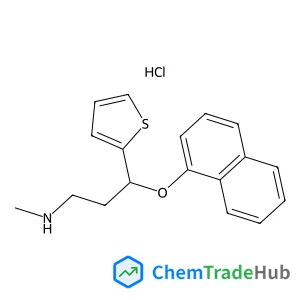
N-Methyl-3-(1-naphthyloxy)-3-(2-thienyl)-1-propanamine hydrochloride (1:1)
CAS番号:
1188266-11-6
分子式:
C18H20ClNOS

おすすめサプライヤー





免責事項
このページに表示される学術雑誌情報は、参考および研究目的のみを目的としています。当社は雑誌出版社とは提携しておらず、投稿の取り扱いも行っておりません。出版に関するお問い合わせは、各雑誌出版社に直接ご連絡ください。
表示されている情報に誤りがある場合は、support@chemtradehub.com までご連絡ください。迅速に確認し、対応いたします。