













Molecular insights into photostability of fluorinated organic photovoltaic blends: role of fullerene electron affinity and donor–acceptor miscibility
文献情報
出版日
2020-09-25
DOI
10.1039/D0SE00971G
インパクトファクター
6.367
著者
Colin P. Brook, Goutam Paul, Vinila Nellissery Viswanathan, Sandeep Satyanarayana, Kumar M. Panidhara, Bryon W. Larson, Andrew J. Ferguson, Amlan J. Pal, Praveen C. Ramamurthy, Steven H. Strauss, Olga V. Boltalina, Wade A. Braunecker
原文を見る
要旨
In this work, the photostability of certain organic photovoltaic (OPV) active layers was demonstrated to improve by as much as a factor of five under white light illumination in air with the use of 1,7-bis-trifluoromethylfullerene (C60(CF3)2) as the acceptor in place of PC60BM. However, the results were highly dependent on the structure and functionality within the donor material. Twelve combinations of active layer blends were studied, comprised of six different high-performance donor polymers (two fluorinated and four non-fluorinated donors) and two fullerene acceptors (PC60BM and C60(CF3)2). The relative rates of irreversible photobleaching of the active layer blends were found to correlate well with the electron affinity of the fullerene when the polymer and fullerene were well blended, but a full rationalization of the photobleaching data requires consideration of both the electron affinity of the fullerene as well as the relative miscibility of the polymer–fullerene components in the blend. Miscibility of those components was probed using a combination of time-resolved photoluminescence (TRPL) measurements and scanning tunneling microscopy (STM) imaging. The presence of fluorinated aromatic units in the donor materials tend to promote more intimate mixing with C60(CF3)2 as compared to PC60BM. The full results of these photobleaching studies and measurements of donor–acceptor miscibility, considered alongside additional photoconductance measurements and preliminary device work, provide new molecular optimization insights for improving the long-term stability of OPV active layers.
関連文献
Enhanced in vivo antiviral activity against pseudorabies virus through transforming gallic acid into graphene quantum dots with stimulation of interferon-related immune responses
Shiyi Ye, Fei Su, Junxing Li, Bin Yu, Lihua Xu, Tao Xiong, Kang Shao, Xiufang Yuan
2023-11-14
Paper
DOI: 10.1039/D3TB01844J
Cation exchange doping by transition and non-transition metals: embracing luminescence for band gap tunability in a ZnS lattice
Tejasvi Pandey, Abhishek Singh, Rajinder Singh Kaundal, Vivek Pandey
2023-12-06
Perspective
DOI: 10.1039/D3NJ05285K
Two new 6-nitrobenzimidazole ligand-modified polymolybdate-based metal–organic complexes with excellent capacitive and electrocatalytic performances
Ju-Ju Liang, Yu-Chen Zhang, Zhi-Han Chang, Yong-Zhen Chen, Ke-Ke Chen, Jun-Jun Lu, Xiu-Li Wang
2023-12-08
Paper
DOI: 10.1039/D3NJ04841A
A sustainable and self-healable silk fibroin nanocomposite with antibacterial and drug eluting properties for 3D printed wound dressings
Sana Sheybanikashani, Nooshin Zandi, Danial Hosseini, Roya Lotfi
2023-12-15
Paper
DOI: 10.1039/D3TB02363J
A silicon-doped carbon dot-based multivariate fluorometric and colorimetric probe for the simultaneous detection of heavy metal ions and dopamine
Yunqi Hao, Tingting Li, Miaomiao Tian, Qijun Dai, Fang Zhang, Fang Chai
2023-12-07
Paper
DOI: 10.1039/D3NJ04627C
Camptothecin-loaded supramolecular nanodelivery system based on amphiphilic calix[4]arene for targeted tumor therapy
2023-12-06
Paper
DOI: 10.1039/D3NJ03289B
Ingenious microenvironment regulation of a metal–organic framework (MOF) nanoreactor for electrochemical detection of chlorogenic acid
Junfeng Wang, Sihua Pan, Wang Sun, Yang Wang
2024-01-05
Paper
DOI: 10.1039/D3NJ05061K
Co-, N-doped carbon dot nanozymes based on an untriggered ROS generation approach for anti-biofilm activities and in vivo anti-bacterial treatment
2023-12-19
Paper
DOI: 10.1039/D3TB01794J
Evaluation of using the time-dependent density functional theory in studying the fluorescence properties of coumarin derivatives
Nguyen Khoa Hien, Mai Van Bay, Quan V. Vo, Ngo Duy Y., Duong Tuan Quang, Pham Cam Nam
2023-12-11
Paper
DOI: 10.1039/D3NJ05220F
Effective antibacterial action of a 2D bimetallic Al/Fe-TCPP NMOF loaded with glucose oxidase by a cascade catalytic reaction and depleting glutathione simultaneously
Shenghua Liao, Yifan Yao, Jingyi Duan, Qikun Zhang, Juan Du, Shengmei Wu
2023-11-20
Paper
DOI: 10.1039/D3NJ04390H
こちらもおすすめ
化合物よくある質問
3-(5-フェニル-2-ファイル)-プロパン酸の市場動向や研究トレンドはどうですか?
この化合物の市場動向は不明ですが、類似化合物の需要は化学繊維、医薬品、農薬分野で安定しています。研究トレンドとしては、該当化合物の生物学的活性の評価や、その他の...
3465-61-03-(5-Phenyl-2-furyl)...
化合物よくある質問
3- Chloro-1H-indazol-5-olはどのように保存すればよいですか?
3- チロロ-1H-吲唑-5-醇は遮光し、直射日光を避けて、温度は室温を推奨し、密閉容器に保存してください。
885519-34-63-Chloro-1H-indazol-...
849924-76-11,2,3,4,5-Cyclopenta...
化合物よくある質問
L-(1-~13~C)メチオニンの市場動向や研究トレンドはどうですか?
L-(1-~13~C)メチオニンは、医薬品やバイオテクノロジー分野での研究が増加しており、その価格は安定しています。新興研究分野では、代謝解析や遺伝子機能解析で...
81202-04-2L-(1-~13~C)Methionin...
化合物よくある質問
1,3-フェニレンビスメチレンビスアクリレートは安全ですか?
1,3-フェニレンビスメチレンビスアクリレートは一般的に安全ですが、直接皮膚に触れる場合は保護用具を使用することを推奨します。高濃度の蒸気が吸入された場合は呼吸...
22757-16-01,3-Phenylenebis(met...
化合物よくある質問
丹参醇Aはどのように保存すればよいですか?
丹参醇Aは、直射日光を避けて室温で保存し、密栓容器に入れることをお勧めします。適切な保存条件は、安定性を保ち、安全性を確保する上で重要です。
189308-08-5Danshenol A
化合物よくある質問
4-メチル-2-(1,1,1-三フロロ-2-メチルプロパニル)ピリドインとは何ですか?
CAS番号1378865-93-0の4-メチル-2-(1,1,1-三フロロ-2-メチルプロパニル)ピリドインは、合成化学分野で用いられる有機化合物の一種です。こ...
1378865-93-04-Methyl-2-(1,1,1-tr...
化合物よくある質問
N-フェニルベンジル-2-クロロ酢氨を取り扱う際の実験室安全事項は何ですか?
N-フェニルベンジル-2-クロロ酢氨は毒性があり、皮膚や粘膜に刺激を与えます。取り扱う際には、保護眼鏡、手袋、ゴーグルを着用することを強く推奨します。ドラフトチ...
2653-14-7N-benzyl-2-chloro-N-...
化合物よくある質問
UCN-02を取り扱う際の実験室安全事項は何ですか?
UCN-02は毒性は低いですが、人体への直接的な接触は避けるべきです。PPE要件はグローブと顔面保護具を着用することです。ドラフトチャンバーを使用して漏洩を処理...
121569-61-7UCN-02
化合物よくある質問
N-[3-[2-(二甲基氨基)乙氧基]-4-甲氧基苯基]-2'-甲基-4'-(5-甲基-1,2,4-恶二唑-3-基)-[1,1'-联苯]-4-甲酰胺を取り扱う際の実験室安全事項は何ですか?
手袋と保護眼鏡を着用し、漏洩時には吸気防止装置を使用してください。室温、乾燥した場所に保管し、直日光から隔離してください。SDS(安全データシート)を参照してく...
170230-39-4N-{3-[2-(Dimethylami...
掲載誌
おすすめ化合物
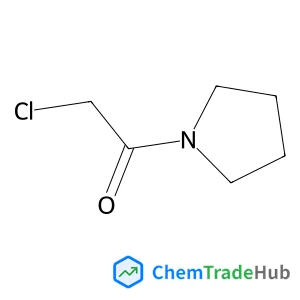
![10-(1-Azabicyclo[2.2.2]oct-3-ylmethyl)-10H-phenothiazine structure](https://static.chemtradehub.com/structs/292/29216-28-2-1d81.webp "10-(1-Azabicyclo[2.2.2]oct-3-ylmethyl)-10H-phenothiazine structure")
おすすめサプライヤー





免責事項
このページに表示される学術雑誌情報は、参考および研究目的のみを目的としています。当社は雑誌出版社とは提携しておらず、投稿の取り扱いも行っておりません。出版に関するお問い合わせは、各雑誌出版社に直接ご連絡ください。
表示されている情報に誤りがある場合は、support@chemtradehub.com までご連絡ください。迅速に確認し、対応いたします。