













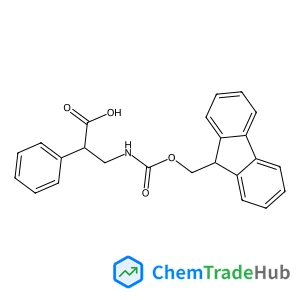
(S)-3-((((9H-Fluoren-9-yl)methoxy)carbonyl)amino)-2-phenylpropanoic acid
CAS番号:
1217663-60-9
分子式:
C24H21NO4
Yu-Tong Mu, Adam Z. Weber, Zhao-Lin Gu, Tobias Schuler, Wen-Quan Tao
Exploring the origins of local transport resistance and characterizing the oxygen transport resistances in the catalyst layer (RCL) are critical for cost reduction. In this paper, a comprehensive mesoscopic model for simulating coupled transport processes of oxygen and water vapor for different structural parameters under different operating conditions in reconstructed microstructures is proposed. The local transport resistance is calculated after achieving the limiting current density and the effective diffusivity of oxygen. The results demonstrate that RCL increases greatly with decreasing platinum loading (LPt) and the transport resistances in other components of the cell dominate for high-loadings. Both the reduced oxygen permeation coefficient in the ionomer thin-film and the adsorption resistance account for the origins of local transport resistance. The local transport resistance increases with the bare carbon ratio for a constant LPt and Pt/C ratio due to the decreased effective ionomer surface, and increases with the I/C ratio due to the increased ionomer thickness and decreased Knudsen diffusivity. Due to the presence of liquid water, a slight decrease followed by an increase of the local transport resistance versus relative humidity is obtained. The contribution of ionomer thin-films to RCL is more sensitive to liquid saturation compared with that of pores.
Neha Mulchandani, Kazunari Masutani, Sachin Kumar, Hideki Yamane, Yoshiharu Kimura, Vimal Katiyar
DOI: 10.1039/D1PY00429H
Chao Li, Li Han, Xiping Chen, Xinyu Bao, Qi Sun, Hongwei Ma, Yang Li
DOI: 10.1039/D1PY00416F
Jiajun Cao, Huangtianzhi Zhu, Liqing Shangguan, Yuezhou Liu, Peiren Liu, Qi Li, Yitao Wu
DOI: 10.1039/D1PY00535A
Hao Lu, Jiansong Cai, Ke Zhang
DOI: 10.1039/D0PY01707H
Josina L. Bohlen, Bragavie Kulendran, Hannah Rothfuss, Peter W. Roesky
DOI: 10.1039/D1PY00552A
Maria Nerantzaki, Capucine Loth, Jean-François Lutz
DOI: 10.1039/D1PY00516B
Lishan Li, Yiwen Li, Shuyuan Wang, Liandong Ye, Wei Zhang, Nianchen Zhou, Zhengbiao Zhang, Xiulin Zhu
DOI: 10.1039/D1PY00099C
DOI: 10.1039/D1PY00313E
環戊烷-1,3-二甲酸甲酯は、環戊烷と塩酸によるヒンデンブルク反応を経由して合成されます。この反応では、環戊烷が塩酸と作用し、1,3-ジカルボキシ基が導入されま...
4-メトキシ-1,2,3-スチアゼ-3,5-ジオンは、CAS番号107843-77-6の化合物で、(E)-ベンジル3-(3,4-ジヒドロキシフェニル) acry...
プロスタグランジンA2 (CAS番号: 41691-92-3) は、化学物質の安全管理に関する規制として、GHS (危険物質の国際的ハザード分類・ラベル付けシス...
4-アミノ-1-ナフタレン sulfonic 酸のCAS番号は84-86-6です。この化合物は結晶性で、分子量は212.15 g/molです。アルコールや水など...
N-GlcNAc-生物素は吸収性があり、皮膚や目への接触を避けることが重要です。PPE(個体保護具)は使用し、ドラフトチャンバーは必要に応じて使用します。漏洩時...
CAS番号1209781-11-2の3-アミノメチルフローラノピペリジン-1-カルボニル酸テルブチルエステルは、有機化合物の一種で、化学式はC10H17FNO3...
6- bromo-1-methyl-1H-benzotriazoleは、ブロモフリオリンと1-メチル-1H-ベンゾ[d][1,2,3]三氮唑の反応により合成され...
4-硫代尿苷は、尿素とD-リボシルヒドロキシアルデヒドを用いてスルホン化反応を経て合成されます。通常は塩酸ヒドロキシチオニルスルホン酸などの触媒を使用し、選択性...
ブレインナトリユリックペプチド32ラット(CAS番号: 133448-20-1)は、心臓で作られるホルモンの一つで、心不全の診断や予後評価に使用されます。
CAS番号810680-60-5の1-(3-氮杂啶)-4-羟基哌啶双盐酸盐は、白色の結晶性粉末である。分子量は360.84 g/molで、水に溶けやすい。反応活...
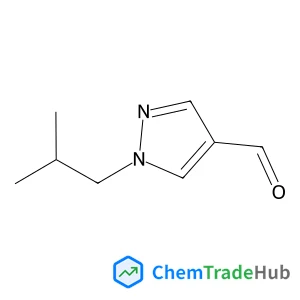
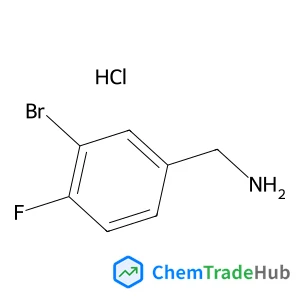
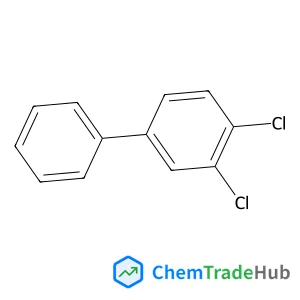
![[4-(Isobutyrylamino)phenyl]boronic acid structure](https://static.chemtradehub.com/structs/874/874219-50-8-6ab5.webp "[4-(Isobutyrylamino)phenyl]boronic acid structure")



