












![6-Bromo-2,3-dihydro-1H-pyrido[2,3-b][1,4]oxazine structure](https://static.chemtradehub.com/structs/120/1203499-17-5-b4d1.webp "6-Bromo-2,3-dihydro-1H-pyrido[2,3-b][1,4]oxazine structure")
Modulating the properties of buckybowls containing multiple heteroatoms
文献情報
出版日
2020-12-14
DOI
10.1039/D0QO01452D
インパクトファクター
5.281
著者
Guanxing Zhu, Yujun Song, Qianyu Zhang, Weiwei Ding, Xinxin Chen, Yuannan Wang, Gang Zhang
原文を見る
要旨
Embedding heteroatoms in buckybowls is an effective approach to alter their electronic structures and physicochemical properties. However, buckybowls with heteroatoms situated at both the peripheral rim and the central core to modulate the properties are quite rare. Herein, we report buckybowls containing sulfur atoms at the rim and nitrogen atoms in the center with tunable properties according to the state of the sulfur atoms. When the sulfur atoms are in the form of electron-donating sulfide, the buckybowl demonstrates weak fluorescence. It shows a low oxidative potential and elevated frontier molecular orbital energy levels due to the increased electron density. The electron-rich heterobuckybowl can be chemically oxidized to generate monocations and dications with gradually planarized structures according to the oxidation state. Moreover, it can assemble with electron-deficient fullerene C60 to form a 1 : 1 complex in toluene solution and a 2 : 1 complex in the crystalline state with strong intermolecular attractive interactions. After the oxidation of the sulfur atom to an electron-withdrawing sulfonyl group, the buckybowl shows the strongest photoluminescence in both solution and solid states in the regime of heterobuckybowls thus far. A decline in frontier molecular orbital energy levels and weak association behavior with fullerene C60 to generate a 1 : 1 complex in toluene solution are also observed due to the reduced electron density.
関連文献
Regiospecific synthesis of functionalised 1,3-diarylisobenzofurans viapalladium- and rhodium-catalysed reaction of boronic acids with o-acylbenzaldehydes under thermal or microwave activation
Jérôme Jacq, Bernard Bessières, Cathy Einhorn, Jacques Einhorn
2010-08-26
Paper
DOI: 10.1039/C0OB00110D
Design of one-to-one recognition triple Au nanoparticlesDNA probe and its application in the electrochemical DNAbiosensor
Hua Zhong, Xi Lei, Xu Hun, Shusheng Zhang
2009-10-16
Communication
DOI: 10.1039/B913922B
Multiple convergence in polyketide biosynthesis: a third folding mode to the anthraquinonechrysophanol‡
Gerhard Bringmann, Tobias A. M. Gulder, Andreas Hamm, Michael Goodfellow, Hans-Peter Fiedler
2009-10-05
Communication
DOI: 10.1039/B910501H
Synthesis, characterization, and self-assembled nanofibers of carbohydrate-functionalized mono- and di(2,2′:6′,2″-terpyridinyl)arenes
Yi-Tsu Chan, Charles N. Moorefield, George R. Newkome
2009-10-20
Communication
DOI: 10.1039/B914743H
Development of 2,6-carboxy-substituted boron dipyrromethene (BODIPY) as a novel scaffold of ratiometric fluorescent probes for live cell imaging
Yasuteru Urano, Hirotatsu Kojima, Takuya Terai, Kenjiro Hanaoka
2009-10-08
Communication
DOI: 10.1039/B917209B
Hydroxylation of benzophenone with ammonium phosphomolybdate in the solid state via UV photoactivation
Mrinmoyee Basu, Suresh Sarkar, Surojit Pande, Subhra Jana, Arun Kumar Sinha, Sougata Sarkar, Mukul Pradhan, Anjali Pal, Tarasankar Pal
2009-10-15
Communication
DOI: 10.1039/B905718H
Silver nanoparticles with planar twinned defects: effect of halides for precise tuning of plasmon resonance maxima from 400 to >900 nm
Nicole Cathcart, Andrew J. Frank, Vladimir Kitaev
2009-10-15
Communication
DOI: 10.1039/B916902D
Facile preparation of linear polystyrene-stabilized Pd nanoparticles in water
Atsushi Ohtaka, Takuto Teratani, Ryohei Fujii, Kanako Ikeshita, Osamu Shimomura
2009-10-15
Communication
DOI: 10.1039/B915039K
Design and synthesis of a novel anchoring ligand for highly efficient thin film dye-sensitized solar cells
Amaresh Mishra, Nuttapol Pootrakulchote, Markus K. R. Fischer, Cedric Klein, Md. K. Nazeeruddin, Shaik M. Zakeeruddin, Peter Bäuerle, Michael Grätzel
2009-10-29
Communication
DOI: 10.1039/B912506J
Redox rich dicobalt macrocycles as templates for multi-electron transformations
Nathaniel K. Szymczak, Louise A. Berben, Jonas C. Peters
2009-10-06
Communication
DOI: 10.1039/B913946J
こちらもおすすめ
化合物よくある質問
環戊烷-1,3-二甲酸甲酯はどのように合成されますか?
環戊烷-1,3-二甲酸甲酯は、環戊烷と塩酸によるヒンデンブルク反応を経由して合成されます。この反応では、環戊烷が塩酸と作用し、1,3-ジカルボキシ基が導入されま...
2435-36-1Dimethyl 1,3-cyclope...
化合物よくある質問
4-メトキシ-1,2,3-スチアゼ-3,5-ジオンとは何ですか?
4-メトキシ-1,2,3-スチアゼ-3,5-ジオンは、CAS番号107843-77-6の化合物で、(E)-ベンジル3-(3,4-ジヒドロキシフェニル) acry...
107843-77-6(E)-Benzyl 3-(3,4-di...
化合物よくある質問
プロスタグランジンA2について「に適用される法規ガイドラインは何ですか?'
プロスタグランジンA2 (CAS番号: 41691-92-3) は、化学物質の安全管理に関する規制として、GHS (危険物質の国際的ハザード分類・ラベル付けシス...
41691-92-316,16-DIMETHYL PROST...
化合物よくある質問
4-アミノ-1-ナフタレン sulfonic 酸についての物理化学的性質は何ですか?
4-アミノ-1-ナフタレン sulfonic 酸のCAS番号は84-86-6です。この化合物は結晶性で、分子量は212.15 g/molです。アルコールや水など...
84-86-64-Amino-1-naphthalen...
化合物よくある質問
N-GlcNAc-生物素を取り扱う際の実験室安全事項は何ですか?
N-GlcNAc-生物素は吸収性があり、皮膚や目への接触を避けることが重要です。PPE(個体保護具)は使用し、ドラフトチャンバーは必要に応じて使用します。漏洩時...
1272755-69-72-Acetamido-2-deoxy-...
化合物よくある質問
3-アミノメチルフローラノピペリジン-1-カルボニル酸テルブチルエステルとは何ですか?
CAS番号1209781-11-2の3-アミノメチルフローラノピペリジン-1-カルボニル酸テルブチルエステルは、有機化合物の一種で、化学式はC10H17FNO3...
1209781-11-22-Methyl-2-propanyl ...
化合物よくある質問
6-溴-1-甲基-1H-ベンゾ[d][1,2,3]三氮唑はどのように合成されますか?
6- bromo-1-methyl-1H-benzotriazoleは、ブロモフリオリンと1-メチル-1H-ベンゾ[d][1,2,3]三氮唑の反応により合成され...
944718-32-56-Bromo-1-methyl-1H-...
化合物よくある質問
4-硫代尿苷はどのように合成されますか?
4-硫代尿苷は、尿素とD-リボシルヒドロキシアルデヒドを用いてスルホン化反応を経て合成されます。通常は塩酸ヒドロキシチオニルスルホン酸などの触媒を使用し、選択性...
6741-73-71-(4-thio-beta-D-rib...
化合物よくある質問
ブレインナトリユリックペプチド32ラットとは何ですか?
ブレインナトリユリックペプチド32ラット(CAS番号: 133448-20-1)は、心臓で作られるホルモンの一つで、心不全の診断や予後評価に使用されます。
133448-20-1Brain Natriuretic Pe...
化合物よくある質問
1-(3-氮杂啶)-4-羟基哌啶双盐酸盐の物理化学的性質は何ですか?
CAS番号810680-60-5の1-(3-氮杂啶)-4-羟基哌啶双盐酸盐は、白色の結晶性粉末である。分子量は360.84 g/molで、水に溶けやすい。反応活...
810680-60-51-(3-Azetidinyl)-4-p...
掲載誌
Organic Chemistry Frontiers

CiteScore:
7.8
自己引用率:
8.7%
年間論文数:
724
Organic Chemistry Frontiers publishes high-quality research from across organic chemistry. Emphases are placed on studies that make significant contributions to the field of organic chemistry by reporting either new or significantly improved protocols or methodologies. Topics include, but are not limited to the following: Organic synthesis Development of synthetic methodologies Catalysis Natural products Functional organic materials Supramolecular and macromolecular chemistry Physical and computational organic chemistry
おすすめ化合物
![2-{[(1R,2S)-2-Aminocyclohexyl]amino}-4-{[3-(2H-1,2,3-triazol-2-yl)phenyl]amino}-5-pyrimidinecarboxamide structure](https://static.chemtradehub.com/structs/137/1370261-96-3-40df.webp "2-{[(1R,2S)-2-Aminocyclohexyl]amino}-4-{[3-(2H-1,2,3-triazol-2-yl)phenyl]amino}-5-pyrimidinecarboxamide structure")
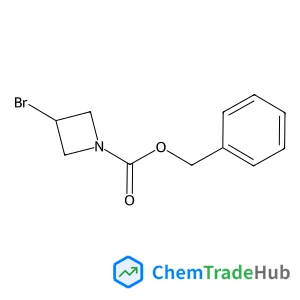
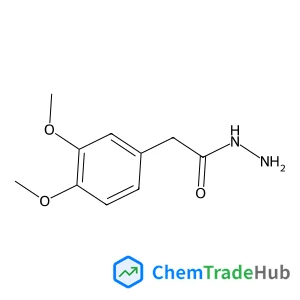
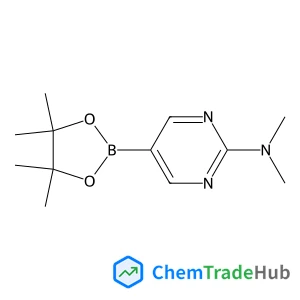
N,N-Dimethyl-5-(4,4,5,5-tetramethyl-1,3,2-dioxaborolan-2-yl)-2-pyrimidinamine
CAS番号:
1032759-30-0
分子式:
C12H20BN3O2
おすすめサプライヤー







免責事項
このページに表示される学術雑誌情報は、参考および研究目的のみを目的としています。当社は雑誌出版社とは提携しておらず、投稿の取り扱いも行っておりません。出版に関するお問い合わせは、各雑誌出版社に直接ご連絡ください。
表示されている情報に誤りがある場合は、support@chemtradehub.com までご連絡ください。迅速に確認し、対応いたします。