












Crystallization behavior, structure, morphology, and thermal properties of crystalline and amorphous stereo diblock copolymers, poly(l-lactide)-b-poly(dl-lactide)
文献情報
出版日
2020-08-28
DOI
10.1039/D0PY01115K
インパクトファクター
5.582
著者
Hideto Tsuji, Kazumasa Iguchi, Kohji Tashiro, Yuki Arakawa
原文を見る
要旨
We investigated the crystallization behavior, structure, morphology, and thermal properties of stereo diblock poly(lactide) (PLA) copolymers of crystalline poly(L-lactide) (PLLA) and amorphous poly(DL-lactide) (PLLA-b-PDLLA) having different molecular weights of the PLLA block, as representative and typical examples of crystalline and amorphous block copolymers. PLLA-b-PDLLA polymers were crystallizable for PLLA fractions down to 25.4%. The transition temperature from the δ-form to the α-form decreased with a decrease in the PLLA fraction and finally only α-form crystallites were formed for PLLA-b-PDLLA with a PLLA fraction of 25.4%. The melting temperature (Tm), radial growth rate of spherulites, and total crystallization rate decreased with decreasing PLLA fraction. Surprisingly, the long period, the mean lamellar thickness (dc), and the mean thickness of the amorphous layer increased with decreasing PLLA fraction. The contradiction between the dependence of Tm and dc on the PLLA fraction can be explained by the fact that the degree of disorder in the crystalline lattice increased and the crystalline surface area along the direction perpendicular to the c-axis became small with decreasing PLLA fraction, and their synergy effect. Some fractions of PDLLA chains were confined in the amorphous regions between the crystalline regions, but the remaining parts of the PDLLA chains should have been excluded from the amorphous regions between the crystalline regions and, as a result, located outside of the alternately layered crystalline and amorphous regions. Confinement of PDLLA chains in the amorphous regions between the crystalline regions is in marked contrast with the result reported for PLLA/PDLLA blends, wherein PDLLA molecules were excluded from the amorphous regions between the crystalline regions.
関連文献
Simplified identification of disulfide, trisulfide, and thioether pairs with 213 nm UVPD
James Bonner, Lance E. Talbert, Nicholas Akkawi, Ryan R. Julian
2018-09-21
Paper
DOI: 10.1039/C8AN01582A
An up-converting phosphor technology-based lateral flow assay for point-of-collection detection of morphine and methamphetamine in saliva
Qiushi Hu, Qiaozhen Wei, Pingping Zhang, Shuang Li, Lei Xue, Ruifu Yang, Lei Zhou
2018-08-01
Paper
DOI: 10.1039/C8AN00651B
A novel electrochemical immunoassay for carcinoembryonic antigen based on glucose oxidase-encapsulated nanogold hollow spheres with a pH meter readout
Yu Jiang, Zhiying Su, Jian Zhang, Meijiao Cai, Lili Wu
2018-09-13
Paper
DOI: 10.1039/C8AN01436A
Interactions of Hg(ii) with oligonucleotides having thymine–thymine mispairs. Optimization of an impedimetric Hg(ii) sensor
Ajar Kamal, Zhe She, Renu Sharma, Heinz-Bernhard Kraatz
2017-04-19
Paper
DOI: 10.1039/C7AN00238F
In vivo measurement of the dynamics of norepinephrine in an olfactory bulb following ischemia-induced olfactory dysfunction and its responses to dexamethasone treatment
Yinghong Zhang, Lijuan Li, Tao Li, Ying Xin, Junxiu Liu, Furong Ma, Lanqun Mao
2018-09-06
Paper
DOI: 10.1039/C8AN01300D
Raman spectroscopy in microsurgery: impact of operating microscope illumination sources on data quality and tissue classification
Joannie Desroches, Audrey Laurence, Michael Pinto, Marie-Andrée Tremblay, Kevin Petrecca, Frédéric Leblond
2016-10-31
Paper
DOI: 10.1039/C6AN02061E
Transformations to reduce the effect of particle size in mid-infrared spectra of biomass
Borja Cantero-Tubilla, Larry P. Walker
2018-09-10
Paper
DOI: 10.1039/C8AN01137K
On-line coupling between capillary electrophoresis and microscale thermophoresis (CE–MST); the proof-of-concept
Paweł M. Nowak, Michał Woźniakiewicz
2018-09-07
Communication
DOI: 10.1039/C8AN01191E
こちらもおすすめ
化合物よくある質問
3-イチチルビフェニルはどのように合成されますか?
3-イチチルビフェニルは、ビフェニルとイチプロピオニトリルを回収率約90%で反応させて合成されます。触媒は通常、亜リチウムホウ素を用います。
5668-93-93-Ethylbiphenyl
化合物よくある質問
8-溴-5-三氟甲基喹啉はどのように合成されますか?
8-溴-5-三氟甲基喹啉は、5-トリフルオロメチル-2-メチル-1,3-ベンゼンジオールをブロモエタノールと反応させて生成します。この反応は塩基性条件下で行われ...
917251-92-48-Bromo-5-(trifluoro...
化合物よくある質問
ジメチル4-(4,4,5,5-テトラメチル-1,3,2-ドioxaborolan-2-基)-2,6-ピリジンジカルボイル酸フェニルアミニドの代替品はありますか?
ジメチル4-(4,4,5,5-テトラメチル-1,3,2-ドioxaborolan-2-基)-2,6-ピリジンジカルボイル酸フェニルアミニドの代替品としては、4-...
741709-66-0Dimethyl 4-(4,4,5,5-...
化合物よくある質問
N-(3,5-ヘキサクロロ-4-ピリドインイル)-8-メチオキシ-5-キノリンカーボン酸の市場動向や研究トレンドはどのようなものでしょうか?
N-(3,5-ヘキサクロロ-4-ピリドインイル)-8-メチオキシ-5-キノリンカーボン酸の市場動向は、主に産業用途での需要により影響を受けます。研究トレンドとし...
199871-63-1N-(3,5-Dichloro-4-py...
化合物よくある質問
イソステアロイルグリセリルは安全ですか?
イソステアロイルグリセリルは一般的に安全性が高いとされていますが、過度な使用や個人差により皮�owsん炎などの反応が起こる可能性があります。使用前に医師に相談す...
222723-55-92-[(5Z,8Z,11Z,14Z)-5...
化合物よくある質問
1-(二苯甲基)-3,3-二氟-氮杂环丁烷の市場動向や研究トレンドはどうですか?
1-(二苯甲基)-3,3-二氟-氮杂环丁烷の市場動向は、医薬品や合成化学の研究分野で注目を集めています。新興研究は、該当化合物の合成改良と生体内での作用メカニズ...
288315-02-61-Benzhydryl-3,3-dif...
化合物よくある質問
3-チオフェンスチオールの物理化学的性質は何ですか?
3-チオフェンスチオールのCAS番号は7774-73-4です。結晶性の白色粉末で、分子量は122.17です。この化合物は水に微溶解し、エタノールやジクロロメタン...
7774-73-43-Thiophenethiol
化合物よくある質問
2-Methyl-2-propanyl (2S)-2-(aminomethyl)-1-piperidinecarboxylateは安全ですか?
2-Methyl-2-propanyl (2S)-2-(aminomethyl)-1-piperidinecarboxylateは一定の安全性基準を満たしていま...
475105-35-22-Methyl-2-propanyl ...
化合物よくある質問
CAS番号1316822-90-8の化合物は安全ですか?
CAS番号1316822-90-8の化合物は安全性に関しては評価が不足していますが、一般的には生物学的に活性な物質であり、取り扱いには適切な安全防護措置が必要で...
1316822-90-8Gal beta(1-3)[Neu5Ac...
化合物よくある質問
Tert-butyl 2-(2-羟基乙基)哌嗪-1-羧酸はどのように保存すればよいですか?
Tert-butyl 2-(2-羟基乙基)哌嗪-1-羧酸は、冷暗所で保存し、直射日光から遠ざけてください。容器は密閉し、高湿度や高温を避けて保管してください。
517866-79-4Tert-butyl 2-(2-hydr...
掲載誌
Polymer Chemistry

CiteScore:
8.6
自己引用率:
7.3%
年間論文数:
457
Polymer Chemistry welcomes submissions in all areas of polymer science that have a strong focus on macromolecular chemistry. Manuscripts may cover a broad range of fields, yet no direct application focus is required.
おすすめ化合物
![5'-Fluoro-[2,3'-biindolinylidene]-2',3-dione structure](https://static.chemtradehub.com/structs/251/251903-00-1-9cb1.webp "5'-Fluoro-[2,3'-biindolinylidene]-2',3-dione structure")
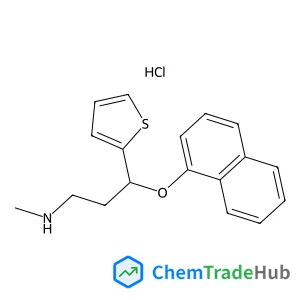
N-Methyl-3-(1-naphthyloxy)-3-(2-thienyl)-1-propanamine hydrochloride (1:1)
CAS番号:
1188266-11-6
分子式:
C18H20ClNOS
おすすめサプライヤー




免責事項
このページに表示される学術雑誌情報は、参考および研究目的のみを目的としています。当社は雑誌出版社とは提携しておらず、投稿の取り扱いも行っておりません。出版に関するお問い合わせは、各雑誌出版社に直接ご連絡ください。
表示されている情報に誤りがある場合は、support@chemtradehub.com までご連絡ください。迅速に確認し、対応いたします。