![2-Methyl-2-propanyl [2-(2-oxa-6-azaspiro[3.3]hept-6-yl)ethyl]carbamate structure](https://static.chemtradehub.com/structs/141/1415562-38-7-c0a4.webp "2-Methyl-2-propanyl [2-(2-oxa-6-azaspiro[3.3]hept-6-yl)ethyl]carbamate structure")
2-Methyl-2-propanyl [2-(2-oxa-6-azaspiro[3.3]hept-6-yl)ethyl]carbamate
CAS番号:
1415562-38-7
分子式:
C12H22N2O3
Amin Reyhani, Masood S. Alivand, Kathryn A. Mumford, Greg Qiao
Magnetic core–shell structured catalysts, Fe3O4@Fe(II)–MOF nanoparticles (NPs), are synthesized in two steps including solvothermal synthesis of Fe3O4 NPs and self-assembly of Fe(II)–MOF particles on the core. They successfully enabled the real time and temporal control of an aqueous reversible addition–fragmentation chain transfer (RAFT) polymerization initiated by the Fenton reaction via an “on–off” reaction at room temperature. The Fenton reaction involves the reduction process of hydrogen peroxide (H2O2) by ferrous ions (Fe(II), inside the MOF), generating hydroxyl radicals (HO˙). These highly reactive radicals, therefore, initiate the magnetic Fenton-RAFT polymerization under ambient conditions. This process leads to the synthesis of controlled polymers with near quantitative monomer conversions, low dispersity values (Đ < 1.10), and experimental molecular weights in good agreement with the theoretical values. The versatility of this system in aqueous media is shown through the polymerization of acrylamide- and acrylate-type monomers including N-acryloylmorpholine, N,N-dimethylacrylamide, 2-hydroxyethyl acrylate, and poly(ethylene glycol) ethyl methyl acrylate, and the formation of polymers with different chain lengths. Moreover, the ‘living’ characteristics of the synthesized polymers are demonstrated with chain extension experiments and Matrix-Assisted Laser Desorption/Ionization Time-of-Flight (MALDI-ToF) analysis. It is expected that the concept of magnetic catalysis could facilitate such temporal control (or “on–off” reaction) over a wide range of polymerizations from a ring opening polymerization (ROP) system where cobalt (or tin)-based catalysts are needed to an atom transfer radical polymerization (ATRP) method where Fe (or Cu)-based catalysts are required.

Electroanalysis

Journal of Asian Natural Products Research

Acta Metallurgica Sinica-English Letters

Bioorganic & Medicinal Chemistry Letters

Critical Reviews in Solid State and Materials Sciences

Heteroatom Chemistry

Colloid Journal

Bioorganic & Medicinal Chemistry

Atomization and Sprays

Journal of the Indian Institute of Science
Kai-Lu Liu, Kongkai Zhu, Hua Zhang
DOI: 10.1039/D1MD00274K
Ivana Cacciatore, Hasan Turkez, Annalisa Di Rienzo, Michele Ciulla, Antonio Di Stefano
DOI: 10.1039/D1MD00177A
Yiwei Liu, Luyi Zhou, Ying Dong, Rui Wang, Ying Pan, Shuze Zhuang, Dong Liu, Jianqiang Liu
DOI: 10.1039/D0MD00416B
Matthias R. Bauer, Paolo Di Fruscia, Simon C. C. Lucas, Iacovos N. Michaelides, Jennifer E. Nelson, R. Ian Storer, Benjamin C. Whitehurst
DOI: 10.1039/D0MD00370K
Neil P. Grimster
DOI: 10.1039/D1MD00191D
Trisha L. Bailey, Juan Ramon Hernandez-Fernaud
DOI: 10.1039/D1MD00078K
Kleinberg X. Fernandez, Conrad Fischer, Jennie Vu, Samantha Gottschalk, John C. Vederas
DOI: 10.1039/D1MD00120E
Tomris Coban, Cameron Robertson, Sianne Schwikkard, Richard Singer, Adam LeGresley
DOI: 10.1039/D0MD00428F
カルボニル基が付いた5-氰基-1-{[(2-メチル-2-プロpanyl)オキシ]カーボンイル}1H-吲哚-2-イリド-2-ボリン酸は、直射日光を避けて室温(15...
この化合物は合成化学分野において、特にピリジン化合物の合成や改良に用いられます。最近の研究では、ピリジン化合物の新規合成法や特性の改良が注目されています。市場動...
聚二季戊四醇六丙烯酸酯は、医薬品、ポリマー、センサー、半導体などの業界で広く使用されています。特にポリマー業界では硬化剤として、医薬分野では医療機器の製造に使用...
1-氯-5-硝基异喹啉は、薬理学や合成化学の研究分野で注目されています。市場動向としては、その生物学的な活性や合成可能性を評価する研究が増えています。また、代替...
2-チロール-5-メチルスルフェニル-3-trifルオルメチルベンゼンは、トリフルオロメチル化反応と硫化反応を経て合成されます。通常、トリフルオロメチル化剤と硫...
p-トールイルマグネシウムブロミドのCAS番号は4294-57-9です。この化合物は白色の結晶性粉末で、分子量は204.32です。溶剤中で良好に溶解しますが、水...
1-(5-甲基-2-硫化素基)プロパン-1-酮の市場動向は、化学産業全体の需要に影響を受けますが、最近では pharmaceutical 分野での応用が注目され...
十一碳烯酰甘氨酸は吸入や皮膚から吸収されることがあり、取り扱う際には防塵マスクと手袋を使用してください。ドラフトチャンバーを用いて漏洩を処理し、適切なSDS(S...
この化合物は吸入や皮膚吸収による毒性があるため、防塵マスク、ゴーグル、防護手袋を使用する必要があります。ドラフトチャンバーでの操作が必要です。漏洩時には即座に換...
安全性は化合物の使用方法によります。直接的な毒性は報告されていませんが、吸入や皮膚接触には注意が必要です。適切な防護服を着用し、換気を図ることを推奨します。

Polymer Chemistry welcomes submissions in all areas of polymer science that have a strong focus on macromolecular chemistry. Manuscripts may cover a broad range of fields, yet no direct application focus is required.
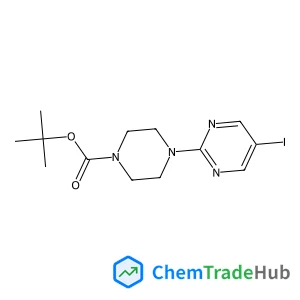
![2-morpholino-2-[2-(trifluoromethyl)pyrimidin-5-yl]ethanamine structure](https://static.chemtradehub.com/structs/119/1192570-20-9-2810.webp "2-morpholino-2-[2-(trifluoromethyl)pyrimidin-5-yl]ethanamine structure")