












![4-Chloro-3-(trifluoromethyl)-1H-pyrrolo[2,3-b]pyridine structure](https://static.chemtradehub.com/structs/869/869335-75-1-a9d0.webp "4-Chloro-3-(trifluoromethyl)-1H-pyrrolo[2,3-b]pyridine structure")
Direct synthesis of cyclic lipopeptides using intramolecular native chemical ligation and thiol–ene CLipPA chemistry
文献情報
出版日
2020-02-05
DOI
10.1039/D0OB00203H
インパクトファクター
3.876
著者
原文を見る
要旨
Naturally occurring cyclic lipopeptides exhibit a diverse range of biological activities and possess several favourable properties. Chemically synthesising and modifying these natural compounds can alter their biological and physical properties. Cyclic lipopeptides are often difficult to synthesise, especially when the lipid moiety is directly attached to the cyclic scaffold. The construction of a series of cyclic lipopeptide analogues of the antifungal peptide iturin A is reported herein. The synthesis of the parent peptide macrocycle was achieved using native chemical ligation (NCL), whereupon the regenerated free thiol was used to attach a lipid moiety using Cysteine Lipidation on a Peptide or Amino acid (CLipPA) technology.
関連文献
Direct growth of novel alloyed PtAu nanodendrites
Dan F. Thomas, Aicheng Chen
2008-09-01
Communication
DOI: 10.1039/B807660J
Three-dimensional AlN microroses and their enhanced photoluminescence properties
Weiwei Lei, Jian Zhang, Dan Liu, Pinwen Zhu, Qiliang Cui, Guangtian Zou
2008-09-12
Communication
DOI: 10.1039/B809380F
Facile synthesis and high d33 of single-crystalline KNbO3 nanocubes
Haiyan Ge, Yudong Hou, Mankang Zhu, Hao Wang, Hui Yan
2008-09-08
Communication
DOI: 10.1039/B810342A
Electrochemical catalytic reforming of oxygenated-organic compounds: a highly efficient method for production of hydrogen from bio-oil
Lixia Yuan, Yaqiong Chen, Chongfu Song, Tongqi Ye, Qingxiang Guo, Qingshi Zhu, Youshifumi Torimoto, Quanxin Li
2008-09-10
Communication
DOI: 10.1039/B810851J
Asymmetric 1,3-dipolar cycloaddition with a P-stereogenic dipolarophile: An efficient approach to novel P-stereogenic 1,2-diphosphine systems
Nikolai Vinokurov, K. Michał Pietrusiewicz, Sławomir Frynas, Michael Wiebcke, Holger Butenschön
2008-09-12
Communication
DOI: 10.1039/B810573A
Deprotonation in anodic methoxylation of fluoroethyl phenyl sulfides using site-isolated heterogeneous bases
Toshiki Tajima, Hitoshi Kurihara
2008-09-10
Communication
DOI: 10.1039/B809998G
Rhodium-catalysed hydroacylation or reductive aldol reactions: a ligand dependent switch of reactivity
James D. Osborne, Michael C. Willis
2008-09-02
Communication
DOI: 10.1039/B810935D
Striking reactivity of ylide-like germylene toward terminal alkynes: [4+2] cycloadditionversus C–H bond activation
Shenglai Yao, Christoph van Wüllen, Matthias Driess
2008-09-18
Communication
DOI: 10.1039/B811952J
Photochromic oligothienoacene derivatives with photo-switchable luminescene properties and computational studies
Chi-Chiu Ko, Wai Han Lam, Vivian Wing-Wah Yam
2008-09-12
Communication
DOI: 10.1039/B810585E
こちらもおすすめ
化合物よくある質問
2-ヒドロキシ-5-ニトロベンジンブロモイドの代替品はありますか?
2-ヒドロキシ-5-ニトロベンジンブロモイドは特定の化学反応に適しているため、代替品は限られています。しかし、同様の構造を持つ2-ヒドロキシ-4-ニトロベンジン...
772-33-82-(Bromomethyl)-4-ni...
化合物よくある質問
N-(2-ブロモフェニル)-1-チロール-3-オキソ-3-(ピペリジニル)プロペン-2-イル)ベンゼンアミドを取り扱う際の実験室安全事項は何ですか?
N-(2-ブロモフェニル)-1-チロール-3-オキソ-3-(ピペリジニル)プロペン-2-イル)ベンゼンアミドは有毒で、皮膚や粘膜に刺激を与える可能性があります。...
1800044-77-2N-[(1Z)-1-(2-Bromoph...
化合物よくある質問
1,3プロパンジオール,2-[2-(2アミノ-6クロロ-9Hピリミジン-9-イル)エチル-1,1,2,2-D4]-2,3-ジアセタートの市場動向や研究トレンドはどうですか?
この化合物は、新規治療薬の開発に注目されています。市場では、その有効性と安全性が評価され、研究分野では、分子生物学と医薬化学の新たな発見が期待されています。
1020718-81-31,3-Propanediol, 2-[...
579-44-2Ethanone, 2-hydroxy-...
化合物よくある質問
Succinimidyl-alanyl-phenylalanyl-prolyl-phenylalanine 4-nitroanilide はどの業界で使用されていますか?
Succinimidyl-alanyl-phenylalanyl-prolyl-phenylalanine 4-nitroanilide は主に医薬品開発やポ...
128802-73-3succinimidyl-alanyl-...
化合物よくある質問
メチル6-アミノ-5-クロロピリジン-2-カーボイル酸について、適用される法規ガイドラインは何ですか?
メチル6-アミノ-5-クロロピリジン-2-カーボイル酸(CAS番号: 1256794-05-4)の使用には、GHS( Globally Harmonized S...
1256794-05-4Methyl 6-amino-5-chl...
化合物よくある質問
エチル4-(シクロ Pentagonyl)アミノ-2-メチル硫化基ピリミジン-5-カルボキシレートを取り扱う際の実験室安全事項は何ですか?
取り扱いには、耐薬品性の容器を使用し、通気性の良い場所で操作することを推奨します。漏れ時は、SDS(安全データシート)を参照して適切な措置を取ること。手洗いと洗...
211245-62-4ethyl 4-(cyclopentyl...
化合物よくある質問
(S)-3-ベンZYルピペリジン塩酸塩とは何ですか?
(S)-3-ベンZYルピペリジン塩酸塩は、CAS番号1258940-00-9で表される化合物です。これは、(S)-3-苯基哌啶的盐酸盐であり、主に医薬品の原料と...
1258940-00-9(S)-3-Phenylpiperidi...
化合物よくある質問
3,5-二甲基金剛胺の主な用途は何ですか?
3,5-二甲基金剛胺は、主に医薬品の原料として使用され、また抗うつ薬や抗アルツハイマー薬の開発に利用されます。さらに、化粧品や食品添加物の製造でも重要な役割を果...
19988-45-52-(2,3-Dihydroxyphen...
化合物よくある質問
ビス(4-メチル-2-ペンチル)フェニルカルボン酸エステルの代替品はありますか?
ビス(4-メチル-2-ペンチル)フェニルカルボン酸エステル (CAS番号: 1398066-13-1) の代替品には、ビス(2-エチルヘキシル)フェノールカルボ...
1398066-13-1Bis(4-methyl-2-penty...
掲載誌
Organic & Biomolecular Chemistry

CiteScore:
3.4
自己引用率:
10.3%
年間論文数:
1041
Organic & Biomolecular Chemistry (OBC) publishes original and high impact research and reviews in organic chemistry. We welcome research that shows new or significantly improved protocols or methodologies in total synthesis, synthetic methodology or physical and theoretical organic chemistry as well as research that shows a significant advance in the organic chemistry or molecular design aspects of chemical biology, catalysis, supramolecular and macromolecular chemistry, theoretical chemistry, mechanism-oriented physical organic chemistry, medicinal chemistry or natural products. Articles published in the journal should report new work which makes a highly-significant impact in the field. Routine and incremental work is generally not suitable for publication in the journal. More details about key areas of our scope are below. In all cases authors should include in their article clear rationale for why their research has been carried out.
おすすめ化合物
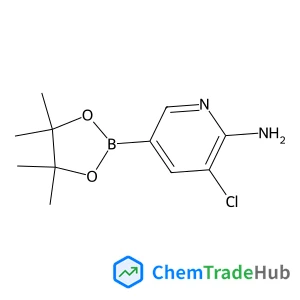
3-Chloro-5-(4,4,5,5-tetramethyl-1,3,2-dioxaborolan-2-yl)-2-pyridinamine
CAS番号:
1032758-99-8
分子式:
C11H16BClN2O2
![2,6-Di(thiophen-2-yl)dithieno[3,2-b:2',3'-d]thiophene structure](https://static.chemtradehub.com/structs/910/910788-24-8-5b70.webp "2,6-Di(thiophen-2-yl)dithieno[3,2-b:2',3'-d]thiophene structure")
おすすめサプライヤー




免責事項
このページに表示される学術雑誌情報は、参考および研究目的のみを目的としています。当社は雑誌出版社とは提携しておらず、投稿の取り扱いも行っておりません。出版に関するお問い合わせは、各雑誌出版社に直接ご連絡ください。
表示されている情報に誤りがある場合は、support@chemtradehub.com までご連絡ください。迅速に確認し、対応いたします。