












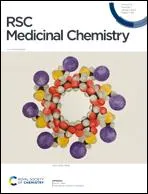
Porphyromonas gingivalis: where do we stand in our battle against this oral pathogen?
文献情報
出版日
2021-02-26
DOI
10.1039/D0MD00424C
インパクトファクター
0
著者
Kaitlind C. Howard, Octavio A. Gonzalez, Sylvie Garneau-Tsodikova
原文を見る
要旨
Periodontal diseases, such as gingivitis and periodontitis, are inflammatory diseases triggered by pathogenic bacteria that lead to damage of the soft tissue and bone supporting the teeth. Amongst the identified oral periodontopathogenic bacteria, Porphyromonas gingivalis is able to enhance oral dysbiosis, which is an imbalance in the beneficial commensal and periodontal pathogenic bacteria that induces chronic inflammation. Given the critical role of oral pathogenic bacteria like P. gingivalis in the pathogenesis of periodontitis, local and/or systemic antibacterial therapy has been suggested to treat this disease, especially in its severe or refractory forms. Nevertheless, the majority of the antibacterial agents currently used for the treatment of periodontal diseases are broad-spectrum, which harms beneficial bacterial species that are critical in health, inhibit the growth of pathogenic bacteria, contribute in protecting the periodontal tissues to damage and aid in its healing. Thus, the development of more effective and specific antibacterial agents is needed to control oral pathogens in a polymicrobial environment. The strategies for the development of novel antibacterial agents include natural product isolation as well as synthetic and semi-synthetic methodologies. This review presents an overview of the periodontal diseases gingivitis and periodontitis along with current antibacterial treatment options (i.e., classes of antibacterial agents and the mechanism(s) of resistance that hinder their usage) used in periodontal diseases that specifically target oral pathogens such as P. gingivalis. In addition, to help medicinal chemists gain a better understanding of potentially promising scaffolds, this review provides an in-depth coverage of the various families of small molecules that have been investigated as potential anti-P. gingivalis agents, including novel families of compounds, repositioned drugs, as well as natural products.
関連文献
A magnetic nanoparticle-based aptasensor for selective and sensitive determination of lysozyme with strongly scattering silver nanoparticles
Chun Mei Li, Lei Zhan, Lin Ling Zheng, Yuan Fang Li
2016-03-23
Paper
DOI: 10.1039/C6AN00489J
The origin of the band at around 730 cm−1 in the SERS spectra of bacteria: a stable isotope approach
Patrick Kubryk, Reinhard Niessner, Natalia P. Ivleva
2016-04-20
Communication
DOI: 10.1039/C6AN00306K
High-throughput endogenous measurement of S-nitrosylation in Alzheimer's disease using oxidized cysteine-selective cPILOT
Liqing Gu, Renã A. S. Robinson
2016-05-06
Paper
DOI: 10.1039/C6AN00417B
A lysosome specific theranostic NO donor inhibits cancer cells by stimuli responsive molecular self-decomposition with an on-demand fluorescence pattern
Wuyang Hua, Xinyi Wang, Sinan Pei
2019-09-30
Paper
DOI: 10.1039/C9AN01746A
A novel platform self-assembled from squaraine-embedded Zn(ii) complexes for selective monitoring of ATP and its level fluctuation in mitotic cells
Ruizhi Feng, Yongqian Xu, Hongwei Zhao, Xuemei Duan, Shiguo Sun
2016-04-26
Communication
DOI: 10.1039/C6AN00646A
A rhodol-hemicyanine based ratiometric fluorescent probe for real-time monitoring of glutathione dynamics in living cells
Minghao Ren, Linfang Wang, Xin Lv, Yuanqiang Sun, Hu Chen, Keyuan Zhang, Qi Wu, Yurong Bai, Wei Guo
2019-11-01
Paper
DOI: 10.1039/C9AN01852B
Spectrochemical analysis of sycamore (Acer pseudoplatanus) leaves for environmental health monitoring
Holly J. Butler, Martin R. McAinsh
2016-04-06
Paper
DOI: 10.1039/C6AN00392C
SERS-based immunoassay using gold-patterned array chips for rapid and sensitive detection of dual cardiac biomarkers
Ziyi Cheng, Rui Wang, Yanlong Xing, Linlu Zhao, Jaebum Choo, Fabiao Yu
2019-09-20
Paper
DOI: 10.1039/C9AN01260E
Electrochemical performance of ruthenium nanoparticles decorated on nitride carbon for non-enzymatic detection of hydrogen peroxide
Xia Cheng, Caili Xu, Qian Chen, Yi Wang, Yun Zhang, Guangyin Fan
2019-09-21
Paper
DOI: 10.1039/C9AN01480B
Synthesis of a CdS-decorated Eu-MOF nanocomposite for the construction of a self-powered photoelectrochemical aptasensor
Jie Gao, Yingxu Chen, Weihao Ji, Zhonghong Gao, Jingdong Zhang
2019-09-25
Paper
DOI: 10.1039/C9AN01606F
こちらもおすすめ
化合物よくある質問
カルボニル基が付いた5-氰基-1-{[(2-メチル-2-プロpanyl)オキシ]カーボンイル}1H-吲哚-2-イリド-2-ボリン酸はどのように保存すればよいですか?
カルボニル基が付いた5-氰基-1-{[(2-メチル-2-プロpanyl)オキシ]カーボンイル}1H-吲哚-2-イリド-2-ボリン酸は、直射日光を避けて室温(15...
475102-15-9(5-Cyano-1-{[(2-meth...
化合物よくある質問
tert-ブチル2-クロロメチルピリジン-3-基炭酸エステルの市場動向や研究トレンドはどうですか?
この化合物は合成化学分野において、特にピリジン化合物の合成や改良に用いられます。最近の研究では、ピリジン化合物の新規合成法や特性の改良が注目されています。市場動...
1203498-98-9tert-Butyl 2-chloro-...
化合物よくある質問
聚二季戊四醇六丙烯酸酯はどの業界で使用されていますか?
聚二季戊四醇六丙烯酸酯は、医薬品、ポリマー、センサー、半導体などの業界で広く使用されています。特にポリマー業界では硬化剤として、医薬分野では医療機器の製造に使用...
29570-58-93-(Acryloyloxy)-2-({...
化合物よくある質問
1-氯-5-硝基异喹啉の市場動向や研究トレンドはどうですか?
1-氯-5-硝基异喹啉は、薬理学や合成化学の研究分野で注目されています。市場動向としては、その生物学的な活性や合成可能性を評価する研究が増えています。また、代替...
58142-97-51-Chloro-5-nitroisoq...
化合物よくある質問
2-チロール-5-メチルスルフェニル-3-trifルオルメチルベンゼンはどのように合成されますか?
2-チロール-5-メチルスルフェニル-3-trifルオルメチルベンゼンは、トリフルオロメチル化反応と硫化反応を経て合成されます。通常、トリフルオロメチル化剤と硫...
957066-04-51-Chloro-4-(methylsu...
化合物よくある質問
p-トールイルマグネシウムブロミドの物理化学的性質は何ですか?
p-トールイルマグネシウムブロミドのCAS番号は4294-57-9です。この化合物は白色の結晶性粉末で、分子量は204.32です。溶剤中で良好に溶解しますが、水...
4294-57-9p-Tolylmagnesium bro...
化合物よくある質問
1-(5-甲基-2-硫化素基)プロパン-1-酮の市場動向や研究トレンドはどうですか?
1-(5-甲基-2-硫化素基)プロパン-1-酮の市場動向は、化学産業全体の需要に影響を受けますが、最近では pharmaceutical 分野での応用が注目され...
59303-13-81-(5-Methyl-2-thieny...
化合物よくある質問
十一碳烯酰甘氨酸を取り扱う際の実験室安全事項は何ですか?
十一碳烯酰甘氨酸は吸入や皮膚から吸収されることがあり、取り扱う際には防塵マスクと手袋を使用してください。ドラフトチャンバーを用いて漏洩を処理し、適切なSDS(S...
54301-26-7N-10-Undecenoylglyci...
化合物よくある質問
1H,1H-全氟-3,6-二氧杂葵-1-醇を取り扱う際の実験室安全事項は何ですか?
この化合物は吸入や皮膚吸収による毒性があるため、防塵マスク、ゴーグル、防護手袋を使用する必要があります。ドラフトチャンバーでの操作が必要です。漏洩時には即座に換...
152914-73-32,2-Difluoro-2-[1,1,...
化合物よくある質問
3-(4-(フルオロメチルオキシ)フェニル)-1,2,4-オキサジアゾール-5-カルボハイドライドは安全ですか?
安全性は化合物の使用方法によります。直接的な毒性は報告されていませんが、吸入や皮膚接触には注意が必要です。適切な防護服を着用し、換気を図ることを推奨します。
883028-82-83-(4-(Trifluorometho...
掲載誌
おすすめ化合物
![1-(2-Chlorophenyl)-6-[(2S)-3,3,3-trifluoro-2-methylpropyl]-1,7-dihydro-4H-pyrazolo[3,4-d]pyrimidin-4-one structure](https://static.chemtradehub.com/structs/794/794568-91-5-0c34.webp "1-(2-Chlorophenyl)-6-[(2S)-3,3,3-trifluoro-2-methylpropyl]-1,7-dihydro-4H-pyrazolo[3,4-d]pyrimidin-4-one structure")

おすすめサプライヤー




免責事項
このページに表示される学術雑誌情報は、参考および研究目的のみを目的としています。当社は雑誌出版社とは提携しておらず、投稿の取り扱いも行っておりません。出版に関するお問い合わせは、各雑誌出版社に直接ご連絡ください。
表示されている情報に誤りがある場合は、support@chemtradehub.com までご連絡ください。迅速に確認し、対応いたします。