












Artificial neural network prediction of self-diffusion in pure compounds over multiple phase regimes
文献情報
出版日
2021-02-23
DOI
10.1039/D0CP06693A
インパクトファクター
3.676
著者
Joshua P. Allers, Todd M. Alam
原文を見る
要旨
Artificial neural networks (ANNs) were developed to accurately predict the self-diffusion constants for pure components in liquid, gas and super critical phases. The ANNs were tested on an experimental database of 6625 self-diffusion constants for 118 different chemical compounds. The presence of multiple phases results in a heavy skew in the distribution of diffusion constants and multiple approaches were used to address this challenge. First, an ANN was developed with the raw diffusion values to assess what the main drawbacks of this direct method were. The first approach for improving the predictions involved taking the log 10 of diffusion to provide a more uniform distribution and reduce the range of target output values used to develop the ANN. The second approach involved developing individual ANNs for each phase using the raw diffusion values. Results show that the log transformation leads to a model with the best self-diffusion constant predictions and an overall average absolute deviation (AAD) of 6.56%. The resultant ANN is a generalized model that can be used to predict diffusion across all three phases and over a diverse group of compounds. The importance of each input feature was ranked using a feature addition method revealing that the density of the compound has the largest impact on the ANN prediction of self-diffusion constants in pure compounds.
関連文献
Self-oriented pseudoisocyanine J-aggregates in solution
Ken Takazawa, Yasutaka Kitahama, Yasuyuki Kimura
2004-09-07
Communication
DOI: 10.1039/B409690H
Water reduction and oxidation on Pt–Ru/Y2Ta2O5N2catalyst under visible light irradiation
Meiying Liu, Wansheng You, Zhibin Lei, Guohua Zhou, Jianjun Yang, Guopeng Wu, Guijun Ma, Guoyou Luan, Tuyoshi Takata, Michikazu Hara, Can Li
2004-08-19
Communication
DOI: 10.1039/B407892F
First lanthanide dipolar complexes for second-order nonlinear optics
Katell Sénéchal, Loïc Toupet, Isabelle Ledoux, Joseph Zyss, Hubert Le Bozec, Olivier Maury
2004-09-08
Communication
DOI: 10.1039/B407073A
A p-phosphinophenolate ligand for the palladium-catalysed arylation of alkenes
Eiji Shirakawa, Keijiro Ishii, Teruhisa Tsuchimoto
2004-10-19
Communication
DOI: 10.1039/B411125G
A thermally stable nanoporous nickel 5-sulfoisophthalate; crystal structure and adsorption properties
Dae Sung Kim, Paul M. Forster, Ronan Le Toquin, Anthony K. Cheetham
2004-08-17
Communication
DOI: 10.1039/B408535C
Novel Pt/CeO2/C catalysts for electrooxidation of alcohols in alkaline media
Changwei Xu, Pei Kang Shen
2004-08-25
Communication
DOI: 10.1039/B408589B
Strongly red-fluorescent novel donor–π-bridge–acceptor–π-bridge–donor (D–π–A–π–D) type 2,1,3-benzothiadiazoles with enhanced two-photon absorption cross-sections
Shin-ichiro Kato, Taisuke Matsumoto, Tsutomu Ishi-i, Thies Thiemann, Motoyuki Shigeiwa, Hideki Gorohmaru, Shuichi Maeda, Yoshiro Yamashita, Shuntaro Mataka
2004-09-07
Communication
DOI: 10.1039/B410016F
The isomerisation of (Z)-3-[2H1]-phenylprop-2-enone as a measure of the rate of hydroperoxide addition in Weitz–Scheffer and Juliá–Colonna epoxidations
David R. Kelly, Eva Caroff, Robert W. Flood, William Heal, Stanley M. Roberts
2004-08-25
Communication
DOI: 10.1039/B404389H
Synthesis and characterization of electron-rich nickel tris-carbene complexes‡
Xile Hu, Ingrid Castro-Rodriguez, Karsten Meyer
2004-08-23
Communication
DOI: 10.1039/B409241D
Practical asymmetric synthesis of β-hydroxy-β-trifluoromethylated ketonesvia the first example of the in situ generation of trifluoro-acetaldehyde and its successive asymmetric carbon–carbon bond formation reaction with chiral imines
Kazumasa Funabiki, Wataru Hashimoto, Masaki Matsui
2004-08-13
Communication
DOI: 10.1039/B408226E
こちらもおすすめ
化合物よくある質問
カルボニル基が付いた5-氰基-1-{[(2-メチル-2-プロpanyl)オキシ]カーボンイル}1H-吲哚-2-イリド-2-ボリン酸はどのように保存すればよいですか?
カルボニル基が付いた5-氰基-1-{[(2-メチル-2-プロpanyl)オキシ]カーボンイル}1H-吲哚-2-イリド-2-ボリン酸は、直射日光を避けて室温(15...
475102-15-9(5-Cyano-1-{[(2-meth...
化合物よくある質問
tert-ブチル2-クロロメチルピリジン-3-基炭酸エステルの市場動向や研究トレンドはどうですか?
この化合物は合成化学分野において、特にピリジン化合物の合成や改良に用いられます。最近の研究では、ピリジン化合物の新規合成法や特性の改良が注目されています。市場動...
1203498-98-9tert-Butyl 2-chloro-...
化合物よくある質問
聚二季戊四醇六丙烯酸酯はどの業界で使用されていますか?
聚二季戊四醇六丙烯酸酯は、医薬品、ポリマー、センサー、半導体などの業界で広く使用されています。特にポリマー業界では硬化剤として、医薬分野では医療機器の製造に使用...
29570-58-93-(Acryloyloxy)-2-({...
化合物よくある質問
1-氯-5-硝基异喹啉の市場動向や研究トレンドはどうですか?
1-氯-5-硝基异喹啉は、薬理学や合成化学の研究分野で注目されています。市場動向としては、その生物学的な活性や合成可能性を評価する研究が増えています。また、代替...
58142-97-51-Chloro-5-nitroisoq...
化合物よくある質問
2-チロール-5-メチルスルフェニル-3-trifルオルメチルベンゼンはどのように合成されますか?
2-チロール-5-メチルスルフェニル-3-trifルオルメチルベンゼンは、トリフルオロメチル化反応と硫化反応を経て合成されます。通常、トリフルオロメチル化剤と硫...
957066-04-51-Chloro-4-(methylsu...
化合物よくある質問
p-トールイルマグネシウムブロミドの物理化学的性質は何ですか?
p-トールイルマグネシウムブロミドのCAS番号は4294-57-9です。この化合物は白色の結晶性粉末で、分子量は204.32です。溶剤中で良好に溶解しますが、水...
4294-57-9p-Tolylmagnesium bro...
化合物よくある質問
1-(5-甲基-2-硫化素基)プロパン-1-酮の市場動向や研究トレンドはどうですか?
1-(5-甲基-2-硫化素基)プロパン-1-酮の市場動向は、化学産業全体の需要に影響を受けますが、最近では pharmaceutical 分野での応用が注目され...
59303-13-81-(5-Methyl-2-thieny...
化合物よくある質問
十一碳烯酰甘氨酸を取り扱う際の実験室安全事項は何ですか?
十一碳烯酰甘氨酸は吸入や皮膚から吸収されることがあり、取り扱う際には防塵マスクと手袋を使用してください。ドラフトチャンバーを用いて漏洩を処理し、適切なSDS(S...
54301-26-7N-10-Undecenoylglyci...
化合物よくある質問
1H,1H-全氟-3,6-二氧杂葵-1-醇を取り扱う際の実験室安全事項は何ですか?
この化合物は吸入や皮膚吸収による毒性があるため、防塵マスク、ゴーグル、防護手袋を使用する必要があります。ドラフトチャンバーでの操作が必要です。漏洩時には即座に換...
152914-73-32,2-Difluoro-2-[1,1,...
化合物よくある質問
3-(4-(フルオロメチルオキシ)フェニル)-1,2,4-オキサジアゾール-5-カルボハイドライドは安全ですか?
安全性は化合物の使用方法によります。直接的な毒性は報告されていませんが、吸入や皮膚接触には注意が必要です。適切な防護服を着用し、換気を図ることを推奨します。
883028-82-83-(4-(Trifluorometho...
掲載誌
Physical Chemistry Chemical Physics

CiteScore:
5.5
自己引用率:
10.3%
年間論文数:
3036
Physical Chemistry Chemical Physics (PCCP) is an international journal co-owned by 19 physical chemistry and physics societies from around the world. This journal publishes original, cutting-edge research in physical chemistry, chemical physics and biophysical chemistry. To be suitable for publication in PCCP, articles must include significant innovation and/or insight into physical chemistry; this is the most important criterion that reviewers and Editors will judge against when evaluating submissions. The journal has a broad scope and welcomes contributions spanning experiment, theory, computation and data science. Topical coverage includes spectroscopy, dynamics, kinetics, statistical mechanics, thermodynamics, electrochemistry, catalysis, surface science, quantum mechanics, quantum computing and machine learning. Interdisciplinary research areas such as polymers and soft matter, materials, nanoscience, energy, surfaces/interfaces, and biophysical chemistry are welcomed if they demonstrate significant innovation and/or insight into physical chemistry. Joined experimental/theoretical studies are particularly appreciated when complementary and based on up-to-date approaches.
おすすめ化合物
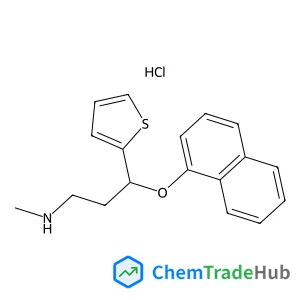
N-Methyl-3-(1-naphthyloxy)-3-(2-thienyl)-1-propanamine hydrochloride (1:1)
CAS番号:
1188266-11-6
分子式:
C18H20ClNOS

![1-oxaspiro[4.4]nonan-6-one structure](https://static.chemtradehub.com/structs/134/134179-01-4-e051.webp "1-oxaspiro[4.4]nonan-6-one structure")
おすすめサプライヤー






免責事項
このページに表示される学術雑誌情報は、参考および研究目的のみを目的としています。当社は雑誌出版社とは提携しておらず、投稿の取り扱いも行っておりません。出版に関するお問い合わせは、各雑誌出版社に直接ご連絡ください。
表示されている情報に誤りがある場合は、support@chemtradehub.com までご連絡ください。迅速に確認し、対応いたします。