












Influence of the MACl additive on grain boundaries, trap-state properties, and charge dynamics in perovskite solar cells
文献情報
出版日
2021-02-20
DOI
10.1039/D0CP06575G
インパクトファクター
3.676
著者
Yanru Guo, Shuai Yuan, Dongping Zhu, Man Yu, Hao-Yi Wang, Jun Lin, Yi Wang, Yujun Qin, Jian-Ping Zhang, Xi-Cheng Ai
原文を見る
要旨
Grain boundary trap passivation in perovskite films has become one of the most effective strategies for suppressing the charge recombination and enhancing the photovoltaic performance of perovskite solar cells, whereas the relevant trap-state properties and the charge carrier dynamics need to be further clarified. In this work, the CH3NH3Cl (MACl) additive is introduced into the MAI:PbI2 precursor solution to obtain perovskite films comprising various grain sizes with distinct grain boundaries and trap-state properties. The influence of grain boundary traps passivated with the MACl additive on trap-state properties and charge carrier transport/recombination dynamics is systematically studied with time-resolved spectroscopic and transient photoelectric characterization. Specifically, the MACl amount determines the content of the PbI2 residual in the final perovskite, leading to photoluminescence quenching induced by charge transfer. The trap-state distribution result reveals that the deep-level traps at the grain boundaries as the main sources of charge recombination centers are dramatically passivated. Low-temperature photoluminescence spectroscopy distinguishes and compares the trap-state emission related to different perovskite phases. Transient photoelectric measurements including photovoltage decay and charge extraction further demonstrate that the boundary trap passivation can effectively promote charge transport and inhibit charge recombination in devices treated with the optimized MACl amount. As a result, the corresponding device possesses superior photovoltaic parameters to the control device. This work proposes a systematic understanding of the grain boundary trap passivation strategy and provides a new insight into the development of high-performance perovskite solar cells.
関連文献
Photocatalytic decomposition of graphene over a ZnO surface under UV irradiation
Dae-Hwa Mun, Hyun Jung Lee, Sukang Bae
2015-05-12
Communication
DOI: 10.1039/C5CP01670C
Methyl-branched lipids promote the membrane adsorption of α-synuclein by enhancing shallow lipid-packing defects
Romain Gautier, Luc Bousset, Ronald Melki, Stefano Vanni
2015-03-23
Paper
DOI: 10.1039/C5CP00244C
Interaction of 4-imidazolemethanol with a copper electrode revealed by isotope-edited SERS and theoretical modeling
Ieva Matulaitienė, Eglė Pociūtė, Zenonas Kuodis, Olegas Eicher-Lorka, Gediminas Niaura
2015-05-28
Paper
DOI: 10.1039/C5CP01290B
Photocatalytic reduction of triclosan on Au–Cu2O nanowire arrays as plasmonic photocatalysts under visible light irradiation
Junfeng Niu, Yunrong Dai, Lifeng Yin, Jianying Shang, John C. Crittenden
2015-06-02
Paper
DOI: 10.1039/C5CP02244D
Interplay of donor–acceptor interactions in stabilizing boron nitride compounds: insights from theory
Mohammad R. Momeni, Lisa Shulman, Eric Rivard, Alex Brown
2015-05-27
Paper
DOI: 10.1039/C5CP01993A
An important impact of the molecule–electrode coupling asymmetry on the efficiency of bias-driven redox processes in molecular junctions
2015-05-06
Paper
DOI: 10.1039/C5CP01805F
A new two-dimensional metal–organic framework with high spin-filtering efficiency
Bikash Mandal, Pranab Sarkar
2015-06-08
Paper
DOI: 10.1039/C5CP01359C
First principles study on stability and hydrogen adsorption properties of Mg/Ti interface
J. H. Dai, R. W. Xie, Y. Y. Chen, Y. Song
2015-05-27
Paper
DOI: 10.1039/C5CP02005K
Size and polydispersity trends found in gold nanoparticles synthesized by laser ablation in liquids
J. Tomko, J. J. Naddeo, R. Jimenez, Y. Tan, M. Steiner, J. M. Fitz-Gerald, D. M. Bubb, S. M. O'Malley
2015-05-27
Paper
DOI: 10.1039/C5CP01965F
こちらもおすすめ
化合物よくある質問
カルボニル基が付いた5-氰基-1-{[(2-メチル-2-プロpanyl)オキシ]カーボンイル}1H-吲哚-2-イリド-2-ボリン酸はどのように保存すればよいですか?
カルボニル基が付いた5-氰基-1-{[(2-メチル-2-プロpanyl)オキシ]カーボンイル}1H-吲哚-2-イリド-2-ボリン酸は、直射日光を避けて室温(15...
475102-15-9(5-Cyano-1-{[(2-meth...
化合物よくある質問
tert-ブチル2-クロロメチルピリジン-3-基炭酸エステルの市場動向や研究トレンドはどうですか?
この化合物は合成化学分野において、特にピリジン化合物の合成や改良に用いられます。最近の研究では、ピリジン化合物の新規合成法や特性の改良が注目されています。市場動...
1203498-98-9tert-Butyl 2-chloro-...
化合物よくある質問
聚二季戊四醇六丙烯酸酯はどの業界で使用されていますか?
聚二季戊四醇六丙烯酸酯は、医薬品、ポリマー、センサー、半導体などの業界で広く使用されています。特にポリマー業界では硬化剤として、医薬分野では医療機器の製造に使用...
29570-58-93-(Acryloyloxy)-2-({...
化合物よくある質問
1-氯-5-硝基异喹啉の市場動向や研究トレンドはどうですか?
1-氯-5-硝基异喹啉は、薬理学や合成化学の研究分野で注目されています。市場動向としては、その生物学的な活性や合成可能性を評価する研究が増えています。また、代替...
58142-97-51-Chloro-5-nitroisoq...
化合物よくある質問
2-チロール-5-メチルスルフェニル-3-trifルオルメチルベンゼンはどのように合成されますか?
2-チロール-5-メチルスルフェニル-3-trifルオルメチルベンゼンは、トリフルオロメチル化反応と硫化反応を経て合成されます。通常、トリフルオロメチル化剤と硫...
957066-04-51-Chloro-4-(methylsu...
化合物よくある質問
p-トールイルマグネシウムブロミドの物理化学的性質は何ですか?
p-トールイルマグネシウムブロミドのCAS番号は4294-57-9です。この化合物は白色の結晶性粉末で、分子量は204.32です。溶剤中で良好に溶解しますが、水...
4294-57-9p-Tolylmagnesium bro...
化合物よくある質問
1-(5-甲基-2-硫化素基)プロパン-1-酮の市場動向や研究トレンドはどうですか?
1-(5-甲基-2-硫化素基)プロパン-1-酮の市場動向は、化学産業全体の需要に影響を受けますが、最近では pharmaceutical 分野での応用が注目され...
59303-13-81-(5-Methyl-2-thieny...
化合物よくある質問
十一碳烯酰甘氨酸を取り扱う際の実験室安全事項は何ですか?
十一碳烯酰甘氨酸は吸入や皮膚から吸収されることがあり、取り扱う際には防塵マスクと手袋を使用してください。ドラフトチャンバーを用いて漏洩を処理し、適切なSDS(S...
54301-26-7N-10-Undecenoylglyci...
化合物よくある質問
1H,1H-全氟-3,6-二氧杂葵-1-醇を取り扱う際の実験室安全事項は何ですか?
この化合物は吸入や皮膚吸収による毒性があるため、防塵マスク、ゴーグル、防護手袋を使用する必要があります。ドラフトチャンバーでの操作が必要です。漏洩時には即座に換...
152914-73-32,2-Difluoro-2-[1,1,...
化合物よくある質問
3-(4-(フルオロメチルオキシ)フェニル)-1,2,4-オキサジアゾール-5-カルボハイドライドは安全ですか?
安全性は化合物の使用方法によります。直接的な毒性は報告されていませんが、吸入や皮膚接触には注意が必要です。適切な防護服を着用し、換気を図ることを推奨します。
883028-82-83-(4-(Trifluorometho...
掲載誌
Physical Chemistry Chemical Physics

CiteScore:
5.5
自己引用率:
10.3%
年間論文数:
3036
Physical Chemistry Chemical Physics (PCCP) is an international journal co-owned by 19 physical chemistry and physics societies from around the world. This journal publishes original, cutting-edge research in physical chemistry, chemical physics and biophysical chemistry. To be suitable for publication in PCCP, articles must include significant innovation and/or insight into physical chemistry; this is the most important criterion that reviewers and Editors will judge against when evaluating submissions. The journal has a broad scope and welcomes contributions spanning experiment, theory, computation and data science. Topical coverage includes spectroscopy, dynamics, kinetics, statistical mechanics, thermodynamics, electrochemistry, catalysis, surface science, quantum mechanics, quantum computing and machine learning. Interdisciplinary research areas such as polymers and soft matter, materials, nanoscience, energy, surfaces/interfaces, and biophysical chemistry are welcomed if they demonstrate significant innovation and/or insight into physical chemistry. Joined experimental/theoretical studies are particularly appreciated when complementary and based on up-to-date approaches.
おすすめ化合物
![1,10-bis(3,5-dimethylphenyl)-12-hydroxy-4,5,6,7-tetrahydroiindeno[7,1-de:1',7'-fg][1,3,2]dioxaphosphocine 12-oxide structure](https://static.chemtradehub.com/structs/141/1412439-82-7-b9a9.webp "1,10-bis(3,5-dimethylphenyl)-12-hydroxy-4,5,6,7-tetrahydroiindeno[7,1-de:1',7'-fg][1,3,2]dioxaphosphocine 12-oxide structure")
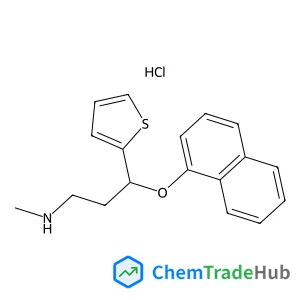
N-Methyl-3-(1-naphthyloxy)-3-(2-thienyl)-1-propanamine hydrochloride (1:1)
CAS番号:
1188266-11-6
分子式:
C18H20ClNOS
おすすめサプライヤー





免責事項
このページに表示される学術雑誌情報は、参考および研究目的のみを目的としています。当社は雑誌出版社とは提携しておらず、投稿の取り扱いも行っておりません。出版に関するお問い合わせは、各雑誌出版社に直接ご連絡ください。
表示されている情報に誤りがある場合は、support@chemtradehub.com までご連絡ください。迅速に確認し、対応いたします。