












Controlling microgel deformation via deposition method and surface functionalization of solid supports
文献情報
出版日
2021-02-15
DOI
10.1039/D0CP06355J
インパクトファクター
3.676
著者
Laura Hoppe Alvarez, Pia Lenssen, Ulrich Simon, Dominik Wöll
原文を見る
要旨
Soft matter at solid–liquid interfaces plays an important role in multiple scientific disciplines as well as in various technological fields. For microgels, representing highly interesting soft matter systems, we demonstrate that the preparation method, i.e. the way how the microgel is applied to the specific surface, plays a key role. Focusing on the three most common sample preparation methods (spin-coating, drop-casting and adsorption from solution), we performed a comparative study of the deformation behavior of microgels at the solid–liquid interface on three different surfaces with varying hydrophilicities. For in situ visualization of the deformation of pNIPMAM microgels, we conducted highly sensitive 3D super resolution fluorescence microscopy methods. We furthermore performed complementary molecular dynamics simulations to determine the driving force responsible for the deformation depending on the surface and the deposition method. The combination of experiments and simulations revealed that the simulated equilibrium structure obtained after simulation of the completely dry microgel after deposition is retained after rehydration and subsequent fluorescent imaging.
関連文献
Combustion resistance of the 129Xe hyperpolarized nuclear spin state
Karl F. Stupic, Joseph S. Six, Michael D. Olsen, Galina E. Pavlovskaya, Thomas Meersmann
2012-11-06
Communication
DOI: 10.1039/C2CP43382F
Formation and infrared absorption of protonated naphthalenes (1-C10H9+ and 2-C10H9+) and their neutral counterparts in solid para-hydrogen
Mohammed Bahou, Yu-Jong Wu
2012-12-03
Paper
DOI: 10.1039/C2CP43143B
Switching of emissive and NLO properties in push–pull chromophores with crescent PPV-like structures
Carmine Coluccini, Arvind K. Sharma, Marco Caricato, Angelo Sironi, Elena Cariati, Stefania Righetto, Elisa Tordin, Chiara Botta, Alessandra Forni
2012-11-26
Paper
DOI: 10.1039/C2CP43140H
P(VDF-TrFE) ferroelectric nanotube array for high energy density capacitor applications
Yee-Fun Lim, Kui Yao, Francis Eng Hock Tay, Kar Heng Seah
2012-11-21
Paper
DOI: 10.1039/C2CP43873A
Glycine conformers: a never-ending story?
Vincenzo Barone, Malgorzata Biczysko, Cristina Puzzarini
2012-11-30
Communication
DOI: 10.1039/C2CP43884D
A comparative VCD study of methyl mandelate in methanol, dimethyl sulfoxide, and chloroform: explicit and implicit solvation models
Mohammad Reza Poopari, Zahra Dezhahang, Yunjie Xu
2012-11-30
Paper
DOI: 10.1039/C2CP42722B
Proton conductivity of columnar ceria thin-films grown by chemical vapor deposition
Tae-Sik Oh, David A. Boyd, David G. Goodwin
2012-12-03
Paper
DOI: 10.1039/C2CP43036C
Exploring a charge-central strategy in the solution of Poisson's equation for biomolecular applications
Jun Wang, Zhilin Li, Hongkai Zhao
2012-10-24
Paper
DOI: 10.1039/C2CP41894K
Deeply-cooled water under strong confinement: neutron scattering investigations and the liquid–liquid critical point hypothesis
Christopher E. Bertrand, Yang Zhang, Sow-Hsin Chen
2012-11-26
Perspective
DOI: 10.1039/C2CP43235H
Tuning the photodriven electron transport within the columnar perylenediimide stacks by changing the π-extent of the electron donors
Mustafa Supur
2013-01-03
Paper
DOI: 10.1039/C2CP44106C
こちらもおすすめ
化合物よくある質問
3-(2-オキサプロピル)ベンzoic酸はどのように合成されますか?
3-(2-オキサプロピル)ベンzoic酸は、ベンzoic酸とプロパノ酸をヒドロキシム化合物として反応させて生成します。具体的には、ベンzoic酸とプロパノ酸を反...
205927-63-53-(2-Oxopropyl)benzo...
114873-01-73-Fluoro-N-{[(2-meth...
化合物よくある質問
4-メチル-4-ピペリジニル-1-ピロリドイン甲酸の主な用途は何ですか?
4-メチル-4-ピペリジニル-1-ピロリドイン甲酸は、主に医薬品の合成材料や研究用物質として使用されます。さらに、一部の薬理学的研究にも応用されています。
885523-47-7(4-Methyl-4-piperidi...
化合物よくある質問
Biotin-PEG3-oxyamine HCl塩について、適切な化合物名称に適用される法規ガイドラインは何ですか?
Biotin-PEG3-oxyamine HCl塩は、GHS( Globally Harmonized System of Classification and...
1786206-22-1Biotin-PEG3-oxyamine...
化合物よくある質問
N-(4-イソチオシアネートフェニル)-2-メトキシアリニンはどのように合成されますか?
N-(4-イソチオシアネートフェニル)-2-メトキシアリニンは、4-イソチオシアノフェノールと2-メトキシアリニルアミンのアミニド反応を用いて合成されます。この...
915919-57-2N-(4-Isothiocyanatop...
化合物よくある質問
金粉蕨亭2'-O-葡萄糖甙の主な用途は何ですか?
金粉蕨亭2'-O-葡萄糖甙は主に薬理研究や医薬品製造に使用され、抗炎症作用や抗がん作用などがあります。また、その構造や性質から、合成化学や化学生理学の研究にも用...
76947-60-92-(7-Hydroxy-2,2,4,6...
化合物よくある質問
2-(2-ニトロフェニル)酢酸ヒドライドの物理化学的性質は何ですか?
2-(2-ニトロフェニル)酢酸ヒドライドのCAS番号は114953-81-0です。この化合物は白色結晶性粉末で、分子量は244.12です。水溶性は限られており、...
114953-81-02-(2-Nitrophenyl)ace...
化合物よくある質問
5-(ヒドロキシメチル)-2-チオキソ-2,3-ジヒドロピリミジン-4(1H)-オンを取り扱う際の実験室安全事項は何ですか?
この化合物は高活性のため、取り扱いには注意が必要です。PPE(個人保護具)としてゴーグル、ガントリー、および防滴シールドを着用することが推奨されます。ドラフトチ...
93185-31-05-(Hydroxymethyl)-2-...
化合物よくある質問
11-脱氢血栓烷 b2の市場動向や研究トレンドはどうですか?
11-脱氢血栓烷 b2は、血栓溶解・抗凝固作用に関する研究で注目を集めています。特に心血管疾患の治療法開発において、市場の需要が高まっています。研究トレンドとし...
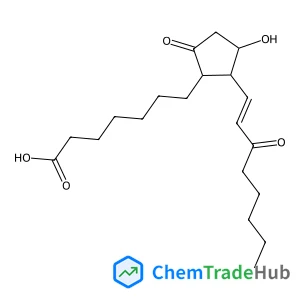
67910-12-77-{(2R,3S,4S)-4-Hydr...
化合物よくある質問
3,3-二甲基哌啶-4-酮はどのように保存すればよいですか?
3,3-二甲基哌啶-4-酮は避光、常温、乾燥した場所で保存してください。容器は密閉し、遠くから火源を離して保管することを確認してください。
150668-82-93,3-Dimethyl-4-piper...
掲載誌
Physical Chemistry Chemical Physics

CiteScore:
5.5
自己引用率:
10.3%
年間論文数:
3036
Physical Chemistry Chemical Physics (PCCP) is an international journal co-owned by 19 physical chemistry and physics societies from around the world. This journal publishes original, cutting-edge research in physical chemistry, chemical physics and biophysical chemistry. To be suitable for publication in PCCP, articles must include significant innovation and/or insight into physical chemistry; this is the most important criterion that reviewers and Editors will judge against when evaluating submissions. The journal has a broad scope and welcomes contributions spanning experiment, theory, computation and data science. Topical coverage includes spectroscopy, dynamics, kinetics, statistical mechanics, thermodynamics, electrochemistry, catalysis, surface science, quantum mechanics, quantum computing and machine learning. Interdisciplinary research areas such as polymers and soft matter, materials, nanoscience, energy, surfaces/interfaces, and biophysical chemistry are welcomed if they demonstrate significant innovation and/or insight into physical chemistry. Joined experimental/theoretical studies are particularly appreciated when complementary and based on up-to-date approaches.
おすすめ化合物
おすすめサプライヤー






免責事項
このページに表示される学術雑誌情報は、参考および研究目的のみを目的としています。当社は雑誌出版社とは提携しておらず、投稿の取り扱いも行っておりません。出版に関するお問い合わせは、各雑誌出版社に直接ご連絡ください。
表示されている情報に誤りがある場合は、support@chemtradehub.com までご連絡ください。迅速に確認し、対応いたします。