![Benzyl spiro[indole-3,4'-piperidine]-1(2H)-carboxylate hydrochloride (1:1) structure](https://static.chemtradehub.com/structs/159/159635-46-8-8de0.webp "Benzyl spiro[indole-3,4'-piperidine]-1(2H)-carboxylate hydrochloride (1:1) structure")
Benzyl spiro[indole-3,4'-piperidine]-1(2H)-carboxylate hydrochloride (1:1)
CAS番号:
159635-46-8
分子式:
C20H23ClN2O2
Xi Chen, Hidehiro Sakurai, Huan Wang, Simeng Gao, Hong-Da Bi
Computational analyses of the solid-state properties of triazasumanene (TAS), a C3-symmetric nitrogen-doped sumanene derivative, were carried out in this work. The present studies are mainly divided into two parts. In the first part, we demonstrated the differences in the interactions of the crystal packing between the racemic and the homochiral structures: the former having perpendicular columnar packing and the latter forming slipped helical packing. Two geometries of the TAS monomer, a theoretically optimized structure under vacuum and an X-ray crystal structure in experiment, were compared. It can be found that it is not the total interaction energy, but the local interactions (mainly the electrostatic interactions) of the molecular dimer that dominate the columnar stacking conformation. The second part involves the investigation of the potential charge transport properties of the crystals according to the semiclassical Marcus theory with the hopping mechanism using the simple dimer model. The charge transfer integrals of the two sets of dimers, racemic and homochiral dimer models, were compared as well. The calculation results show that the TAS racemic crystal was predicted to have an advantage of hole transport properties. The perpendicular columnar stacking of the homochiral conformation should essentially have better charge transport properties than the racemic conformation. It is reasonable to employ the simple dimer model built using optimized monomers under vacuum for the purpose of the prediction of the molecular packing conformation by IES calculation and the charge transport properties of the perpendicular columnar-stacking crystal. Our work provides a simple approach to the deep understanding of the structure–property relationship of bowl-shaped molecular systems in theory. It can help to facilitate the design and preparation of heteroatom-doped sumanene derivatives with perpendicular columnar stacking crystals as novel organic semiconductor materials.
Zhenghua Li, Fulin Wei, Satoru Yoshimura, Guoqing Li, Hidefumi Asano, Hitoshi Saito
DOI: 10.1039/C2CP42868G
Daniel Cardoso Rodrigues, Gustavo Fernandes Souza Andrade, Marcia Laudelina Arruda Temperini
DOI: 10.1039/C2CP43229C
Yifeng Liao, Emily Hoffman, Markus Wimmer, Alfons Fischer, Joshua Jacobs, Laurence Marks
DOI: 10.1039/C2CP42968C
Sergei Manzhos, Hiroshi Segawa, Koichi Yamashita
DOI: 10.1039/C2CP43448B
Kęstutis Aidas, Hans Ågren, Jacob Kongsted
DOI: 10.1039/C2CP41993A
Gernot Engler, Kai Seefeld, Michael Schmitt, Jörg Tatchen, Oliver Grotkopp, Thomas J. J. Müller, Karl Kleinermanns
DOI: 10.1039/C2CP42859H
Aleix Comas-Vives, Jochen Bandlow, Timo Jacob
DOI: 10.1039/C2CP43054A
Weiqi Li, Xin Zhou, Wei Quan Tian, Xiudong Sun
DOI: 10.1039/C2CP43536E
Yufan He, Maolin Lu, H. Peter Lu
DOI: 10.1039/C2CP42944F
Deniz Sezer
DOI: 10.1039/C2CP42430D
3-(2-オキサプロピル)ベンzoic酸は、ベンzoic酸とプロパノ酸をヒドロキシム化合物として反応させて生成します。具体的には、ベンzoic酸とプロパノ酸を反...
4-メチル-4-ピペリジニル-1-ピロリドイン甲酸は、主に医薬品の合成材料や研究用物質として使用されます。さらに、一部の薬理学的研究にも応用されています。
Biotin-PEG3-oxyamine HCl塩は、GHS( Globally Harmonized System of Classification and...
N-(4-イソチオシアネートフェニル)-2-メトキシアリニンは、4-イソチオシアノフェノールと2-メトキシアリニルアミンのアミニド反応を用いて合成されます。この...
金粉蕨亭2'-O-葡萄糖甙は主に薬理研究や医薬品製造に使用され、抗炎症作用や抗がん作用などがあります。また、その構造や性質から、合成化学や化学生理学の研究にも用...
2-(2-ニトロフェニル)酢酸ヒドライドのCAS番号は114953-81-0です。この化合物は白色結晶性粉末で、分子量は244.12です。水溶性は限られており、...
この化合物は高活性のため、取り扱いには注意が必要です。PPE(個人保護具)としてゴーグル、ガントリー、および防滴シールドを着用することが推奨されます。ドラフトチ...
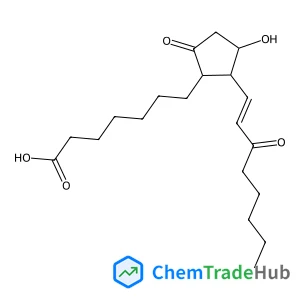
11-脱氢血栓烷 b2は、血栓溶解・抗凝固作用に関する研究で注目を集めています。特に心血管疾患の治療法開発において、市場の需要が高まっています。研究トレンドとし...
3,3-二甲基哌啶-4-酮は避光、常温、乾燥した場所で保存してください。容器は密閉し、遠くから火源を離して保管することを確認してください。

Physical Chemistry Chemical Physics (PCCP) is an international journal co-owned by 19 physical chemistry and physics societies from around the world. This journal publishes original, cutting-edge research in physical chemistry, chemical physics and biophysical chemistry. To be suitable for publication in PCCP, articles must include significant innovation and/or insight into physical chemistry; this is the most important criterion that reviewers and Editors will judge against when evaluating submissions. The journal has a broad scope and welcomes contributions spanning experiment, theory, computation and data science. Topical coverage includes spectroscopy, dynamics, kinetics, statistical mechanics, thermodynamics, electrochemistry, catalysis, surface science, quantum mechanics, quantum computing and machine learning. Interdisciplinary research areas such as polymers and soft matter, materials, nanoscience, energy, surfaces/interfaces, and biophysical chemistry are welcomed if they demonstrate significant innovation and/or insight into physical chemistry. Joined experimental/theoretical studies are particularly appreciated when complementary and based on up-to-date approaches.