












![[4-Chloro-3-(diethylcarbamoyl)phenyl]boronic acid structure](https://static.chemtradehub.com/structs/871/871332-68-2-0e3b.webp "[4-Chloro-3-(diethylcarbamoyl)phenyl]boronic acid structure")
Cooperative roles of chemical reactions and mechanical friction in chemical mechanical polishing of gallium nitride assisted by OH radicals: tight-binding quantum chemical molecular dynamics simulations
文献情報
出版日
2021-01-06
DOI
10.1039/D0CP05826B
インパクトファクター
3.676
著者
Kentaro Kawaguchi, Yusuke Ootani, Yuji Higuchi, Nobuki Ozawa
原文を見る
要旨
Chemical mechanical polishing (CMP) is a key manufacturing process for applying gallium nitride (GaN), especially the Ga-face GaN, to semiconductor devices such as laser diodes. However, the CMP efficiency for GaN is very low due to its high hardness and chemical stability. Experimentally, OH radicals appear able to improve the CMP efficiency of GaN polished by a SiO2 abrasive grain, whereas the mechanisms of the OH-radical-assisted CMP process remain unclear because experimental elucidation of the complex chemical reactions occurring among GaN substrate, abrasive grain, and OH radicals is difficult. In this work, we used our previously developed tight-binding quantum chemical molecular dynamics simulator to study the OH-radical-assisted CMP process of the widely employed Ga-face GaN substrate polished by an amorphous SiO2 abrasive grain in an effort to understand how OH radicals assist the CMP process and then aid the development of next-generation CMP techniques. Our simulations revealed that the OH-radical-assisted CMP process of GaN occurs via the following three basic reaction steps: (i) first, all hydrogen terminations on the GaN surface are replaced by OH terminations through continuous reactions with OH radicals; (ii) after the substrate is fully terminated by OH, the hydrogen atoms of these OH terminations are removed by reacting with newly added OH radicals, which forms H2O molecules and leaves energetic oxygen atoms with dangling bonds on the surface; and (iii) finally, these energetic oxygen atoms intrude inside the substrate with concomitant dissociation of Ga–N bonds and the generation of N2 and gallium hydroxide molecules, which accumulatively lead to the removal of N and Ga atoms from the substrate.
関連文献
The first dehydration and the competing reaction pathways of glucose homogeneously and heterogeneously catalyzed by acids
David Lee Phillips
2013-01-03
Paper
DOI: 10.1039/C2CP43644B
Effect of nuclear vibrations, temperature, co-adsorbed water, and dye orientation on light absorption, charge injection and recombination conditions in organic dyes on TiO2
Sergei Manzhos, Hiroshi Segawa, Koichi Yamashita
2012-11-23
Paper
DOI: 10.1039/C2CP43448B
Theoretical predictions for hexagonal BN based nanomaterials as electrocatalysts for the oxygen reduction reaction
2012-12-17
Paper
DOI: 10.1039/C2CP42907A
Ordered mesoporous boron-doped carbons as metal-free electrocatalysts for the oxygen reduction reaction in alkaline solution
Xiangjie Bo, Liping Guo
2012-11-27
Paper
DOI: 10.1039/C2CP43541A
Low-energy electron scattering by cellulose and hemicellulose components
Eliane M. de Oliveira, Romarly F. da Costa, Sergio d'A. Sanchez, Alexandra P. P. Natalense, Márcio H. F. Bettega, Márcio T. do N. Varella
2012-11-26
Paper
DOI: 10.1039/C2CP43375C
Temperature-controlled self-assembling structure with selective guest-recognition at the liquid–solid interface
Chunhua Liu, Yunzhi Xie, Xiaokang Li, Xun Li, Xiaolin Fan, Ke Deng, Qingdao Zeng, Chen Wang
2012-10-24
Paper
DOI: 10.1039/C2CP43244G
Excited-state dynamics of porphyrin–naphthalenediimide–porphyrin triads
Diego Villamaina, Sheshanath V. Bhosale, Steven J. Langford, Eric Vauthey
2012-11-21
Paper
DOI: 10.1039/C2CP43595K
Coherent transient spectroscopy with continuous wave quantum cascade lasers
James M. R. Kirkbride, Sarah K. Causier, Elin A. McCormack, Grant A. D. Ritchie
2013-01-04
Paper
DOI: 10.1039/C2CP44116K
Quantification of silanol sites for the most common mesoporous ordered silicas and organosilicas: total versus accessible silanols
Matthias Ide, Mohamad El-Roz, Els De Canck, Aurélie Vicente, Tom Planckaert, Isabel Van Driessche, Frédéric Lynen, Veronique Van Speybroeck, Frédéric Thybault-Starzyk, Pascal Van Der Voort
2012-11-07
Paper
DOI: 10.1039/C2CP42811C
SERS performance of gold nanotubes obtained by sputtering onto polycarbonate track-etched membranes
Daniel Cardoso Rodrigues, Gustavo Fernandes Souza Andrade, Marcia Laudelina Arruda Temperini
2012-11-20
Paper
DOI: 10.1039/C2CP43229C
こちらもおすすめ
化合物よくある質問
3-(2-オキサプロピル)ベンzoic酸はどのように合成されますか?
3-(2-オキサプロピル)ベンzoic酸は、ベンzoic酸とプロパノ酸をヒドロキシム化合物として反応させて生成します。具体的には、ベンzoic酸とプロパノ酸を反...
205927-63-53-(2-Oxopropyl)benzo...
114873-01-73-Fluoro-N-{[(2-meth...
化合物よくある質問
4-メチル-4-ピペリジニル-1-ピロリドイン甲酸の主な用途は何ですか?
4-メチル-4-ピペリジニル-1-ピロリドイン甲酸は、主に医薬品の合成材料や研究用物質として使用されます。さらに、一部の薬理学的研究にも応用されています。
885523-47-7(4-Methyl-4-piperidi...
化合物よくある質問
Biotin-PEG3-oxyamine HCl塩について、適切な化合物名称に適用される法規ガイドラインは何ですか?
Biotin-PEG3-oxyamine HCl塩は、GHS( Globally Harmonized System of Classification and...
1786206-22-1Biotin-PEG3-oxyamine...
化合物よくある質問
N-(4-イソチオシアネートフェニル)-2-メトキシアリニンはどのように合成されますか?
N-(4-イソチオシアネートフェニル)-2-メトキシアリニンは、4-イソチオシアノフェノールと2-メトキシアリニルアミンのアミニド反応を用いて合成されます。この...
915919-57-2N-(4-Isothiocyanatop...
化合物よくある質問
金粉蕨亭2'-O-葡萄糖甙の主な用途は何ですか?
金粉蕨亭2'-O-葡萄糖甙は主に薬理研究や医薬品製造に使用され、抗炎症作用や抗がん作用などがあります。また、その構造や性質から、合成化学や化学生理学の研究にも用...
76947-60-92-(7-Hydroxy-2,2,4,6...
化合物よくある質問
2-(2-ニトロフェニル)酢酸ヒドライドの物理化学的性質は何ですか?
2-(2-ニトロフェニル)酢酸ヒドライドのCAS番号は114953-81-0です。この化合物は白色結晶性粉末で、分子量は244.12です。水溶性は限られており、...
114953-81-02-(2-Nitrophenyl)ace...
化合物よくある質問
5-(ヒドロキシメチル)-2-チオキソ-2,3-ジヒドロピリミジン-4(1H)-オンを取り扱う際の実験室安全事項は何ですか?
この化合物は高活性のため、取り扱いには注意が必要です。PPE(個人保護具)としてゴーグル、ガントリー、および防滴シールドを着用することが推奨されます。ドラフトチ...
93185-31-05-(Hydroxymethyl)-2-...
化合物よくある質問
11-脱氢血栓烷 b2の市場動向や研究トレンドはどうですか?
11-脱氢血栓烷 b2は、血栓溶解・抗凝固作用に関する研究で注目を集めています。特に心血管疾患の治療法開発において、市場の需要が高まっています。研究トレンドとし...
67910-12-77-{(2R,3S,4S)-4-Hydr...
化合物よくある質問
3,3-二甲基哌啶-4-酮はどのように保存すればよいですか?
3,3-二甲基哌啶-4-酮は避光、常温、乾燥した場所で保存してください。容器は密閉し、遠くから火源を離して保管することを確認してください。
150668-82-93,3-Dimethyl-4-piper...
掲載誌
Physical Chemistry Chemical Physics

CiteScore:
5.5
自己引用率:
10.3%
年間論文数:
3036
Physical Chemistry Chemical Physics (PCCP) is an international journal co-owned by 19 physical chemistry and physics societies from around the world. This journal publishes original, cutting-edge research in physical chemistry, chemical physics and biophysical chemistry. To be suitable for publication in PCCP, articles must include significant innovation and/or insight into physical chemistry; this is the most important criterion that reviewers and Editors will judge against when evaluating submissions. The journal has a broad scope and welcomes contributions spanning experiment, theory, computation and data science. Topical coverage includes spectroscopy, dynamics, kinetics, statistical mechanics, thermodynamics, electrochemistry, catalysis, surface science, quantum mechanics, quantum computing and machine learning. Interdisciplinary research areas such as polymers and soft matter, materials, nanoscience, energy, surfaces/interfaces, and biophysical chemistry are welcomed if they demonstrate significant innovation and/or insight into physical chemistry. Joined experimental/theoretical studies are particularly appreciated when complementary and based on up-to-date approaches.
おすすめ化合物
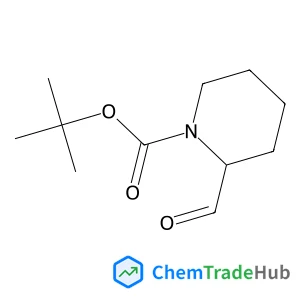
![2-Methyl-2-propanyl [(2S)-1-hydroxy-3-(4-hydroxyphenyl)-2-propanyl]carbamate structure](https://static.chemtradehub.com/structs/833/83345-46-4-eec2.webp "2-Methyl-2-propanyl [(2S)-1-hydroxy-3-(4-hydroxyphenyl)-2-propanyl]carbamate structure")
おすすめサプライヤー




免責事項
このページに表示される学術雑誌情報は、参考および研究目的のみを目的としています。当社は雑誌出版社とは提携しておらず、投稿の取り扱いも行っておりません。出版に関するお問い合わせは、各雑誌出版社に直接ご連絡ください。
表示されている情報に誤りがある場合は、support@chemtradehub.com までご連絡ください。迅速に確認し、対応いたします。