


![[4-(Isobutyrylamino)phenyl]boronic acid structure](https://static.chemtradehub.com/structs/874/874219-50-8-6ab5.webp "[4-(Isobutyrylamino)phenyl]boronic acid structure")
Anchoring a bow-shaped boron single chain in binary Be6B7− cluster: hybrid octagonal ring, multifold π/σ aromaticity, and dual electronic transmutation
文献情報
出版日
2020-11-09
DOI
10.1039/D0CP05012A
インパクトファクター
3.676
著者
Lin-Yan Feng, Kang Wang, Hua-Jin Zhai
原文を見る
要旨
Elemental boron clusters do not form linear chain or monocyclic ring structures, which is in contrast to carbon. Based on computer global searches and quantum chemical calculations, we report on the viability of a curved boron single chain in binary Be6B7− cluster. The boron motif assumes a bow shape, being anchored on a Be6 prism. Such a motif, which appears to be highly strained in its free-standing form, is exotic in boron-based clusters and nanostructures. Chemically, the cluster is analogous to a “clam-and-pearl-chain” system at the nanoscale (about 1 nm in size), in which a Be6 clam moderately opens its mouth, except that a B7 pearl chain is too large to be encapsulated inside. The picture differs from a three-layered sandwich. This cluster features a hybrid Be2B7 monocyclic ring, which is octagonal in nature and supports double 10π/6σ aromaticity. The number of π bonds substantially surpasses that in bare boron clusters of similar sizes. Two Be3 rings in the prism are also σ aromatic, albeit with effective 1σ/1σ electron-counting only. The unique multifold 1σ/10π/6σ/1σ aromaticity governs the geometry of the Be6B7− cluster, which can also be rationalized using the concept of dual electronic transmutation.
おすすめジャーナル

Russian Journal of Organic Chemistry

Chemical Communications

Drug Discovery Today

Russian Journal of Coordination Chemistry

Saudi Pharmaceutical Journal

Chemistry Education Research and Practice

Russian Journal of Applied Chemistry

Russian Journal of Bioorganic Chemistry

New Journal of Chemistry

Journal of Saudi Chemical Society
関連文献
Sulfonated N-heterocyclic carbenes for Suzuki coupling in water
Christoph Fleckenstein, Sutapa Roy, Steffen Leuthäußer, Herbert Plenio
2007-05-02
Communication
DOI: 10.1039/B703658B
An azido–CuII–triazolate complex with utp-type topological network, showing spin-canted antiferromagnetism
Jian-Rong Li, Qun Yu, E. Carolina Sañudo, Ying Tao, Xian-He Bu
2007-04-12
Communication
DOI: 10.1039/B702988H
The selective trimerisation of isoprene with chromium N,N-bis(diarylphosphino)amine catalysts
Lucy E. Bowen, Manutsavin Charernsuk, Duncan F. Wass
2007-05-01
Communication
DOI: 10.1039/B702331F
Rhodium-catalyzed enantioselective desymmetrization of bicyclic hydrazines with alkynylboronic esters
Stefano Crotti, Ferruccio Bertolini, Franco Macchia, Mauro Pineschi
2008-05-08
Communication
DOI: 10.1039/B803693D
Synthesis of α-keto esters by the rhodium-catalysed reaction of cyanoformate with arylboronic acids
Hiroshi Shimizu, Masahiro Murakami
2007-04-26
Communication
DOI: 10.1039/B704105E
Supported ionic liquidcatalyst (Pd-SILC) for highly efficient and recyclable Suzuki–Miyaura reaction
Hisahiro Hagiwara, Keon Hyeok Ko, Takashi Hoshi, Toshio Suzuki
2007-05-01
Communication
DOI: 10.1039/B704098A
Elaboration of nanohybrid materials by photopolymerisation of 3,4-ethylenedioxythiophene on TiO2
Fabrice Goubard, Pierre-Henri Aubert, Kada Boukerma, Emmanuel Pauthe, Claude Chevrot
2008-05-09
Communication
DOI: 10.1039/B800754C
Room temperature fabrication of porous ZnO photoelectrodes for flexible dye-sensitized solar cells
Xizhe Liu, Yanhong Luo, Hong Li, Yuzun Fan, Zhexun Yu, Yuan Lin, Liquan Chen, Qingbo Meng
2007-04-30
Communication
DOI: 10.1039/B700472A
Electronic communication in “chain-like” trimetallic ruthenium complexes with two C7 carbon-rich conjugated bridges
Céline Olivier, Sylvie Choua, Philippe Turek, Daniel Touchard, Stéphane Rigaut
2007-05-17
Communication
DOI: 10.1039/B704241H
こちらもおすすめ
化合物よくある質問
6- bromo-1-cyclopropyl-1H-benzimidazoleの市場動向や研究トレンドはどうですか?
6- bromo-1-cyclopropyl-1H-benzimidazoleは、抗炎症、抗ウイルス作用を持つことが報告されており、新薬開発の研究対象として注目...
1416713-53-56-Bromo-1-cyclopropy...
化合物よくある質問
環氧プロpanol-d5を取り扱う際の実験室安全事項は何ですか?
取り扱う際には、防護眼鏡と手袋を使用し、ドラフトチャンバー内で操作することを推奨します。漏洩時には適切な手順で処理し、安全データシートを常に参照してください。
1246819-20-4Glycidol-d5
化合物よくある質問
2,2’-ジメチル-3,3’-ビピリジンはどのように合成されますか?
2,2’-ジメチル-3,3’-ビピリジンは、ピリジンと2-メチルアクリルアミドを有機合成反応で合成します。この反応では、ピリジンと2-メチルアクリルアミドを含有...
86156-55-02,2’-Dimethyl-3,3’-b...
化合物よくある質問
6-甲基ピリジン-2-ボリック酸の主な用途は何ですか?
6-甲基ピリジン-2-ボリック酸は、合成化学、医薬品合成、以及研究用途などに広く使用され、特に組換えDNA技術や分子生物学の研究において重要な役割を果たします。
372963-50-3(6-Methyl-2-pyridiny...
化合物よくある質問
(R)-3-(1-甲基-2-氧環己基)プロpano酸メチルは安全ですか?
(R)-3-(1-甲基-2-氧環己基)プロpano酸メチルは一定の安全性がありますが、直接的な皮膚接触や吸入は避けるべきです。使用する際は適切な個々の安全データ...
94089-47-1methyl 3-[(1R)-1-met...
化合物よくある質問
ketorolacはどのように保存すればよいですか?
ketorolacは、密封して遮光容器に保管し、直射日光や高温を避けて保存してください。温度は常温で保存し、湿度をなるべく低く保つことが推奨されます。
74103-06-3rac Ketorolac
化合物よくある質問
L-2,3-二氨基丙酸二盐酸盐を取り扱う際の実験室安全事項は何ですか?
L-2,3-二氨基丙酸二盐酸盐は腐食性が強く、皮膚や粘膜に刺激を与える可能性があります。取り扱う際は、防塵マスク、ゴーグル、手袋を使用し、適切な排気設備を使用し...
19777-68-5(S)-2,3-Diaminopropa...
化合物よくある質問
2-(4-溴ピリジン-2-基)乙腈の物理化学的性質は何ですか?
2-(4-溴ピリジン-2-基)乙腈のCAS番号は312325-73-8です。主に結晶形態で存在し、分子量は159.01 g/molです。この化合物は水に溶けやす...
312325-73-8(4-Bromo-2-pyridinyl...
化合物よくある質問
3-フローロ-[1,1-ベンジレン]-3,4-ジカルボン酸を取り扱う際の実験室安全事項は何ですか?
この化合物は毒性は低いですが、直接的な接触や吸入に注意が必要です。PPE(個人防護具)を着用し、ドラフトチャンバーを使用して操作することを推奨します。また、漏洩...
1261915-32-53'-Fluoro-[1,1'-biph...
化合物よくある質問
3-(1-氧代-1,3-二氢-2H-2-异吲哚)丙酸の主な用途は何ですか?
3-(1-氧代-1,3-二氢-2H-2-异吲哚)丙酸は、薬理学研究や医薬品製造において広く用いられる化合物です。また、工業的な用途でも一部の化学反応の触媒や助剤...
83747-30-23-(1-Oxo-1,3-dihydro...
掲載誌
Physical Chemistry Chemical Physics

CiteScore:
5.5
自己引用率:
10.3%
年間論文数:
3036
Physical Chemistry Chemical Physics (PCCP) is an international journal co-owned by 19 physical chemistry and physics societies from around the world. This journal publishes original, cutting-edge research in physical chemistry, chemical physics and biophysical chemistry. To be suitable for publication in PCCP, articles must include significant innovation and/or insight into physical chemistry; this is the most important criterion that reviewers and Editors will judge against when evaluating submissions. The journal has a broad scope and welcomes contributions spanning experiment, theory, computation and data science. Topical coverage includes spectroscopy, dynamics, kinetics, statistical mechanics, thermodynamics, electrochemistry, catalysis, surface science, quantum mechanics, quantum computing and machine learning. Interdisciplinary research areas such as polymers and soft matter, materials, nanoscience, energy, surfaces/interfaces, and biophysical chemistry are welcomed if they demonstrate significant innovation and/or insight into physical chemistry. Joined experimental/theoretical studies are particularly appreciated when complementary and based on up-to-date approaches.
おすすめ化合物
![6-Bromo-2,3-dihydro-1H-pyrido[2,3-b][1,4]oxazine structure](https://static.chemtradehub.com/structs/120/1203499-17-5-b4d1.webp "6-Bromo-2,3-dihydro-1H-pyrido[2,3-b][1,4]oxazine structure")
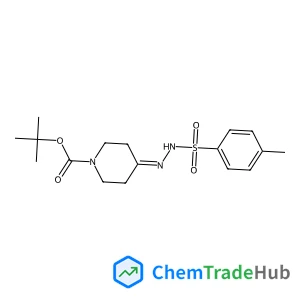
tert-Butyl 4-(2-(p-Tolylsulfonyl)hydrazono)piperidine-1-carboxylate
CAS番号:
1046478-89-0
分子式:
C17H25N3O4S
おすすめサプライヤー




免責事項
このページに表示される学術雑誌情報は、参考および研究目的のみを目的としています。当社は雑誌出版社とは提携しておらず、投稿の取り扱いも行っておりません。出版に関するお問い合わせは、各雑誌出版社に直接ご連絡ください。
表示されている情報に誤りがある場合は、support@chemtradehub.com までご連絡ください。迅速に確認し、対応いたします。