


Atomic-scale analysis of the physical strength and phonon transport mechanisms of monolayer β-bismuthene
文献情報
出版日
2020-12-09
DOI
10.1039/D0CP04785F
インパクトファクター
3.676
著者
Emdadul Haque Chowdhury, Md. Habibur Rahman, Pritom Bose, Rahul Jayan, Md Mahbubul Islam
原文を見る
要旨
Bismuthene has opened up a new avenue in the field of nanotechnology because of its spectacular electronic and thermoelectric features. The strong spin–orbit-coupling enables its operation as the largest nontrivial bandgap topological insulator and quantum spin hall material at room temperature, which is unlikely for any other 2D material. It is also known to be the most promising thermoelectric material due to its remarkable thermoelectric properties, including a substantially high power factor. However, an in-depth understanding of the mechanical and thermal transport properties of bismuthene is crucial for its practical implementation and efficient operation. Employing the Stillinger–Weber potential, we utilized molecular dynamics simulations to inspect the mechanical strength and thermal conductivity of the monolayer β-bismuthene for the first time. We analyzed the effect of temperature on the tensile mechanical properties along the armchair and zigzag directions of bismuthene nanosheets and found that increasing temperature causes a significant deterioration in these properties. The material shows superior fracture resistance with zigzag loading, whereas the armchair direction exhibits an improved elasticity. Next, we showed that increasing vacancy concentration and crack length notably reduce the fracture stress and strain of β-bismuthene. Under all these conditions, β-bismuthene showed a strong chirality effect under tensile loading. We also explored the fracture phenomena of a pre-cracked β-bismuthene, which reveal that the armchair-directed crack possesses a higher fracture resistance than the zigzag-directed crack. Interestingly, branching phenomena occurred during crack propagation for the armchair crack; meanwhile, the crack propagates perpendicular to loading for the zigzag crack. Afterward, we investigated the effect of loading rate on the fracture properties of bismuthene along the armchair and zigzag directions. Finally, we calculated the thermal conductivity of bismuthene under the influence of temperature and vacancy and recorded a substantial decrement in thermal conductivity with increasing temperature and vacancy. The obtained results are comprehensively discussed in the light of phonon density of states, phonon dispersion spectrum, and phonon group velocities. It is also disclosed that the thermal conductivity of β-bismuthene is considerably lower than that of other analogous honeycomb structures. This study can add a new dimension to the successful realization of bismuthene in future (opto)electronic, spintronic, and thermoelectric devices.
おすすめジャーナル

New Journal of Chemistry

Current Opinion in Solid State & Materials Science

Crystallography Reports

Russian Journal of General Chemistry

Current Opinion in Colloid & Interface Science

Russian Journal of Bioorganic Chemistry

Russian Journal of Organic Chemistry

Acta Materialia

Saudi Pharmaceutical Journal

Chemistry Education Research and Practice
関連文献
Self-assembled perpendicular growth of organic nanoneedles via simple vapor-phase deposition: one-step fabrication of a superhydrophobic surface
Jong Won Chung, Byeong-Kwan An, Ji Whan Kim, Jang-Joo Kim, Soo Young Park
2008-05-13
Communication
DOI: 10.1039/B802749H
Csp3–F bond activation by nucleophilic attack of the {Pt2S2} core assisted by non-covalent interactions
Ainara Nova, Gregori Ujaque, Pilar González-Duarte, Agustí Lledós
2008-04-29
Communication
DOI: 10.1039/B801889H
A conjugated polyelectrolyte-based fluorescence sensor for pyrophosphate
Xiaoyong Zhao, Yan Liu, Kirk S. Schanze
2007-06-21
Communication
DOI: 10.1039/B706629E
A hierarchical self-similar structure of oriented calcite with association of an agar gel matrix: inheritance of crystal habit from nanoscale
Yuya Oaki, Shinichiro Hayashi, Hiroaki Imai
2007-04-30
Communication
DOI: 10.1039/B704129B
Tetraplatinum precursors for supramolecular assemblies: syntheses, crystal structures, and stereoselective self-assemblies of [Pt4(μ-OCOCH3)6(κ4-N4-DArBp)] (DArBp = 1,3-bis(arylbenzamidinate)propane)
Masato Ohashi, Akihiro Yagyu, Tsuneaki Yamagata, Kazushi Mashima
2007-05-22
Communication
DOI: 10.1039/B703730A
Stereocontrolled synthesis of carbocyclesvia four successive pericyclic reactions
Roxanne Clément, Christiane M. Grisé, Louis Barriault
2008-06-06
Communication
DOI: 10.1039/B803898H
Concerted attack of frustrated Lewis acid–base pairs on olefinic double bonds: a theoretical study
András Stirling, Andrea Hamza, Tibor András Rokob, Imre Pápai
2008-05-09
Communication
DOI: 10.1039/B804662J
Two-dimensional alignment of imogolite on a solid surface
Sungjin Park, Yunha Lee, Bumjung Kim, Jisun Lee, Youngdo Jeong, Jaegeun Noh, Atsushi Takahara, Daewon Sohn
2007-06-21
Communication
DOI: 10.1039/B706505A
Rhodium-catalyzed enantioselective desymmetrization of bicyclic hydrazines with alkynylboronic esters
Stefano Crotti, Ferruccio Bertolini, Franco Macchia, Mauro Pineschi
2008-05-08
Communication
DOI: 10.1039/B803693D
Influence of a diene impurity on the molecular structure of phosphate-containing polymers with medical applications
Lisbeth Grøndahl, Edeline Wentrup-Byrne
2008-05-13
Communication
DOI: 10.1039/B803223H
こちらもおすすめ
化合物よくある質問
6- bromo-1-cyclopropyl-1H-benzimidazoleの市場動向や研究トレンドはどうですか?
6- bromo-1-cyclopropyl-1H-benzimidazoleは、抗炎症、抗ウイルス作用を持つことが報告されており、新薬開発の研究対象として注目...
1416713-53-56-Bromo-1-cyclopropy...
化合物よくある質問
環氧プロpanol-d5を取り扱う際の実験室安全事項は何ですか?
取り扱う際には、防護眼鏡と手袋を使用し、ドラフトチャンバー内で操作することを推奨します。漏洩時には適切な手順で処理し、安全データシートを常に参照してください。
1246819-20-4Glycidol-d5
化合物よくある質問
2,2’-ジメチル-3,3’-ビピリジンはどのように合成されますか?
2,2’-ジメチル-3,3’-ビピリジンは、ピリジンと2-メチルアクリルアミドを有機合成反応で合成します。この反応では、ピリジンと2-メチルアクリルアミドを含有...
86156-55-02,2’-Dimethyl-3,3’-b...
化合物よくある質問
6-甲基ピリジン-2-ボリック酸の主な用途は何ですか?
6-甲基ピリジン-2-ボリック酸は、合成化学、医薬品合成、以及研究用途などに広く使用され、特に組換えDNA技術や分子生物学の研究において重要な役割を果たします。
372963-50-3(6-Methyl-2-pyridiny...
化合物よくある質問
(R)-3-(1-甲基-2-氧環己基)プロpano酸メチルは安全ですか?
(R)-3-(1-甲基-2-氧環己基)プロpano酸メチルは一定の安全性がありますが、直接的な皮膚接触や吸入は避けるべきです。使用する際は適切な個々の安全データ...
94089-47-1methyl 3-[(1R)-1-met...
化合物よくある質問
ketorolacはどのように保存すればよいですか?
ketorolacは、密封して遮光容器に保管し、直射日光や高温を避けて保存してください。温度は常温で保存し、湿度をなるべく低く保つことが推奨されます。
74103-06-3rac Ketorolac
化合物よくある質問
L-2,3-二氨基丙酸二盐酸盐を取り扱う際の実験室安全事項は何ですか?
L-2,3-二氨基丙酸二盐酸盐は腐食性が強く、皮膚や粘膜に刺激を与える可能性があります。取り扱う際は、防塵マスク、ゴーグル、手袋を使用し、適切な排気設備を使用し...
19777-68-5(S)-2,3-Diaminopropa...
化合物よくある質問
2-(4-溴ピリジン-2-基)乙腈の物理化学的性質は何ですか?
2-(4-溴ピリジン-2-基)乙腈のCAS番号は312325-73-8です。主に結晶形態で存在し、分子量は159.01 g/molです。この化合物は水に溶けやす...
312325-73-8(4-Bromo-2-pyridinyl...
化合物よくある質問
3-フローロ-[1,1-ベンジレン]-3,4-ジカルボン酸を取り扱う際の実験室安全事項は何ですか?
この化合物は毒性は低いですが、直接的な接触や吸入に注意が必要です。PPE(個人防護具)を着用し、ドラフトチャンバーを使用して操作することを推奨します。また、漏洩...
1261915-32-53'-Fluoro-[1,1'-biph...
化合物よくある質問
3-(1-氧代-1,3-二氢-2H-2-异吲哚)丙酸の主な用途は何ですか?
3-(1-氧代-1,3-二氢-2H-2-异吲哚)丙酸は、薬理学研究や医薬品製造において広く用いられる化合物です。また、工業的な用途でも一部の化学反応の触媒や助剤...
83747-30-23-(1-Oxo-1,3-dihydro...
掲載誌
Physical Chemistry Chemical Physics

CiteScore:
5.5
自己引用率:
10.3%
年間論文数:
3036
Physical Chemistry Chemical Physics (PCCP) is an international journal co-owned by 19 physical chemistry and physics societies from around the world. This journal publishes original, cutting-edge research in physical chemistry, chemical physics and biophysical chemistry. To be suitable for publication in PCCP, articles must include significant innovation and/or insight into physical chemistry; this is the most important criterion that reviewers and Editors will judge against when evaluating submissions. The journal has a broad scope and welcomes contributions spanning experiment, theory, computation and data science. Topical coverage includes spectroscopy, dynamics, kinetics, statistical mechanics, thermodynamics, electrochemistry, catalysis, surface science, quantum mechanics, quantum computing and machine learning. Interdisciplinary research areas such as polymers and soft matter, materials, nanoscience, energy, surfaces/interfaces, and biophysical chemistry are welcomed if they demonstrate significant innovation and/or insight into physical chemistry. Joined experimental/theoretical studies are particularly appreciated when complementary and based on up-to-date approaches.
おすすめ化合物
![[4-(Isobutyrylamino)phenyl]boronic acid structure](https://static.chemtradehub.com/structs/874/874219-50-8-6ab5.webp "[4-(Isobutyrylamino)phenyl]boronic acid structure")
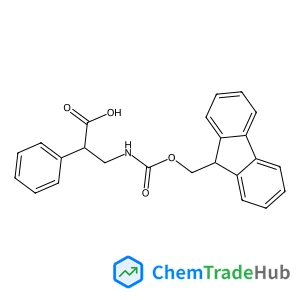
(S)-3-((((9H-Fluoren-9-yl)methoxy)carbonyl)amino)-2-phenylpropanoic acid
CAS番号:
1217663-60-9
分子式:
C24H21NO4
![2-{[(1R,2S)-2-Aminocyclohexyl]amino}-4-{[3-(2H-1,2,3-triazol-2-yl)phenyl]amino}-5-pyrimidinecarboxamide structure](https://static.chemtradehub.com/structs/137/1370261-96-3-40df.webp "2-{[(1R,2S)-2-Aminocyclohexyl]amino}-4-{[3-(2H-1,2,3-triazol-2-yl)phenyl]amino}-5-pyrimidinecarboxamide structure")
おすすめサプライヤー




免責事項
このページに表示される学術雑誌情報は、参考および研究目的のみを目的としています。当社は雑誌出版社とは提携しておらず、投稿の取り扱いも行っておりません。出版に関するお問い合わせは、各雑誌出版社に直接ご連絡ください。
表示されている情報に誤りがある場合は、support@chemtradehub.com までご連絡ください。迅速に確認し、対応いたします。