












![4-[(2-{2-[2-(2-Aminoethoxy)ethoxy]ethoxy}ethyl)amino]-2-(2,6-dioxo-3-piperidinyl)-1H-isoindole-1,3(2H)-dione structure](https://static.chemtradehub.com/structs/209/2093416-31-8-3162.webp "4-[(2-{2-[2-(2-Aminoethoxy)ethoxy]ethoxy}ethyl)amino]-2-(2,6-dioxo-3-piperidinyl)-1H-isoindole-1,3(2H)-dione structure")
Experimental and theoretical studies on thymine photodimerization mediated by oxidatively generated DNA lesions and epigenetic intermediates
文献情報
出版日
2020-11-03
DOI
10.1039/D0CP04557H
インパクトファクター
3.676
著者
Mauricio Lineros-Rosa, Antonio Monari, Miguel Angel Miranda, Virginie Lhiaubet-Vallet
原文を見る
要旨
Interaction of nucleic acids with light is a scientific question of paramount relevance not only in the understanding of life functioning and evolution, but also in the insurgence of diseases such as malignant skin cancer and in the development of biomarkers and novel light-assisted therapeutic tools. This work shows that the UVA portion of sunlight, not absorbed by canonical DNA nucleobases, can be absorbed by 5-formyluracil (ForU) and 5-formylcytosine (ForC), two ubiquitous oxidatively generated lesions and epigenetic intermediates present in living beings in natural conditions. We measure the strong propensity of these molecules to populate triplet excited states able to transfer the excitation energy to thymine–thymine dyads, inducing the formation of cyclobutane pyrimidine dimers (CPDs). By using steady-state and transient absorption spectroscopy, NMR, HPLC, and theoretical calculations, we quantify the differences in the triplet–triplet energy transfer mediated by ForU and ForC, revealing that the former is much more efficient in delivering the excitation energy and producing the CPD photoproduct. Although significantly slower than ForU, ForC is also able to harm DNA nucleobases and therefore this process has to be taken into account as a viable photosensitization mechanism. The present findings evidence a rich photochemistry crucial to understand DNA damage photobehavior.
関連文献
Theoretical investigation on the ligands constructed from phenanthroline and five-membered N-heterocyclic rings for bonding and separation properties of Am(iii) and Eu(iii)
Shouqiang Wu, An Yong Li
2023-12-12
Paper
DOI: 10.1039/D3CP05101C
A nanoscale surface engineered magneto-mechano-triboelectric nanogenerator enabled by reliable pattern replication for self-powered IoT devices
Srinivas Pattipaka, Tae Wan Park, Young Min Bae, Yujin Na, Kyeongwoon Chung, Kwi-Il Park, Jungho Ryu, Woon Ik Park, Geon-Tae Hwang
2024-01-04
Paper
DOI: 10.1039/D3SE01206A
Utilization of the through-space effect to design donor–acceptor systems of pyrrole, indole, isoindole, azulene and aniline
2023-12-18
Paper
DOI: 10.1039/D3CP03393G
Analysing the stability of He-filled hydrates: how many He atoms fit in the sII crystal?
Raquel Yanes-Rodríguez, Rita Prosmiti
2023-12-01
Paper
DOI: 10.1039/D3CP05410A
A study on the Si1−xGex gradual buffer layer of III–V/Si multi-junction solar cells based on first-principles calculations
Qian Wang, Yu Zhuang, Abuduwayiti Aierken, Qiaogang Song, Qin Zhang, Youbo Dou, Qiuli Zhang, Shuyi Zhang
2023-12-07
Paper
DOI: 10.1039/D3CP05309A
Effect of substituting donors on the hole mobility of hole transporting materials in perovskite solar cells: a DFT study
Md Al Mamunur Rashid, Sein Min, Sung Keon Namgoong, Keunhong Jeong
2023-12-04
Paper
DOI: 10.1039/D3CP04310J
Reaction mechanism of the ethynylation of formaldehyde on copper terminated Cu2O(100) surfaces: a DFT study
2023-11-29
Paper
DOI: 10.1039/D3CP03903J
Effects of surface chemistry on the mechanochemical decomposition of tricresyl phosphate
Fakhrul H. Bhuiyan, Ashlie Martini
2023-11-30
Paper
DOI: 10.1039/D3CP05320B
Exploring the potential of cobalt hydroxide and its derivatives as a cost-effective and abundant alternative to noble metal electrocatalysts in oxygen evolution reactions: a review
Umair Shamraiz, Abdul Majeed, Bareera Raza, Noor ul Ain, Amin Badshah
2023-12-07
Review Article
DOI: 10.1039/D3SE00942D
こちらもおすすめ
化合物よくある質問
2-メトキシ-4-(メチルスルフィニル)アミンの主な用途は何ですか?
2-メトキシ-4-(メチルスルフィニル)アミンは、主に医薬品および農薬の製造に使用されます。また、合成化学の一部として研究用材料としても利用されます。
41608-73-52-Methoxy-4-(methyls...
118684-13-24-(Bromomethyl)-3-me...
化合物よくある質問
4,6-二氯-N-甲基ピラミジンアミンの代替品はありますか?
代替品としては、4,6-二クロロピラミジンアミンや他のピラミジン系化合物が考えられます。ただし、目的と用途によって最適な代替品は異なります。
10397-15-64,6-Dichloro-N-methy...
化合物よくある質問
6-氯-4-甲基-1H-吲哚を含む廃棄物はどのように処理すべきですか?
6-氯-4-甲基-1H-吲哚の廃棄物は、適切な容器に収集し、密閉して保管します。温度は常温、湿度は低く、直射日光を避けて保管することを推奨します。廃棄処理は専門...
885520-84-36-chloro-4-methyl-1H...
化合物よくある質問
2-フローユロ-4-(トリフルオロメチル)ベンゾイドについて「に適用される法規ガイドラインは何ですか」
2-フローユロ-4-(トリフルオロメチル)ベンゾイドのCAS番号は207974-08-1です。この化合物はGHS分類で毒性物質と有害な反応物質として分類されます...
207974-08-1[2-Fluoro-4-(trifluo...
化合物よくある質問
4-ニトロフェニルN-[(ベンゼルオキシルカーボンイル]グリシングリシングリシン酸はどのように保存すればよいですか?
4-ニトロフェニルN-[(ベンゼルオキシルカーボンイル]グリシングリシングリシン酸は、室温で暗所に保管し、乾燥した環境で保存することを推奨します。容器は密閉性の...
19811-64-44-Nitrophenyl N-[(be...
化合物よくある質問
イソデスロラタドリンの代替品はありますか?
イソデスロラタドリンの代替品としては、デスロラタドリンや他の抗ヒスタミン薬が挙げられます。具体的には、デスロラタドリン、ラセカミド、フェルタドリンなどが、症状や...
183198-49-4Iso Desloratadine
化合物よくある質問
5-甲氧基-1,2,3,4-四氢异喹啉盐酸盐はどのように合成されますか?
5-甲氧基-1,2,3,4-四氢异喹啉盐酸盐の一般的な合成方法は、メタノール中で5-メトキシ-1,2,3,4-四ヒュドロイソキシンを塩酸で塩化します。この反応で...
103030-69-95-Methoxy-1,2,3,4-te...
化合物よくある質問
4-アミノ-5-メトキシ-2-トルエンサルホニック酸についての法規ガイドラインは何ですか?
CAS番号6471-78-9の4-アミノ-5-メトキシ-2-トルエンサルホニック酸は、GHS分類では corrosive(腐食性)と識別されます。EUのREAC...
6471-78-94-Amino-5-Methoxy-2-...
化合物よくある質問
甲基孕酮を取り扱う際の実験室安全事項は何ですか?
甲基孕酮の取り扱いは、PPE(個人保護具)の使用が必要な重要な安全事項を伴います。防塵マスク、ゴーグル、手袋を着用することが推奨されます。ドラフトチャンバーを使...
204063-33-22-[(Diphenylmethyl)a...
掲載誌
Physical Chemistry Chemical Physics

CiteScore:
5.5
自己引用率:
10.3%
年間論文数:
3036
Physical Chemistry Chemical Physics (PCCP) is an international journal co-owned by 19 physical chemistry and physics societies from around the world. This journal publishes original, cutting-edge research in physical chemistry, chemical physics and biophysical chemistry. To be suitable for publication in PCCP, articles must include significant innovation and/or insight into physical chemistry; this is the most important criterion that reviewers and Editors will judge against when evaluating submissions. The journal has a broad scope and welcomes contributions spanning experiment, theory, computation and data science. Topical coverage includes spectroscopy, dynamics, kinetics, statistical mechanics, thermodynamics, electrochemistry, catalysis, surface science, quantum mechanics, quantum computing and machine learning. Interdisciplinary research areas such as polymers and soft matter, materials, nanoscience, energy, surfaces/interfaces, and biophysical chemistry are welcomed if they demonstrate significant innovation and/or insight into physical chemistry. Joined experimental/theoretical studies are particularly appreciated when complementary and based on up-to-date approaches.
おすすめ化合物
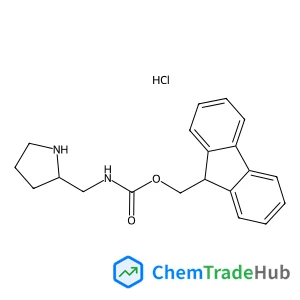
(S)-(9H-Fluoren-9-yl)methyl (pyrrolidin-2-ylmethyl)carbamate hydrochloride
CAS番号:
1217813-15-4
分子式:
C20H23ClN2O2
![[(5-Methyl-1,3,4-thiadiazol-2-yl)sulfanyl]acetic acid structure](https://static.chemtradehub.com/structs/509/50918-26-8-4ce8.webp "[(5-Methyl-1,3,4-thiadiazol-2-yl)sulfanyl]acetic acid structure")

おすすめサプライヤー






免責事項
このページに表示される学術雑誌情報は、参考および研究目的のみを目的としています。当社は雑誌出版社とは提携しておらず、投稿の取り扱いも行っておりません。出版に関するお問い合わせは、各雑誌出版社に直接ご連絡ください。
表示されている情報に誤りがある場合は、support@chemtradehub.com までご連絡ください。迅速に確認し、対応いたします。