












![2-Methyl-2-propanyl {3-[4-(4,4,5,5-tetramethyl-1,3,2-dioxaborolan-2-yl)phenyl]-3-oxetanyl}carbamate structure](https://static.chemtradehub.com/structs/127/1279090-25-3-1b84.webp "2-Methyl-2-propanyl {3-[4-(4,4,5,5-tetramethyl-1,3,2-dioxaborolan-2-yl)phenyl]-3-oxetanyl}carbamate structure")
The physisorption mechanism of SO2 on graphitized carbon
文献情報
出版日
2020-08-28
DOI
10.1039/D0CP03860A
インパクトファクター
3.676
著者
Shiliang Johnathan Tan, D. D. Do
原文を見る
要旨
Sulfur dioxide (SO2) in flue gases emitted from fossil fuel power plants dramatically reduces the CO2 capture efficiency via adsorption, which is due to the potential reaction of SO2 with basic functional groups on the adsorbent. Physisorption rather than chemisorption is preferred, because adsorbents can be more easily regenerated by either reducing the pressure or increasing the temperature. Carbon is a suitable adsorbent for SO2 capture and widely used, and therefore it is important to study SO2 adsorption onto carbon with the Monte Carlo simulation to provide microscopic details to demarcate the roles of the basal plane of the graphene layer and the functional groups in adsorption. SO2 is a polar molecule like water, as they both carry partial charges, but they interact differently with functional groups. Instead of 3D-clusters in the case of water, SO2 is localized around the functional groups and spreads over the basal plane to form 2D-molecular layers because of the strong dispersive interactions with graphite. The results indicate that the functional group has a negligible effect on the enhancement of adsorption and its role is to localize 2D-clusters of SO2 molecules. For non-graphitized carbon, we have found that the greater loadings at low pressure compared to the highly graphitized carbon is due to the presence of defects (crevices) on the basal plane surface. Finally, to describe better the experimental data, we have found that the reduction in the interactions between adsorbed molecules in the first layer is because of the repulsion of their dipoles pointing normal to the surface, a phenomenon called surface mediation and is widely used in the description of gas adsorption on surfaces.
関連文献
Diastereoselective Ni(0)-catalyzed carbocyclization to chiral vinylic sulfoxide
Naoyoshi Maezaki, Hiroaki Sawamoto, Hiroyuki Ishihara, Tetsuaki Tanaka
2005-07-11
Communication
DOI: 10.1039/B506375B
Highly enantioselective organocatalysis of the Hajos–Parrish–Eder–Sauer–Wiechert reaction by the β-amino acid cispentacin
Stephen G. Davies, Ruth L. Sheppard, Andrew D. Smith, James E. Thomson
2005-06-30
Communication
DOI: 10.1039/B506780B
Interpenetrated networks from a novel nanometer-sized pseudopeptidic ligand, bridging water, and transition metal ions with cds topology
Luigi Casella, Nick Hadjiliadis, Enrico Monzani, Nikolaos Kourkoumelis, John C. Plakatouras
2005-06-21
Communication
DOI: 10.1039/B502788H
High-density doxorubicin-conjugated polymeric nanoparticlesvia ring-opening metathesis polymerization
Paul A. Bertin, DeeDee Smith, SonBinh T. Nguyen
2005-07-04
Communication
DOI: 10.1039/B504643B
Porous inorganic capsules in action: modelling transmembrane cation-transport parameter-dependence based on water as vehicle‡
Erhard T. K. Haupt, Claudia Wontorra, Dieter Rehder, Achim Müller
2005-07-07
Communication
DOI: 10.1039/B506087G
Isolation of axial conformers of chloro- and bromocyclohexane in a pure state as inclusion complexes with 9,9′-bianthryl, and the discovery of a novel 1,3 diaxial Cl⋯H weak interaction
Shinya Hirano, Shinji Toyota, Masako Kato, Fumio Toda
2005-05-18
Communication
DOI: 10.1039/B501633A
A new class of DNA quadruplexes formed by oligodeoxyribonucleotides containing a 3′-3′ or 5′-5′ inversion of polarity site
Veronica Esposito, Antonella Virgilio, Antonio Randazzo, Aldo Galeone, Luciano Mayol
2005-06-22
Communication
DOI: 10.1039/B504455C
Enlarged π-electronic network of a meso-meso, β-β, β-β triply linked dibenzoporphyrin dimer that exhibits a large two-photon absorption cross section
Noboru Ono, Hidemitsu Uno, Deok Yun Kim, Soo Bum Noh, Dongho Kim
2005-07-01
Communication
DOI: 10.1039/B505340D
こちらもおすすめ
化合物よくある質問
2-メトキシ-4-(メチルスルフィニル)アミンの主な用途は何ですか?
2-メトキシ-4-(メチルスルフィニル)アミンは、主に医薬品および農薬の製造に使用されます。また、合成化学の一部として研究用材料としても利用されます。
41608-73-52-Methoxy-4-(methyls...
118684-13-24-(Bromomethyl)-3-me...
化合物よくある質問
4,6-二氯-N-甲基ピラミジンアミンの代替品はありますか?
代替品としては、4,6-二クロロピラミジンアミンや他のピラミジン系化合物が考えられます。ただし、目的と用途によって最適な代替品は異なります。
10397-15-64,6-Dichloro-N-methy...
化合物よくある質問
6-氯-4-甲基-1H-吲哚を含む廃棄物はどのように処理すべきですか?
6-氯-4-甲基-1H-吲哚の廃棄物は、適切な容器に収集し、密閉して保管します。温度は常温、湿度は低く、直射日光を避けて保管することを推奨します。廃棄処理は専門...
885520-84-36-chloro-4-methyl-1H...
化合物よくある質問
2-フローユロ-4-(トリフルオロメチル)ベンゾイドについて「に適用される法規ガイドラインは何ですか」
2-フローユロ-4-(トリフルオロメチル)ベンゾイドのCAS番号は207974-08-1です。この化合物はGHS分類で毒性物質と有害な反応物質として分類されます...
207974-08-1[2-Fluoro-4-(trifluo...
化合物よくある質問
4-ニトロフェニルN-[(ベンゼルオキシルカーボンイル]グリシングリシングリシン酸はどのように保存すればよいですか?
4-ニトロフェニルN-[(ベンゼルオキシルカーボンイル]グリシングリシングリシン酸は、室温で暗所に保管し、乾燥した環境で保存することを推奨します。容器は密閉性の...
19811-64-44-Nitrophenyl N-[(be...
化合物よくある質問
イソデスロラタドリンの代替品はありますか?
イソデスロラタドリンの代替品としては、デスロラタドリンや他の抗ヒスタミン薬が挙げられます。具体的には、デスロラタドリン、ラセカミド、フェルタドリンなどが、症状や...
183198-49-4Iso Desloratadine
化合物よくある質問
5-甲氧基-1,2,3,4-四氢异喹啉盐酸盐はどのように合成されますか?
5-甲氧基-1,2,3,4-四氢异喹啉盐酸盐の一般的な合成方法は、メタノール中で5-メトキシ-1,2,3,4-四ヒュドロイソキシンを塩酸で塩化します。この反応で...
103030-69-95-Methoxy-1,2,3,4-te...
化合物よくある質問
4-アミノ-5-メトキシ-2-トルエンサルホニック酸についての法規ガイドラインは何ですか?
CAS番号6471-78-9の4-アミノ-5-メトキシ-2-トルエンサルホニック酸は、GHS分類では corrosive(腐食性)と識別されます。EUのREAC...
6471-78-94-Amino-5-Methoxy-2-...
化合物よくある質問
甲基孕酮を取り扱う際の実験室安全事項は何ですか?
甲基孕酮の取り扱いは、PPE(個人保護具)の使用が必要な重要な安全事項を伴います。防塵マスク、ゴーグル、手袋を着用することが推奨されます。ドラフトチャンバーを使...
204063-33-22-[(Diphenylmethyl)a...
掲載誌
Physical Chemistry Chemical Physics

CiteScore:
5.5
自己引用率:
10.3%
年間論文数:
3036
Physical Chemistry Chemical Physics (PCCP) is an international journal co-owned by 19 physical chemistry and physics societies from around the world. This journal publishes original, cutting-edge research in physical chemistry, chemical physics and biophysical chemistry. To be suitable for publication in PCCP, articles must include significant innovation and/or insight into physical chemistry; this is the most important criterion that reviewers and Editors will judge against when evaluating submissions. The journal has a broad scope and welcomes contributions spanning experiment, theory, computation and data science. Topical coverage includes spectroscopy, dynamics, kinetics, statistical mechanics, thermodynamics, electrochemistry, catalysis, surface science, quantum mechanics, quantum computing and machine learning. Interdisciplinary research areas such as polymers and soft matter, materials, nanoscience, energy, surfaces/interfaces, and biophysical chemistry are welcomed if they demonstrate significant innovation and/or insight into physical chemistry. Joined experimental/theoretical studies are particularly appreciated when complementary and based on up-to-date approaches.
おすすめ化合物
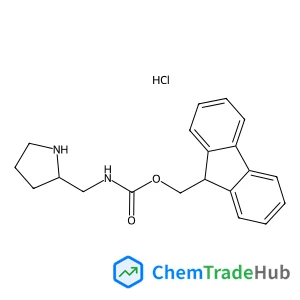
(S)-(9H-Fluoren-9-yl)methyl (pyrrolidin-2-ylmethyl)carbamate hydrochloride
CAS番号:
1217813-15-4
分子式:
C20H23ClN2O2

おすすめサプライヤー






免責事項
このページに表示される学術雑誌情報は、参考および研究目的のみを目的としています。当社は雑誌出版社とは提携しておらず、投稿の取り扱いも行っておりません。出版に関するお問い合わせは、各雑誌出版社に直接ご連絡ください。
表示されている情報に誤りがある場合は、support@chemtradehub.com までご連絡ください。迅速に確認し、対応いたします。