













Thickness-dependent elastic strain in Stranski–Krastanow growth
文献情報
出版日
2020-08-21
DOI
10.1039/D0CP03538F
インパクトファクター
3.676
著者
Alexander V. Voitsekhovskii
原文を見る
要旨
In this paper, we comprehensively consider the effect of the dependence of elastic strain on the thickness of deposited material on the formation of two-dimensional layers and quantum dots by the Stranski–Krastanow mechanism. The nucleation and growth of germanium quantum dots on silicon surface (100) are used as a model system for conducting experimental studies and theoretical calculations. A detailed dependence of the value of elastic strains on the effective thickness of deposited germanium is obtained. It is also shown that the magnitude of the 1/N superstructural periodicity in this system reaches 12.5%. Based on the obtained thickness dependence of lattice mismatch, a new theory is constructed for calculating the parameters of the formed islands, generalizing previously used thermodynamic models. The equilibrium and critical thicknesses of the wetting layer are determined for the first time under the assumption that lattice mismatch depends on the thickness of the deposited material. In this approximation, some unexpected results are obtained that refine traditional thermodynamic models and confirmed by experimental data. The results of this work and proposed theoretical model may be applied for strain engineering in other material systems where growth of two-dimensional materials and quantum-sized islands by the Stranski–Krastanow mechanism is realized.
関連文献
Size dependent interaction of biofunctionalized CdS nanoparticles with tyrosine at different pH
Amiya Priyam, Anindita Chatterjee, Satyen K. Das, Abhijit Saha
2005-07-13
Communication
DOI: 10.1039/B505960G
A preliminary observation of additive thermodynamic contribution of pendant arms to the complexation of calixarene derivatives with mercury(ii)
Angela F. Danil de Namor, Samir Chahine, Eduardo E. Castellano, Oscar E. Piro, H. Donald Brooke Jenkins
2005-06-23
Communication
DOI: 10.1039/B505408G
Noncatalytic mono-N-methylation of aniline in supercritical methanol: the kinetics and acid/base effect
Yoshihiro Takebayashi, Yoshinori Morita, Hideki Sakai, Masahiko Abe, Satoshi Yoda, Takeshi Furuya, Tsutomu Sugeta, Katsuto Otake
2005-07-07
Communication
DOI: 10.1039/B504050G
Fabrication of polyimide nanotubes and carbon nanotubes containing magnetic iron oxide in confinement
Jyongsik Jang, Kyung Jin Lee, Younggeun Kim
2005-06-23
Communication
DOI: 10.1039/B503831F
Cobalt oxide hollow nanoparticles derived by bio-templating
Jae-Woo Kim, Sang H. Choi, Peter T. Lillehei, Sang-Hyon Chu, Glen C. King, Gerald D. Watt
2005-07-14
Communication
DOI: 10.1039/B505097A
Max Perutz: chemist, molecular biologist, human rights activist
2005-07-18
40th Anniversary Article
DOI: 10.1039/B507503N
Surface-induced hydrogelation
Arno M. Bieser, Joerg C. Tiller
2005-06-22
Communication
DOI: 10.1039/B506160A
Thermal hysteresis loop of the spin-state in nanoparticles of transition metal complexes: Monte Carlo simulations on an Ising-like model
Tohru Kawamoto, Shuji Abe
2005-07-11
Communication
DOI: 10.1039/B506643C
Infrared spectrum and structure of the gold dihydroxide molecule
Xuefeng Wang, Lester Andrews
2005-07-12
Communication
DOI: 10.1039/B506970J
Regioselective synthesis and zone selective deprotection of [60]fullerene tris-adducts with an e,e,e addition pattern
Florian Beuerle, Nikos Chronakis, Andreas Hirsch
2005-06-16
Communication
DOI: 10.1039/B504748J
こちらもおすすめ
化合物よくある質問
2-メトキシ-4-(メチルスルフィニル)アミンの主な用途は何ですか?
2-メトキシ-4-(メチルスルフィニル)アミンは、主に医薬品および農薬の製造に使用されます。また、合成化学の一部として研究用材料としても利用されます。
41608-73-52-Methoxy-4-(methyls...
118684-13-24-(Bromomethyl)-3-me...
化合物よくある質問
4,6-二氯-N-甲基ピラミジンアミンの代替品はありますか?
代替品としては、4,6-二クロロピラミジンアミンや他のピラミジン系化合物が考えられます。ただし、目的と用途によって最適な代替品は異なります。
10397-15-64,6-Dichloro-N-methy...
化合物よくある質問
6-氯-4-甲基-1H-吲哚を含む廃棄物はどのように処理すべきですか?
6-氯-4-甲基-1H-吲哚の廃棄物は、適切な容器に収集し、密閉して保管します。温度は常温、湿度は低く、直射日光を避けて保管することを推奨します。廃棄処理は専門...
885520-84-36-chloro-4-methyl-1H...
化合物よくある質問
2-フローユロ-4-(トリフルオロメチル)ベンゾイドについて「に適用される法規ガイドラインは何ですか」
2-フローユロ-4-(トリフルオロメチル)ベンゾイドのCAS番号は207974-08-1です。この化合物はGHS分類で毒性物質と有害な反応物質として分類されます...
207974-08-1[2-Fluoro-4-(trifluo...
化合物よくある質問
4-ニトロフェニルN-[(ベンゼルオキシルカーボンイル]グリシングリシングリシン酸はどのように保存すればよいですか?
4-ニトロフェニルN-[(ベンゼルオキシルカーボンイル]グリシングリシングリシン酸は、室温で暗所に保管し、乾燥した環境で保存することを推奨します。容器は密閉性の...
19811-64-44-Nitrophenyl N-[(be...
化合物よくある質問
イソデスロラタドリンの代替品はありますか?
イソデスロラタドリンの代替品としては、デスロラタドリンや他の抗ヒスタミン薬が挙げられます。具体的には、デスロラタドリン、ラセカミド、フェルタドリンなどが、症状や...
183198-49-4Iso Desloratadine
化合物よくある質問
5-甲氧基-1,2,3,4-四氢异喹啉盐酸盐はどのように合成されますか?
5-甲氧基-1,2,3,4-四氢异喹啉盐酸盐の一般的な合成方法は、メタノール中で5-メトキシ-1,2,3,4-四ヒュドロイソキシンを塩酸で塩化します。この反応で...
103030-69-95-Methoxy-1,2,3,4-te...
化合物よくある質問
4-アミノ-5-メトキシ-2-トルエンサルホニック酸についての法規ガイドラインは何ですか?
CAS番号6471-78-9の4-アミノ-5-メトキシ-2-トルエンサルホニック酸は、GHS分類では corrosive(腐食性)と識別されます。EUのREAC...
6471-78-94-Amino-5-Methoxy-2-...
化合物よくある質問
甲基孕酮を取り扱う際の実験室安全事項は何ですか?
甲基孕酮の取り扱いは、PPE(個人保護具)の使用が必要な重要な安全事項を伴います。防塵マスク、ゴーグル、手袋を着用することが推奨されます。ドラフトチャンバーを使...
204063-33-22-[(Diphenylmethyl)a...
掲載誌
Physical Chemistry Chemical Physics

CiteScore:
5.5
自己引用率:
10.3%
年間論文数:
3036
Physical Chemistry Chemical Physics (PCCP) is an international journal co-owned by 19 physical chemistry and physics societies from around the world. This journal publishes original, cutting-edge research in physical chemistry, chemical physics and biophysical chemistry. To be suitable for publication in PCCP, articles must include significant innovation and/or insight into physical chemistry; this is the most important criterion that reviewers and Editors will judge against when evaluating submissions. The journal has a broad scope and welcomes contributions spanning experiment, theory, computation and data science. Topical coverage includes spectroscopy, dynamics, kinetics, statistical mechanics, thermodynamics, electrochemistry, catalysis, surface science, quantum mechanics, quantum computing and machine learning. Interdisciplinary research areas such as polymers and soft matter, materials, nanoscience, energy, surfaces/interfaces, and biophysical chemistry are welcomed if they demonstrate significant innovation and/or insight into physical chemistry. Joined experimental/theoretical studies are particularly appreciated when complementary and based on up-to-date approaches.
おすすめ化合物
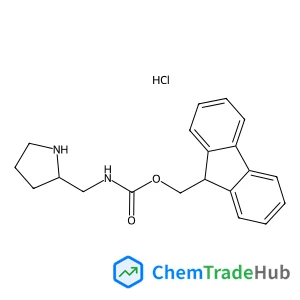
(S)-(9H-Fluoren-9-yl)methyl (pyrrolidin-2-ylmethyl)carbamate hydrochloride
CAS番号:
1217813-15-4
分子式:
C20H23ClN2O2

おすすめサプライヤー





免責事項
このページに表示される学術雑誌情報は、参考および研究目的のみを目的としています。当社は雑誌出版社とは提携しておらず、投稿の取り扱いも行っておりません。出版に関するお問い合わせは、各雑誌出版社に直接ご連絡ください。
表示されている情報に誤りがある場合は、support@chemtradehub.com までご連絡ください。迅速に確認し、対応いたします。