


The interaction strength of an intrinsically disordered protein domain with its binding partner is little affected by very different cosolutes
文献情報
出版日
2020-11-20
DOI
10.1039/D0CP03040F
インパクトファクター
3.676
著者
Jan Schnatwinkel, Christian Herrmann
原文を見る
要旨
A common feature of intrinsically disordered proteins (IDPs) is a disorder-to-order transition upon binding to other proteins, which has been tied to multiple benefits, including accelerated association rates or binding with low affinity, yet high specificity. Given the balanced equilibrium concentrations of folded and unfolded state of an IDP we asked the question if changes in the chemical environment, such as the presence of osmolytes or crowding agents, have a strong influence on the interaction of an IDP. Here, we demonstrate the impact of cosolutes on the interaction of the intrinsically disordered transcription factor c-Myb and its binding partner, the kinase-inducible interaction domain (KIX) of the CREB-binding protein. Temperature jump relaxation kinetics and microscale thermophoresis were employed in order to quantify the rate constants and the binding affinity of the c-Myb/KIX complex, respectively, in the presence of various cosolutes. We find the binding free energy of the c-Myb/KIX complex only marginally modulated by cosolutes, whereas the enthalpy and entropy of the interaction are very sensitive to the respective solvent conditions. For different cosolutes we observe substantial changes in enthalpy, both favorable and unfavorable, which are going with entropy changes largely compensating the enthalpy effects in each case. These characteristics might reflect a potential mechanism by which c-Myb offsets changes in the physico-chemical environment to maintain a roughly unaltered binding affinity.
おすすめジャーナル

Journal of Saudi Chemical Society

Current Opinion in Solid State & Materials Science

Crystallography Reports

Nature Medicine

Acta Materialia

Russian Journal of Applied Chemistry

Russian Journal of Coordination Chemistry

Journal of Peptide Science

Russian Journal of General Chemistry

Organic Process Research & Development
関連文献
Rescue of the streptomycin antibiotic activity by using streptidine as a “decoy acceptor” for the aminoglycoside-inactivating enzyme adenyl transferase
Montserrat Latorre, Pablo Peñalver, Julia Revuelta, Juan Luis Asensio, Eduardo García-Junceda, Agatha Bastida
2007-06-13
Communication
DOI: 10.1039/B704785A
Gold nanoparticles become stable to cyanide etch when coated with hybrid lipid bilayers
Sarita Sitaula, Marilyn R. Mackiewicz, Scott M. Reed
2008-05-15
Communication
DOI: 10.1039/B801525B
Alkylation of active methylene compounds with alcohols catalyzed by an iridium complex
Masao Morita, Yasushi Obora, Yasutaka Ishii
2007-04-30
Communication
DOI: 10.1039/B702293J
Electronic communication in “chain-like” trimetallic ruthenium complexes with two C7 carbon-rich conjugated bridges
Céline Olivier, Sylvie Choua, Philippe Turek, Daniel Touchard, Stéphane Rigaut
2007-05-17
Communication
DOI: 10.1039/B704241H
Hydrogen bond assisted helical self-assembly into [n]catenane
Yanhua Zhang, Jiaqi He, Jin-Pei Cheng
2007-04-12
Communication
DOI: 10.1039/B703591H
Fabrication of oriented zeolite L monolayers employing luminescent perylenediimide-bridged silsesquioxane precursor as the covalent linker
Huanrong Li, Yige Wang, Wenjun Zhang, Binyuan Liu, Gion Calzaferri
2007-04-27
Communication
DOI: 10.1039/B702175E
Transition metal-catalyzed three-component coupling of allenes and the related allylation reactions
Masilamani Jeganmohan, Chien-Hong Cheng
2008-05-15
Feature Article
DOI: 10.1039/B800440D
Polycarbide nickel clusters containing interstitial Ni(η2-C2)4 and Ni2(μ-η2-C2)4 acetylide moieties: mimicking the supersaturated Ni–C solutions preceding the catalytic growth of CNTs with the structures of [HNi25(C2)4(CO)32]3− and [Ni22(C2)4(CO)28Cl]3−
Cristina Femoni, Maria Carmela Iapalucci, Giuliano Longoni, Stefano Zacchini
2008-05-08
Communication
DOI: 10.1039/B803992E
こちらもおすすめ
化合物よくある質問
6- bromo-1-cyclopropyl-1H-benzimidazoleの市場動向や研究トレンドはどうですか?
6- bromo-1-cyclopropyl-1H-benzimidazoleは、抗炎症、抗ウイルス作用を持つことが報告されており、新薬開発の研究対象として注目...
1416713-53-56-Bromo-1-cyclopropy...
化合物よくある質問
環氧プロpanol-d5を取り扱う際の実験室安全事項は何ですか?
取り扱う際には、防護眼鏡と手袋を使用し、ドラフトチャンバー内で操作することを推奨します。漏洩時には適切な手順で処理し、安全データシートを常に参照してください。
1246819-20-4Glycidol-d5
化合物よくある質問
2,2’-ジメチル-3,3’-ビピリジンはどのように合成されますか?
2,2’-ジメチル-3,3’-ビピリジンは、ピリジンと2-メチルアクリルアミドを有機合成反応で合成します。この反応では、ピリジンと2-メチルアクリルアミドを含有...
86156-55-02,2’-Dimethyl-3,3’-b...
化合物よくある質問
6-甲基ピリジン-2-ボリック酸の主な用途は何ですか?
6-甲基ピリジン-2-ボリック酸は、合成化学、医薬品合成、以及研究用途などに広く使用され、特に組換えDNA技術や分子生物学の研究において重要な役割を果たします。
372963-50-3(6-Methyl-2-pyridiny...
化合物よくある質問
(R)-3-(1-甲基-2-氧環己基)プロpano酸メチルは安全ですか?
(R)-3-(1-甲基-2-氧環己基)プロpano酸メチルは一定の安全性がありますが、直接的な皮膚接触や吸入は避けるべきです。使用する際は適切な個々の安全データ...
94089-47-1methyl 3-[(1R)-1-met...
化合物よくある質問
ketorolacはどのように保存すればよいですか?
ketorolacは、密封して遮光容器に保管し、直射日光や高温を避けて保存してください。温度は常温で保存し、湿度をなるべく低く保つことが推奨されます。
74103-06-3rac Ketorolac
化合物よくある質問
L-2,3-二氨基丙酸二盐酸盐を取り扱う際の実験室安全事項は何ですか?
L-2,3-二氨基丙酸二盐酸盐は腐食性が強く、皮膚や粘膜に刺激を与える可能性があります。取り扱う際は、防塵マスク、ゴーグル、手袋を使用し、適切な排気設備を使用し...
19777-68-5(S)-2,3-Diaminopropa...
化合物よくある質問
2-(4-溴ピリジン-2-基)乙腈の物理化学的性質は何ですか?
2-(4-溴ピリジン-2-基)乙腈のCAS番号は312325-73-8です。主に結晶形態で存在し、分子量は159.01 g/molです。この化合物は水に溶けやす...
312325-73-8(4-Bromo-2-pyridinyl...
化合物よくある質問
3-フローロ-[1,1-ベンジレン]-3,4-ジカルボン酸を取り扱う際の実験室安全事項は何ですか?
この化合物は毒性は低いですが、直接的な接触や吸入に注意が必要です。PPE(個人防護具)を着用し、ドラフトチャンバーを使用して操作することを推奨します。また、漏洩...
1261915-32-53'-Fluoro-[1,1'-biph...
化合物よくある質問
3-(1-氧代-1,3-二氢-2H-2-异吲哚)丙酸の主な用途は何ですか?
3-(1-氧代-1,3-二氢-2H-2-异吲哚)丙酸は、薬理学研究や医薬品製造において広く用いられる化合物です。また、工業的な用途でも一部の化学反応の触媒や助剤...
83747-30-23-(1-Oxo-1,3-dihydro...
掲載誌
Physical Chemistry Chemical Physics

CiteScore:
5.5
自己引用率:
10.3%
年間論文数:
3036
Physical Chemistry Chemical Physics (PCCP) is an international journal co-owned by 19 physical chemistry and physics societies from around the world. This journal publishes original, cutting-edge research in physical chemistry, chemical physics and biophysical chemistry. To be suitable for publication in PCCP, articles must include significant innovation and/or insight into physical chemistry; this is the most important criterion that reviewers and Editors will judge against when evaluating submissions. The journal has a broad scope and welcomes contributions spanning experiment, theory, computation and data science. Topical coverage includes spectroscopy, dynamics, kinetics, statistical mechanics, thermodynamics, electrochemistry, catalysis, surface science, quantum mechanics, quantum computing and machine learning. Interdisciplinary research areas such as polymers and soft matter, materials, nanoscience, energy, surfaces/interfaces, and biophysical chemistry are welcomed if they demonstrate significant innovation and/or insight into physical chemistry. Joined experimental/theoretical studies are particularly appreciated when complementary and based on up-to-date approaches.
おすすめ化合物
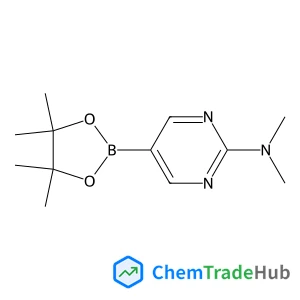
N,N-Dimethyl-5-(4,4,5,5-tetramethyl-1,3,2-dioxaborolan-2-yl)-2-pyrimidinamine
CAS番号:
1032759-30-0
分子式:
C12H20BN3O2
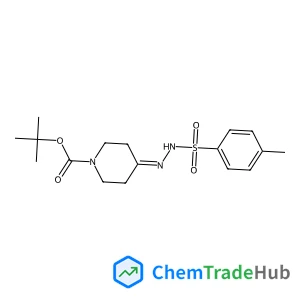
tert-Butyl 4-(2-(p-Tolylsulfonyl)hydrazono)piperidine-1-carboxylate
CAS番号:
1046478-89-0
分子式:
C17H25N3O4S
おすすめサプライヤー




免責事項
このページに表示される学術雑誌情報は、参考および研究目的のみを目的としています。当社は雑誌出版社とは提携しておらず、投稿の取り扱いも行っておりません。出版に関するお問い合わせは、各雑誌出版社に直接ご連絡ください。
表示されている情報に誤りがある場合は、support@chemtradehub.com までご連絡ください。迅速に確認し、対応いたします。