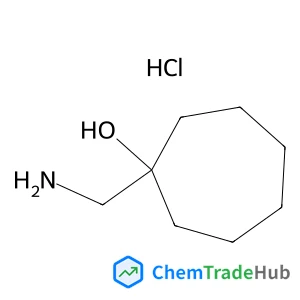
(S)-(9H-Fluoren-9-yl)methyl (pyrrolidin-2-ylmethyl)carbamate hydrochloride
CAS番号:
1217813-15-4
分子式:
C20H23ClN2O2
Gildas Goldsztejn, Venkateswara Rao Mundlapati, Jérémy Donon, Benjamin Tardivel, Eric Gloaguen, Valérie Brenner, Michel Mons
Models of protein chains containing a seleno-cysteine (Sec) residue have been investigated by gas phase laser spectroscopy in order to document the effect of the H-bonding properties of the SeH group in the folding of the Sec side chain, by comparison with recent data on Ser- and Cys-containing sequences. Experimental data, complemented by quantum chemistry calculations and natural bonding orbital (NBO) analyses, are interpreted in terms of the formation of a so-called 5γ intra-residue motif, which bridges the acceptor chalcogen atom of the side chain to the NH bond of the same residue. This local structure, in which the O/S/Se atom is close to the plane of the N-terminal side amide, is constrained by local backbone-side chain hyperconjugation effects involving the S and Se atoms. Theoretical investigations of the Cys/Sec side chain show that (i) this 5γ motif is an intrinsic feature of these residues, (ii) the corresponding H-bond is strongly non-linear and intrinsically weak, (iii) but enhanced by γ- and β-turn secondary structures, which promote a more favorable 5γ H-bonding approach and distance. The resulting H-bonds are slightly stronger in selenocysteine than in cysteine, but nearly inexistent in serine, whose side chain in contrast behaves as a H-bonding donor. The modest spectral shifts of the Cys/Sec NH stretches measured experimentally reflect the moderate strength of the 5γ H-bonding, in agreement with the correlation obtained with a NBO-based H-bond strength indicator. The evolution along the Ser, Cys and Sec series emphasizes the compromise between the several factors that control the H-bonding in a hyperconjugation-constrained geometry, among them the chalcogen van der Waals and covalent radii. It also illustrates the 5γ H-bond enhancements with the Sec and Cys residues favoured by the constraints imposed by the γ- and β-turn structures of the peptide chain.
Q. Wan, T. H. Wang
DOI: 10.1039/B504094A
Philip A. Gale
DOI: 10.1039/B504596G
DOI: 10.1039/B507503N
Antonella Dalla Cort, Luigi Mandolini, Luca Schiaffino
DOI: 10.1039/B504713G
Ryoichi Kuwano, Naoki Ishida, Masahiro Murakami
DOI: 10.1039/B505105C
Shunichi Fukuzumi, Kei Ohkubo, Javier Ortiz, Ana M. Gutiérrez, Fernando Fernández-Lázaro, Ángela Sastre-Santos
DOI: 10.1039/B506412K
Tai Hwan Ha, Jin Young Jeong
DOI: 10.1039/B504184H
Meng Tack Ng, Chris Boothroyd, Jagadese J. Vittal
DOI: 10.1039/B506203A
Tohru Kawamoto, Shuji Abe
DOI: 10.1039/B506643C
Arno M. Bieser, Joerg C. Tiller
DOI: 10.1039/B506160A
2-メトキシ-4-(メチルスルフィニル)アミンは、主に医薬品および農薬の製造に使用されます。また、合成化学の一部として研究用材料としても利用されます。
代替品としては、4,6-二クロロピラミジンアミンや他のピラミジン系化合物が考えられます。ただし、目的と用途によって最適な代替品は異なります。
6-氯-4-甲基-1H-吲哚の廃棄物は、適切な容器に収集し、密閉して保管します。温度は常温、湿度は低く、直射日光を避けて保管することを推奨します。廃棄処理は専門...
2-フローユロ-4-(トリフルオロメチル)ベンゾイドのCAS番号は207974-08-1です。この化合物はGHS分類で毒性物質と有害な反応物質として分類されます...
4-ニトロフェニルN-[(ベンゼルオキシルカーボンイル]グリシングリシングリシン酸は、室温で暗所に保管し、乾燥した環境で保存することを推奨します。容器は密閉性の...
イソデスロラタドリンの代替品としては、デスロラタドリンや他の抗ヒスタミン薬が挙げられます。具体的には、デスロラタドリン、ラセカミド、フェルタドリンなどが、症状や...
5-甲氧基-1,2,3,4-四氢异喹啉盐酸盐の一般的な合成方法は、メタノール中で5-メトキシ-1,2,3,4-四ヒュドロイソキシンを塩酸で塩化します。この反応で...
CAS番号6471-78-9の4-アミノ-5-メトキシ-2-トルエンサルホニック酸は、GHS分類では corrosive(腐食性)と識別されます。EUのREAC...
甲基孕酮の取り扱いは、PPE(個人保護具)の使用が必要な重要な安全事項を伴います。防塵マスク、ゴーグル、手袋を着用することが推奨されます。ドラフトチャンバーを使...

Physical Chemistry Chemical Physics (PCCP) is an international journal co-owned by 19 physical chemistry and physics societies from around the world. This journal publishes original, cutting-edge research in physical chemistry, chemical physics and biophysical chemistry. To be suitable for publication in PCCP, articles must include significant innovation and/or insight into physical chemistry; this is the most important criterion that reviewers and Editors will judge against when evaluating submissions. The journal has a broad scope and welcomes contributions spanning experiment, theory, computation and data science. Topical coverage includes spectroscopy, dynamics, kinetics, statistical mechanics, thermodynamics, electrochemistry, catalysis, surface science, quantum mechanics, quantum computing and machine learning. Interdisciplinary research areas such as polymers and soft matter, materials, nanoscience, energy, surfaces/interfaces, and biophysical chemistry are welcomed if they demonstrate significant innovation and/or insight into physical chemistry. Joined experimental/theoretical studies are particularly appreciated when complementary and based on up-to-date approaches.