












phosphoryl}methyl 4-methylbenzenesulfonate structure](https://static.chemtradehub.com/structs/864/864068-45-1-ba7c.webp "{[3-(Hexadecyloxy)propoxy](hydroxy)phosphoryl}methyl 4-methylbenzenesulfonate structure")
{[3-(Hexadecyloxy)propoxy](hydroxy)phosphoryl}methyl 4-methylbenzenesulfonate
CAS番号:
864068-45-1
分子式:
C27H49O7PS
Jiwen Jian, Elumalai Varathan, Thibault Cheisson, Tian Jian, Wayne W. Lukens, Rebecca L. Davis, Eric J. Schelter, Georg Schreckenbach, John K. Gibson
The anions pertechnetate, TcO4−, and perrhenate, ReO4−, exhibit very similar chemical and physical properties. Revealing and understanding disparities between them enhances fundamental understanding of both. Electrospray ionization generated the gas-phase proton bound dimer (TcO4−)(H+)(ReO4−). Collision induced dissociation of the dimer yielded predominantly HTcO4 and ReO4−, which according to Cooks’ kinetic method indicates that the proton affinity (PA) of TcO4− is greater than that of ReO4−. Density functional theory computations agree with the experimental observation, providing PA[TcO4−] = 300.1 kcal mol−1 and PA[ReO4−] = 297.2 kcal mol−1. Attempts to rationalize these relative PAs based on elementary molecular parameters such as atomic charges indicate that the entirety of bond formation and concomitant bond disruption needs to be considered to understand the energies associated with such protonation processes. Although in both the gas and solution phases, TcO4− is a stronger base than ReO4−, it is noted that the significance of even such qualitative accordance is tempered by the very different natures of the underlying phenomena.
Hidekazu Oyamada, Ryo Akiyama, Hiroyuki Hagio, Takeshi Naito, Shū Kobayashi
DOI: 10.1039/B610241G
Dolores Abella, Víctor Blanco, Elena Pía, Marcos Chas, Carlos Platas-Iglesias, Carlos Peinador, José M. Quintela
DOI: 10.1039/B802213E
Carsten Strohmann, Christian Däschlein
DOI: 10.1039/B802211A
Zhiyan Guo, Fanglin Du, Guicun Li, Zuolin Cui
DOI: 10.1039/B719500A
Bradley M. Wile, Mark Stradiotto
DOI: 10.1039/B609679D
Francesco Basile, Patricia Benito, Pascal Del Gallo, Giuseppe Fornasari, Daniel Gary, Valentina Rosetti, Erika Scavetta, Domenica Tonelli, Angelo Vaccari
DOI: 10.1039/B801645C
Naoki Ousaka, Norihiko Tani, Ryo Sekiya
DOI: 10.1039/B803080D
Brian L. Scott, T. Mark McCleskey, Anu Chaudhary, Elizabeth Hong-Geller, S. Gnanakaran
DOI: 10.1039/B718746G
CAS番号163217-74-1の「邻羟基阿托伐他汀内酯标准品」は、GHS分類では危険物に分類されず、主にREACH規則とFDA/EPAの管理対象となります。R...
メチル(3R)-3-アミノ-2,3-ジヒドロ-1-ベンゾファンラニン-5-カルボイル酸塩塩酸塩は、医薬品や合成化学の研究に広く用いられます。また、特定の薬物の前...
トランス-4-メチルピロリジン-3-オール塩酸塩は、4-メチルピロリジンの塩酸塩化によって合成されます。一般的な合成方法では、4-メチルピロリジンを塩酸に加えて...
硫雜環丁烷-1,1-二氧化物は安全ではありません。毒性は報告されていませんが、高温下で分解し、可燃性があるため、高圧ガスは注意が必要です。密閉した容器で保管し、...
9-ヒドロキシエリプチシネ塩酸塩は、エリプチシネから塩酸を添加することで合成されます。選択性は高いですが、収率は約70%です。
5-塩素-2-(メチルアミノ)フェニル-(2-塩素フェニル)メタン酮のCAS番号は5621-86-3です。この化合物は白色の結晶性粉末で、分子量は415.03で...
1-[2-(4-甲氧基-苯氧基)-乙基]-哌嗪は、直射日光を避けて暗所に、室温(15-25℃)で保管し、密閉容器に入れることで安定性を保つことができます。
2-[3-(4-甲氧基フェニル)プロピル]-4,4,5,5-四メチル-1,3,2-ドイボロロールアンは、医薬品の合成、有機合成化学、および新材料の研究で使用され...

Physical Chemistry Chemical Physics (PCCP) is an international journal co-owned by 19 physical chemistry and physics societies from around the world. This journal publishes original, cutting-edge research in physical chemistry, chemical physics and biophysical chemistry. To be suitable for publication in PCCP, articles must include significant innovation and/or insight into physical chemistry; this is the most important criterion that reviewers and Editors will judge against when evaluating submissions. The journal has a broad scope and welcomes contributions spanning experiment, theory, computation and data science. Topical coverage includes spectroscopy, dynamics, kinetics, statistical mechanics, thermodynamics, electrochemistry, catalysis, surface science, quantum mechanics, quantum computing and machine learning. Interdisciplinary research areas such as polymers and soft matter, materials, nanoscience, energy, surfaces/interfaces, and biophysical chemistry are welcomed if they demonstrate significant innovation and/or insight into physical chemistry. Joined experimental/theoretical studies are particularly appreciated when complementary and based on up-to-date approaches.
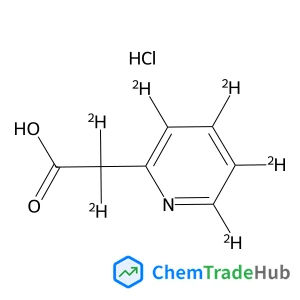

![(3R,5R)-1-[(Benzyloxy)carbonyl]-5-methyl-3-piperidinecarboxylic acid structure](https://static.chemtradehub.com/structs/126/1269757-29-0-c552.webp "(3R,5R)-1-[(Benzyloxy)carbonyl]-5-methyl-3-piperidinecarboxylic acid structure")





