













Chemophysical acetylene-sensing mechanisms of Sb2O3/NaWO4-doped WO3 heterointerfaces
文献情報
出版日
2020-08-06
DOI
10.1039/D0CP01444C
インパクトファクター
3.676
著者
Sukon Phanichphant, Duangdao Channei, Visittapong Yordsri
原文を見る
要旨
Sb2O3-loaded NaWO4-doped WO3 nanorods were fabricated with varying Sb contents from 0 to 2 wt% by precipitation/impregnation methods and their p-type acetylene (C2H2) gas-sensing mechanisms were rigorously analyzed. Material characterization by X-ray diffraction, X-ray photoelectron spectroscopy, scanning transmission electron microscopy and nitrogen adsorption indicated the construction of short NaWO4-doped monoclinic WO3 nanorods loaded with very fine Sb2O3 nanoparticles. The sensors were fabricated by powder pasting and spin coating and their gas-sensing characteristics were evaluated towards 0.08–1.77 vol% C2H2 at 200–350 °C in dry air. The gas-sensing properties of the NaWO4-doped WO3 sensor with the optimum Sb content of 1 wt% showed the highest p-type response of ∼250.2 to 1.77 vol% C2H2, which was more than 20 times as high as that of the unloaded one at the best working temperature of 250 °C. Furthermore, the Sb2O3-loaded sensor offered high C2H2 selectivity against CH4, H2, C3H6O, C2H5OH, HCHO, CH3OH, C8H10, C7H8, C2H4 and NO2. Mechanisms responsible for the observed p-type sensing and response enhancement behaviors were proposed based on the NaWO4-doped WO3–Sb2O3 (p–n) heterointerfaces and catalytic spillover effects. Consequently, the Sb2O3-loaded NaWO4-doped WO3 nanorods have potential as alternative p-type gas sensors for selective and sensitive C2H2 detection in various industrial applications.
関連文献
Exclusive transition state stabilization in the supramolecular catalysis of Diels–Alder reaction by a uranyl salophen complex
Antonella Dalla Cort, Luigi Mandolini, Luca Schiaffino
2005-07-01
Communication
DOI: 10.1039/B504713G
Highly enantioselective organocatalysis of the Hajos–Parrish–Eder–Sauer–Wiechert reaction by the β-amino acid cispentacin
Stephen G. Davies, Ruth L. Sheppard, Andrew D. Smith, James E. Thomson
2005-06-30
Communication
DOI: 10.1039/B506780B
Supported hydrotalcites as highly active solid base catalysts
Ferry Winter, A. Jos van Dillen, Krijn P. de Jong
2005-07-08
Communication
DOI: 10.1039/B506173C
Directed assembly and reactivity of olefins within a one-dimensional ladder-like coordination polymer based on a dinuclear Zn(ii) platform
Giannis S. Papaefstathiou, Ivan G. Georgiev, Tomislav Friščić, Leonard R. MacGillivray
2005-07-08
Communication
DOI: 10.1039/B504477D
Making crystals from crystals: a green route to crystal engineering and polymorphism
Dario Braga, Fabrizia Grepioni
2005-06-15
Feature Article
DOI: 10.1039/B504668H
2,2-Dimethyl cyclopentanones by acid catalyzed ring expansion of isopropenylcyclobutanols. A short synthesis of (±)-α-cuparenone and (±)-herbertene
Angela M. Bernard, Angelo Frongia, Francesco Secci, Pier P. Piras
2005-06-23
Communication
DOI: 10.1039/B505707H
Structure and reactivity of a new anionic N-heterocyclic carbene silver(i) complex
Claude Y. Legault, Christopher Kendall, André B. Charette
2005-07-01
Communication
DOI: 10.1039/B506232B
Chemical control of the photochromic reactivity of diarylethene derivatives
Masato Ohsumi, Tuyoshi Fukaminato, Masahiro Irie
2005-07-08
Communication
DOI: 10.1039/B506801K
On the CH⋯Cu agostic interaction: chiral copper(ii) compounds with ephedrine and pseudoephedrine derivatives
Miguel Castro, Julián Cruz, Horacio López-Sandoval, Norah Barba-Behrens
2005-06-24
Communication
DOI: 10.1039/B505554G
こちらもおすすめ
化合物よくある質問
2-メトキシ-4-(メチルスルフィニル)アミンの主な用途は何ですか?
2-メトキシ-4-(メチルスルフィニル)アミンは、主に医薬品および農薬の製造に使用されます。また、合成化学の一部として研究用材料としても利用されます。
41608-73-52-Methoxy-4-(methyls...
118684-13-24-(Bromomethyl)-3-me...
化合物よくある質問
4,6-二氯-N-甲基ピラミジンアミンの代替品はありますか?
代替品としては、4,6-二クロロピラミジンアミンや他のピラミジン系化合物が考えられます。ただし、目的と用途によって最適な代替品は異なります。
10397-15-64,6-Dichloro-N-methy...
化合物よくある質問
6-氯-4-甲基-1H-吲哚を含む廃棄物はどのように処理すべきですか?
6-氯-4-甲基-1H-吲哚の廃棄物は、適切な容器に収集し、密閉して保管します。温度は常温、湿度は低く、直射日光を避けて保管することを推奨します。廃棄処理は専門...
885520-84-36-chloro-4-methyl-1H...
化合物よくある質問
2-フローユロ-4-(トリフルオロメチル)ベンゾイドについて「に適用される法規ガイドラインは何ですか」
2-フローユロ-4-(トリフルオロメチル)ベンゾイドのCAS番号は207974-08-1です。この化合物はGHS分類で毒性物質と有害な反応物質として分類されます...
207974-08-1[2-Fluoro-4-(trifluo...
化合物よくある質問
4-ニトロフェニルN-[(ベンゼルオキシルカーボンイル]グリシングリシングリシン酸はどのように保存すればよいですか?
4-ニトロフェニルN-[(ベンゼルオキシルカーボンイル]グリシングリシングリシン酸は、室温で暗所に保管し、乾燥した環境で保存することを推奨します。容器は密閉性の...
19811-64-44-Nitrophenyl N-[(be...
化合物よくある質問
イソデスロラタドリンの代替品はありますか?
イソデスロラタドリンの代替品としては、デスロラタドリンや他の抗ヒスタミン薬が挙げられます。具体的には、デスロラタドリン、ラセカミド、フェルタドリンなどが、症状や...
183198-49-4Iso Desloratadine
化合物よくある質問
5-甲氧基-1,2,3,4-四氢异喹啉盐酸盐はどのように合成されますか?
5-甲氧基-1,2,3,4-四氢异喹啉盐酸盐の一般的な合成方法は、メタノール中で5-メトキシ-1,2,3,4-四ヒュドロイソキシンを塩酸で塩化します。この反応で...
103030-69-95-Methoxy-1,2,3,4-te...
化合物よくある質問
4-アミノ-5-メトキシ-2-トルエンサルホニック酸についての法規ガイドラインは何ですか?
CAS番号6471-78-9の4-アミノ-5-メトキシ-2-トルエンサルホニック酸は、GHS分類では corrosive(腐食性)と識別されます。EUのREAC...
6471-78-94-Amino-5-Methoxy-2-...
化合物よくある質問
甲基孕酮を取り扱う際の実験室安全事項は何ですか?
甲基孕酮の取り扱いは、PPE(個人保護具)の使用が必要な重要な安全事項を伴います。防塵マスク、ゴーグル、手袋を着用することが推奨されます。ドラフトチャンバーを使...
204063-33-22-[(Diphenylmethyl)a...
掲載誌
Physical Chemistry Chemical Physics

CiteScore:
5.5
自己引用率:
10.3%
年間論文数:
3036
Physical Chemistry Chemical Physics (PCCP) is an international journal co-owned by 19 physical chemistry and physics societies from around the world. This journal publishes original, cutting-edge research in physical chemistry, chemical physics and biophysical chemistry. To be suitable for publication in PCCP, articles must include significant innovation and/or insight into physical chemistry; this is the most important criterion that reviewers and Editors will judge against when evaluating submissions. The journal has a broad scope and welcomes contributions spanning experiment, theory, computation and data science. Topical coverage includes spectroscopy, dynamics, kinetics, statistical mechanics, thermodynamics, electrochemistry, catalysis, surface science, quantum mechanics, quantum computing and machine learning. Interdisciplinary research areas such as polymers and soft matter, materials, nanoscience, energy, surfaces/interfaces, and biophysical chemistry are welcomed if they demonstrate significant innovation and/or insight into physical chemistry. Joined experimental/theoretical studies are particularly appreciated when complementary and based on up-to-date approaches.
おすすめ化合物

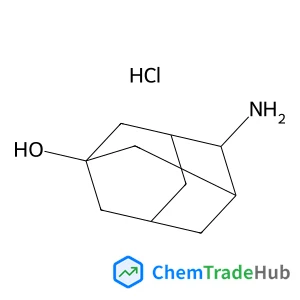
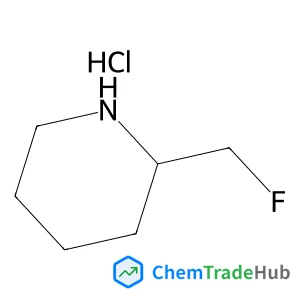
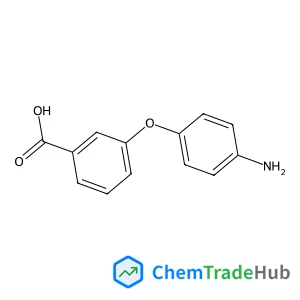
おすすめサプライヤー





免責事項
このページに表示される学術雑誌情報は、参考および研究目的のみを目的としています。当社は雑誌出版社とは提携しておらず、投稿の取り扱いも行っておりません。出版に関するお問い合わせは、各雑誌出版社に直接ご連絡ください。
表示されている情報に誤りがある場合は、support@chemtradehub.com までご連絡ください。迅速に確認し、対応いたします。