












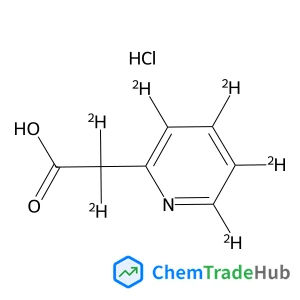
2,2-dideuterio-2-(3,4,5,6-tetradeuterio-2-pyridyl)acetic acid;hydrochloride
CAS番号:
1329799-67-8
分子式:
C7H2ClD6NO2
Jinyang Zhang, Chao Su, Fergus J. M. Rogers, Nadim Darwish, Michelle L. Coote, Simone Ciampi
Here, we investigate the development and relaxation of static charges on the surface of plastic materials that are first brought in contact, and then macroscopically separated. Experimentalists dealing with the static electrification of insulators are aware of difficulties predictably attaining, and precisely reproducing, a given charging magnitude. Here we have observed for the first time that in homo-systems (e.g. PTFE rubbed against PTFE) charge densities reach the maximum value after a material-specific contact time. Attempts to charge a sample beyond its peak value leads to a progressive drop in charge. We propose this drop to result both from the electrostatically driven segregation of polymer ionic fragments, as well as from the discharge of unstable fragments by dielectric breakdown when a sufficiently high surface charge density is reached. We therefore highlight the general existence of two branches in the charging versus charging time curve: the assumption of a monotonous charging slope holds only left or right of the charging maxima and to achieve a specific charge density, care has to be taken to remain within one branch. Differences between materials in the tribocharging peak time are shown to reflect difference in material transfer rates and water adsorption, rather than differences in electronic factors such as the relative stability of cationic and anionic fragments.
Valérie Sciannamea, Antoine Debuigne, Yasmine Piette, Robert Jerome, Christophe Detrembleur
DOI: 10.1039/B610455J
Vincent Souchon, Isabelle Leray, Bernard Valeur
DOI: 10.1039/B609466J
Jangwon Seo, Jong Won Chung, Eun-Hye Jo, Soo Young Park
DOI: 10.1039/B802096E
Stuart Licht, Xingwen Yu, Dong Zheng
DOI: 10.1039/B608716G
Zhiyan Guo, Fanglin Du, Guicun Li, Zuolin Cui
DOI: 10.1039/B719500A
Sanjib K. Patra, S. M. Wahidur Rahaman, Moumita Majumdar, Arup Sinha, Jitendra K. Bera
DOI: 10.1039/B803632B
C. M. Simon Yau, Susan A. Odom, John E. Warren, Eric J. F. Klotz, Michael J. Frampton, Charlotte C. Williams, Veaceslav Coropceanu, Marina K. Kuimova, David Phillips, Stephen Barlow, Jean-Luc Brédas, Seth R. Marder, Val Millar, Harry L. Anderson
DOI: 10.1039/B802728E
CAS番号163217-74-1の「邻羟基阿托伐他汀内酯标准品」は、GHS分類では危険物に分類されず、主にREACH規則とFDA/EPAの管理対象となります。R...
メチル(3R)-3-アミノ-2,3-ジヒドロ-1-ベンゾファンラニン-5-カルボイル酸塩塩酸塩は、医薬品や合成化学の研究に広く用いられます。また、特定の薬物の前...
トランス-4-メチルピロリジン-3-オール塩酸塩は、4-メチルピロリジンの塩酸塩化によって合成されます。一般的な合成方法では、4-メチルピロリジンを塩酸に加えて...
硫雜環丁烷-1,1-二氧化物は安全ではありません。毒性は報告されていませんが、高温下で分解し、可燃性があるため、高圧ガスは注意が必要です。密閉した容器で保管し、...
9-ヒドロキシエリプチシネ塩酸塩は、エリプチシネから塩酸を添加することで合成されます。選択性は高いですが、収率は約70%です。
5-塩素-2-(メチルアミノ)フェニル-(2-塩素フェニル)メタン酮のCAS番号は5621-86-3です。この化合物は白色の結晶性粉末で、分子量は415.03で...
1-[2-(4-甲氧基-苯氧基)-乙基]-哌嗪は、直射日光を避けて暗所に、室温(15-25℃)で保管し、密閉容器に入れることで安定性を保つことができます。
2-[3-(4-甲氧基フェニル)プロピル]-4,4,5,5-四メチル-1,3,2-ドイボロロールアンは、医薬品の合成、有機合成化学、および新材料の研究で使用され...

Physical Chemistry Chemical Physics (PCCP) is an international journal co-owned by 19 physical chemistry and physics societies from around the world. This journal publishes original, cutting-edge research in physical chemistry, chemical physics and biophysical chemistry. To be suitable for publication in PCCP, articles must include significant innovation and/or insight into physical chemistry; this is the most important criterion that reviewers and Editors will judge against when evaluating submissions. The journal has a broad scope and welcomes contributions spanning experiment, theory, computation and data science. Topical coverage includes spectroscopy, dynamics, kinetics, statistical mechanics, thermodynamics, electrochemistry, catalysis, surface science, quantum mechanics, quantum computing and machine learning. Interdisciplinary research areas such as polymers and soft matter, materials, nanoscience, energy, surfaces/interfaces, and biophysical chemistry are welcomed if they demonstrate significant innovation and/or insight into physical chemistry. Joined experimental/theoretical studies are particularly appreciated when complementary and based on up-to-date approaches.
![S-[2,3-Bis(palmitoyloxy)propyl]-N-[(9H-fluoren-9-ylmethoxy)(hydroxy)methylene]cysteine structure](https://static.chemtradehub.com/structs/210/210532-98-2-f6a7.webp "S-[2,3-Bis(palmitoyloxy)propyl]-N-[(9H-fluoren-9-ylmethoxy)(hydroxy)methylene]cysteine structure")
![N-[2-(4-Hydroxyphenoxy)-4-nitrophenyl]methanesulfonamide structure](https://static.chemtradehub.com/structs/109/109032-22-6-7c88.webp "N-[2-(4-Hydroxyphenoxy)-4-nitrophenyl]methanesulfonamide structure")
![1-[(4-Methylphenyl)sulfonyl]-3-(4,4,5,5-tetramethyl-1,3,2-dioxaborolan-2-yl)-1H-pyrrolo[2,3-b]pyridine-5-carbonitrile structure](https://static.chemtradehub.com/structs/143/1434747-57-5-fc0d.webp "1-[(4-Methylphenyl)sulfonyl]-3-(4,4,5,5-tetramethyl-1,3,2-dioxaborolan-2-yl)-1H-pyrrolo[2,3-b]pyridine-5-carbonitrile structure")






