












A modelling algorithm for amorphous covalent triazine-based polymers
文献情報
出版日
2020-08-17
DOI
10.1039/D0CP01277G
インパクトファクター
3.676
著者
Fangyuan Hu, Zhaoliang Meng, Shengming Li, Tianpeng Zhang, Wenlong Shao, Siyang Liu
原文を見る
要旨
Rational and purposeful designs of amorphous materials with desirable structures are difficult to implement due to the complex and unordered nature of such materials. In this work, a modelling algorithm was proposed for amorphous covalent triazine-based polymers to construct atomistic representative models that can reproduce the experimentally measured properties of experimental samples. The constructed models were examined through comparisons of simulated and experimental properties, such as surface area, pore volume, and structure factor, and further validated by the good consistency observed among these properties. To assess the predictive capability of the modelling algorithm, we used a new covalent triazine-based polymer and predicted its porosity by constructing a simulated model. The predicted results on the surface area and pore volume of the simulated model were quantitatively consistent with the experimental data derived from the experimentally synthesized sample. This consistency reveals the predictive capacity of the proposed modelling algorithm. The algorithm could be a promising approach to predict and develop advanced covalent triazine-based polymers for multiple applications.
関連文献
Correction: Observation of ordered arrays of endotaxially grown nanostructures from size-selected Cu-nanoclusters deposited on patterned substrates of Si
Debasree Chowdhury, Pabitra Das, Biswarup Satpati, Debabrata Ghose, Satya Ranjan Bhattacharyya
2021-04-07
Correction
DOI: 10.1039/D1CP90070F
Discriminating the influence of thermal excitation and the presence of structural isomers on the Stark and Zeeman effect of AlSn12 clusters by combined electric and magnetic beam deflection experiments
Filip Rivic, Thomas M. Fuchs, Rolf Schäfer
2021-04-19
Paper
DOI: 10.1039/D1CP00351H
Monitoring the active sites for the hydrogen evolution reaction at model carbon surfaces
Regina M. Kluge, Richard W. Haid, Ifan E. L. Stephens, Federico Calle-Vallejo
2021-03-25
Paper
DOI: 10.1039/D1CP00434D
Multiple dehydrogenation of fluorene cation and neutral fluorene using the statistical molecular fragmentation model
Nguyen-Thi Van-Oanh, Lejin Xu, Yining Luo
2021-04-08
Paper
DOI: 10.1039/D0CP06100J
Correction: Local structure of a highly concentrated NaClO4 aqueous solution-type electrolyte for sodium ion batteries
Ryo Sakamoto, Maho Yamashita, Kosuke Nakamoto, Yongquan Zhou, Nobuko Yoshimoto, Kenta Fujii, Toshio Yamaguchi
2021-04-19
Correction
DOI: 10.1039/D1CP90077C
On the spectral features of dangling bonds in CH4/H2O amorphous ice mixtures
Belén Maté, Miguel Á. Satorre, Rafael Escribano
2021-03-26
Paper
DOI: 10.1039/D1CP00291K
The freezing behavior of aqueous n-alcohol nanodroplets
Tong Sun, Dor Ben-Amotz
2021-04-19
Paper
DOI: 10.1039/D0CP06131J
The role of the three body photodissociation channel of water in the evolution of dioxygen in astrophysical applications
Suming An, Kaijun Yuan, Rex T. Skodje
2021-04-06
Paper
DOI: 10.1039/D1CP00565K
Size of the hydrogen bond network in liquid methanol: a quantum cluster equilibrium model with extensive structure search
Soon Teh, Po-Jen Hsu, Jer-Lai Kuo
2021-04-12
Paper
DOI: 10.1039/D1CP00427A
こちらもおすすめ
化合物よくある質問
オステニ二甲磺酸塩に適用される法規ガイドラインは何ですか?
オステニ二甲磺酸塩は、GHS分類に基づき corrosive 物質として分類されます。REACH規則では、該当物質の登録が要求される可能性があります。また、FD...
2070014-82-1N-(2-{[2-(Dimethylam...
化合物よくある質問
環丁基肼盐酸盐は安全ですか?
環丁基肼盐酸盐は毒性があり、吸入や皮膚接触は有害です。使用時の安全対策として、密閉システムを使用し、適切な排気設備を備えた場所で作業することが推奨されます。
1156980-49-2Cyclobutylhydrazine ...
化合物よくある質問
N-(4-パリドン基ソニルフェニル)硫代イソシアネートを取り扱う際の実験室安全事項は何ですか?
N-(4-パリドン基ソニルフェニル)硫代イソシアネートは高毒性で、皮膚や吸入による毒性があります。取り扱う際は防毒マスク、保護用手袋、保護眼鏡などのPPEを着用...
7356-55-01-[(4-Isothiocyanato...
化合物よくある質問
5-ヒドロキシ-1,3-ジヒドロ-2H-インドン-2-酮の物理化学的性質は何ですか?
CAS番号3416-18-0の5-ヒドロキシ-1,3-ジヒドロ-2H-インドン-2-酮は、結晶性の白色粉末です。分子量は228.25であり、 aqueous m...
3416-18-05-Hydroxy-1,3-dihydr...
化合物よくある質問
O-苄基-D-丝氨醇はどのように合成されますか?
O-苄基-D-丝氨醇は、D-アミノ酸とベンゼン環の経由で合成されます。触媒としてジメチルアミノピリジンが使用され、選択性は高いです。一般的な収率は約90%です。
58577-88-1(s)-2-Amino-3-benzyl...
化合物よくある質問
ナトリウム3-ヒドロキシbutano酸とは何ですか?
ナトリウム3-ヒドロキシbutano酸は、CAS番号13613-65-5で登録されている化合物です。この化合物は、(3R)-3-ヒドロキシbutano酸とナトリ...
13613-65-5sodium;(3R)-3-hydrox...
化合物よくある質問
1-(二苯甲基)-4-甲基ベンゼンの物理化学的性質は何ですか?
CAS番号603-37-2の1-(二苯甲基)-4-甲基ベンゼンは、結晶性の固体で、分子量は244.28であり、水中的には微溶です。この化合物は有機反応において中...
603-37-21-(Diphenylmethyl)-4...
化合物よくある質問
ネアミン塩酸塩の物理化学的性質は何ですか?
ネアミン塩酸塩の分子量は321.19であり、結晶性の白色粉末です。この化合物は水に溶けやすく、pHが低くなると不溶性になります。反応活性は高く、水溶液中の酸化還...
15446-43-2NEAMINE HYDROCHLORID...
化合物よくある質問
偶氮二甲酰二哌啶の主な用途は何ですか?
偶氮二甲酰二哌啶は、医薬品、染料、高 Então 剤、触媒、溶媒、量論試薬など、様々な分野で使用されています。特に、高 Enough 反応において、グリコール酸...
10465-81-3(E)-1,2-Diazenediylb...
664969-54-44-[(2E)-3-Phenyl-2-p...
掲載誌
Physical Chemistry Chemical Physics

CiteScore:
5.5
自己引用率:
10.3%
年間論文数:
3036
Physical Chemistry Chemical Physics (PCCP) is an international journal co-owned by 19 physical chemistry and physics societies from around the world. This journal publishes original, cutting-edge research in physical chemistry, chemical physics and biophysical chemistry. To be suitable for publication in PCCP, articles must include significant innovation and/or insight into physical chemistry; this is the most important criterion that reviewers and Editors will judge against when evaluating submissions. The journal has a broad scope and welcomes contributions spanning experiment, theory, computation and data science. Topical coverage includes spectroscopy, dynamics, kinetics, statistical mechanics, thermodynamics, electrochemistry, catalysis, surface science, quantum mechanics, quantum computing and machine learning. Interdisciplinary research areas such as polymers and soft matter, materials, nanoscience, energy, surfaces/interfaces, and biophysical chemistry are welcomed if they demonstrate significant innovation and/or insight into physical chemistry. Joined experimental/theoretical studies are particularly appreciated when complementary and based on up-to-date approaches.
おすすめ化合物
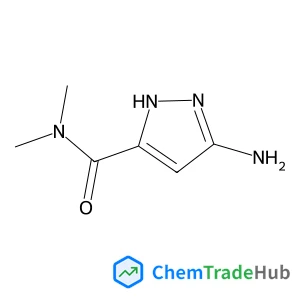
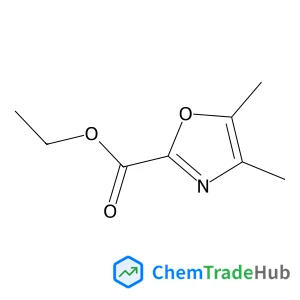
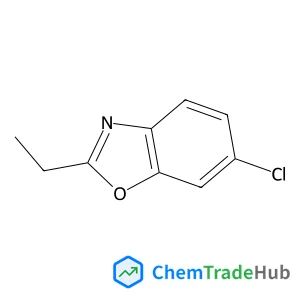
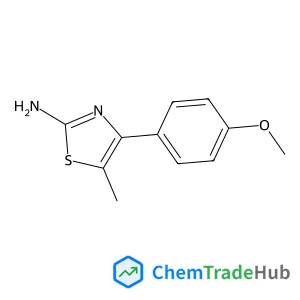
おすすめサプライヤー




免責事項
このページに表示される学術雑誌情報は、参考および研究目的のみを目的としています。当社は雑誌出版社とは提携しておらず、投稿の取り扱いも行っておりません。出版に関するお問い合わせは、各雑誌出版社に直接ご連絡ください。
表示されている情報に誤りがある場合は、support@chemtradehub.com までご連絡ください。迅速に確認し、対応いたします。