


![tert-Butyl 6-chloro-4-oxospiro[chroman-2,4'-piperidine]-1'-carboxylate structure](https://static.chemtradehub.com/structs/101/1011482-37-3-88a5.webp "tert-Butyl 6-chloro-4-oxospiro[chroman-2,4'-piperidine]-1'-carboxylate structure")
tert-Butyl 6-chloro-4-oxospiro[chroman-2,4'-piperidine]-1'-carboxylate
CAS番号:
1011482-37-3
分子式:
C18H22ClNO4
Hideharu Mori
Deep eutectic solvents (DESs) have recently attracted significant attention as inexpensive materials with similar characteristics to ionic liquids. For practical applications of DESs in electrochemical devices such as lithium-ion batteries (LIBs), the manipulation of the melting point and electrochemical stability is important as they are important parameters that determine device performance. In this study, we investigated a family of Li-salt/amide-based electrolytes (DEEs) comprised of five amide derivatives (urea, acetamide, N,N′-dimethylpropyleneurea, 2-imidazolidinone and tetramethylurea) and two representative Li-salts (LiCl and LiTFSI), in terms of thermal and electrochemical properties. To verify the effect of the coordination state on the melting point, the coordination state between lithium salt and amide was calculated by a molecular dynamics simulation using four representative DEEs. Regarding electrochemical stability, the HOMO and LUMO were calculated by density functional theory and the correlation with the experimental result of cyclic voltammetry was verified. Hydrogen bonding donor (HBD)-free DEEs comprised of amides without any N–H bonds (e.g. 1,1,3,3-tetramethylurea and 1,3-dimethyl-2-imidazoline) were found to be superior to those containing HBDs derived from amides having N–H bonds (e.g. urea, acetamide and 2-imidazolidinone), in terms of reduction stability. Among various DEEs evaluated in this study, the DEE derived from LiTFSI : 1,1,3,3-tetramethylurea = 1 : 5 mol% was the best electrolyte in terms of melting point, electrochemical stability and ionic conductivity. The results of this study provide important guidelines for designing DESs as LIB electrolytes.

Russian Chemical Bulletin

Journal of Saudi Chemical Society

Current Opinion in Colloid & Interface Science

Journal of Peptide Science

Russian Journal of Bioorganic Chemistry

Nature Medicine

Saudi Pharmaceutical Journal

Drug Discovery Today

Chemistry Education Research and Practice

Journal of Natural Medicines
Swati Yadav, Subrata Banik, M. Durga Prasad
DOI: 10.1039/D0CP01157F
Sabyasachi Pramanik, Mihir Manna, Biswajit Hudait, Shilaj Roy, Satyapriya Bhandari
DOI: 10.1039/D1CP00753J
Lennart Gundelach, Thomas Fox, Christofer S. Tautermann, Chris-Kriton Skylaris
DOI: 10.1039/D1CP00206F
James D. Blakemore, Bruce S. Brunschwig, Harry B. Gray, Petter Persson
DOI: 10.1039/D1CP00545F
T. Yokoi, K. Ikawa, A. Nakamura
DOI: 10.1039/D1CP00790D
Mark Louis P. Vidallon, Luke W. Giles, Simon Crawford, Alexis I. Bishop, Rico F. Tabor, Liliana de Campo, Boon Mian Teo
DOI: 10.1039/D1CP01146D
V. G. de Pina, B. G. A. Brito, G.-Q. Hai, L. Cândido
DOI: 10.1039/D0CP06499H
Yu-Liang Liu, Wen-Kai Zhao, Ying Shi, Chuan-Lu Yang
DOI: 10.1039/D1CP00483B
Rui Zhao, Li Sheng
DOI: 10.1039/D0CP06450E
2-メトキシ-4-(メチルスルフィニル)アミンは、主に医薬品および農薬の製造に使用されます。また、合成化学の一部として研究用材料としても利用されます。
代替品としては、4,6-二クロロピラミジンアミンや他のピラミジン系化合物が考えられます。ただし、目的と用途によって最適な代替品は異なります。
6-氯-4-甲基-1H-吲哚の廃棄物は、適切な容器に収集し、密閉して保管します。温度は常温、湿度は低く、直射日光を避けて保管することを推奨します。廃棄処理は専門...
2-フローユロ-4-(トリフルオロメチル)ベンゾイドのCAS番号は207974-08-1です。この化合物はGHS分類で毒性物質と有害な反応物質として分類されます...
4-ニトロフェニルN-[(ベンゼルオキシルカーボンイル]グリシングリシングリシン酸は、室温で暗所に保管し、乾燥した環境で保存することを推奨します。容器は密閉性の...
イソデスロラタドリンの代替品としては、デスロラタドリンや他の抗ヒスタミン薬が挙げられます。具体的には、デスロラタドリン、ラセカミド、フェルタドリンなどが、症状や...
5-甲氧基-1,2,3,4-四氢异喹啉盐酸盐の一般的な合成方法は、メタノール中で5-メトキシ-1,2,3,4-四ヒュドロイソキシンを塩酸で塩化します。この反応で...
CAS番号6471-78-9の4-アミノ-5-メトキシ-2-トルエンサルホニック酸は、GHS分類では corrosive(腐食性)と識別されます。EUのREAC...
甲基孕酮の取り扱いは、PPE(個人保護具)の使用が必要な重要な安全事項を伴います。防塵マスク、ゴーグル、手袋を着用することが推奨されます。ドラフトチャンバーを使...

Physical Chemistry Chemical Physics (PCCP) is an international journal co-owned by 19 physical chemistry and physics societies from around the world. This journal publishes original, cutting-edge research in physical chemistry, chemical physics and biophysical chemistry. To be suitable for publication in PCCP, articles must include significant innovation and/or insight into physical chemistry; this is the most important criterion that reviewers and Editors will judge against when evaluating submissions. The journal has a broad scope and welcomes contributions spanning experiment, theory, computation and data science. Topical coverage includes spectroscopy, dynamics, kinetics, statistical mechanics, thermodynamics, electrochemistry, catalysis, surface science, quantum mechanics, quantum computing and machine learning. Interdisciplinary research areas such as polymers and soft matter, materials, nanoscience, energy, surfaces/interfaces, and biophysical chemistry are welcomed if they demonstrate significant innovation and/or insight into physical chemistry. Joined experimental/theoretical studies are particularly appreciated when complementary and based on up-to-date approaches.
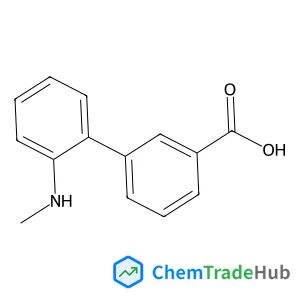
![4-Chloro-2-{[(2-chlorophenoxy)acetyl]amino}benzoic acid structure](https://static.chemtradehub.com/structs/351/351424-20-9-9467.webp "4-Chloro-2-{[(2-chlorophenoxy)acetyl]amino}benzoic acid structure")
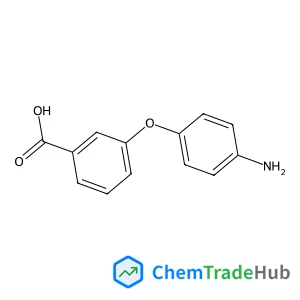
![2-Methyl-2-propanyl {3-[4-(4,4,5,5-tetramethyl-1,3,2-dioxaborolan-2-yl)phenyl]-3-oxetanyl}carbamate structure](https://static.chemtradehub.com/structs/127/1279090-25-3-1b84.webp "2-Methyl-2-propanyl {3-[4-(4,4,5,5-tetramethyl-1,3,2-dioxaborolan-2-yl)phenyl]-3-oxetanyl}carbamate structure")





