












Impact of cation redox chemistry on continuous hydrothermal synthesis of 2D-Ni(Co/Fe) hydroxides
文献情報
出版日
2019-10-08
DOI
10.1039/C9RE00334G
インパクトファクター
4.239
著者
Massimo Rosa, Debora Marani, Giovanni Perin, Søren Bredmose Simonsen, Philipp Zielke, Antonella Glisenti, Ragnar Kiebach, Andreas Lesch, Vincenzo Esposito
原文を見る
要旨
Continuous hydrothermal flow synthesis (CHFS) is a facile, upscalable and cost-efficient synthetic method enabling the nanostructuring of advanced functional materials in steady conditions, i.e. not in batch synthesis. In this paper, we use CHFS to crystallize NiCo- and NiFe-hydroxides in water solution with 2D nanofeatures. By tuning the synthetic parameters, we disclose the key role of the cation redox chemistry in the transition between two competitive phases: from 2D-nanoplatelets of brucite to layered double hydroxides (LDH). For controlling the precipitation of different Ni, Fe, Co-hydroxide phases, we propose the combined use of an oxidizing (H2O2) and a complexing (NH3) agent. At temperatures as low as 80 °C, the presence of H2O2 and a low concentration of NH3 favour the Ni2+/Co3+ over Ni2+/Co2+ oxidation states, shifting the product structure from brucite phase (temperatures > 80 °C) to LDH. Conversely, for the NiFe-hydroxides the transition from LDH (temperatures ≤ 80 °C) to brucite phase (temperatures > 80 °C) is controlled by the reaction temperature only. Due to the high stability of Fe3+, the synthesis of NiFe products by CHFS does not require oxidizing and complexing agents, resulting in a robust process for large-scale production.
関連文献
Understanding the different activities of highly promiscuous MbtI by computational methods
Silvia Ferrer, Sergio Martí, Vicent Moliner, Iñaki Tuñón, Juan Bertrán
2012-01-17
Paper
DOI: 10.1039/C2CP23149B
A highly efficient light capturing 2D (nanosheet)–1D (nanorod) combined hierarchical ZnO nanostructure for efficient quantum dot sensitized solar cells
Heejin Kim, Kijung Yong
2012-12-06
Paper
DOI: 10.1039/C2CP44045H
Influence of hydroxyl groups on the adsorption of HCHO on TiO2-B(100) surface by first-principles study
K. M. Liew, Chunxu Pan
2013-01-08
Paper
DOI: 10.1039/C3CP43549K
Hydrogen oxidation at the Pt–BaZr0.1Ce0.7Y0.1Yb0.1O3−δ (BZCYYb) interface
Mingfei Liu, Shi Feng, Wei Liu, Hyeon Cheol Park, Meilin Liu
2013-01-21
Paper
DOI: 10.1039/C3CP44225J
General treatment of the multimode Jahn–Teller effect: study of fullerenecations
Harry Ramanantoanina, Matija Zlatar, Pablo García-Fernández, Claude Daul
2012-11-22
Paper
DOI: 10.1039/C2CP43591H
A novel three-step method for preparation of a TiB2-promoted LiBH4–MgH2 composite for reversible hydrogen storage
Xiangdong Kang, Kuikui Wang, Yujie Zhong, Bing Yang, Ping Wang
2012-12-07
Paper
DOI: 10.1039/C2CP43532B
Enhancement of the hydrogen storage capacity of Mg(AlH4)2 by excess electrons: a DFT study
S. Karthikeyan
2012-11-21
Paper
DOI: 10.1039/C2CP43297H
Thermoelectric power factor optimization in PEDOT:PSS tellurium nanowire hybrid composites
Arun Majumdar, Jeffrey J. Urban
2013-01-31
Paper
DOI: 10.1039/C3CP44558E
Theoretical studies on the transport mechanism of 5-fluorouracil through cyclic peptide based nanotubes
Sofie Van Damme, Patrick Bultinck, Venkatesan Subramanian
2012-10-23
Paper
DOI: 10.1039/C2CP42038D
Mutual diffusion in the ternary mixture of water + methanol + ethanol and its binary subsystems
Stanislav Pa, Gabriela Guevara-Carrion, Hans Hasse, Jadran Vrabec
2013-01-10
Paper
DOI: 10.1039/C3CP43785J
こちらもおすすめ
化合物よくある質問
間溴苯甲酰腈の市場動向や研究トレンドはどうですか?
間 brom 苯甲酰腈は、合成化学や薬物化学において重要な Intermediate として使用されています。市場動向としては、その合成性と機能性により、研究開...
24999-51-7(3-Bromophenyl)(oxo)...
287966-62-5Desulfo Glucoraphani...
化合物よくある質問
Methyl 2-amino-5-(trifluoromethyl)benzoateに適用される法規ガイドラインは何ですか?
CAS番号117324-58-0の塩酸メチル2アミノ-5-トリフルオロメチルベンゼートは、GHS分類により腐食性物質と判定されます。REACH規則では、製造、販...
117324-58-0Methyl 2-amino-5-(tr...
化合物よくある質問
3-ブロモ-1,3,4,5-四水化-2H-1-ベンザアゼピン-2-オンは安全ですか?
毒性があるため、適切な安全対策が必須です。皮膚や粘膜への刺激性が強く、吸入や誤飲により健康被害を引き起こす可能性があります。取扱時にはガスマスクや手袋、眼鏡を使...
86499-96-93-Bromo-1,3,4,5-tetr...
化合物よくある質問
三氟甲基ピリジン-2-甲アミン塩酸塩は安全ですか?
三氟甲基ピリジン-2-甲アミン塩酸塩は安全性に注意が必要です。毒性は低レベルですが、直接的接触や吸入は避けるべきです。適切な手袋や防塵マスクを着用し、密閉された...
871826-12-9(5-(Trifluoromethyl)...
化合物よくある質問
1-エチル-4-(4-硝基フェニル)ピペリジンは安全ですか?
1-エチル-4-(4-硝基フェニル)ピペリジンは有毒であり、取扱には注意が必要です。保管や作業中に手袋を着用し、目や皮膚に接触しないように注意する必要があります...
115619-00-61-Ethyl-4-(4-nitroph...
化合物よくある質問
1,1-ジメトキシプロパン-2-オンは安全ですか?
1,1-ジメトキシプロパン-2-オンは一般的に低毒性ですが、皮膚や目への刺激性があるため、取扱いには注意が必要です。蒸気や液体の吸入には有害な可能性があり、適切...
6342-56-91,1-dimethoxypropan-...
化合物よくある質問
コバルト(II) 3,3'-{[(1S,2S)-1,2-ジメチルフENCYCLICALE-1,2-エチエンジイル]ビス[ニトロリルメチルイリデン]}ビス[4-オキソ-2-ペンテン-2-olate]について「に適用される法規ガイドラインは何ですか?
この化合物はCAS番号259259-80-8に対応しています。GHS分類では、毒性、燃焼性、反応性、炎症性を考慮に入れ、適切な危険性分類が行われます。REACH...
259259-80-8Cobalt(2+) (2E,2'E)-...
化合物よくある質問
「カーバミル酸, N-[8-[[2-[[2-(2,6-ジオキソ-3-ピペリジニル)-2,3-ジオキソ-1,3-ジヒドロ-1H-イソイソインドール-4-イルオキシ]アセチル]アミノ]オクチル]-1,1-ジメチレチルエステル」はどのように保存すればよいですか?
この化合物は、冷却庫で-20℃の温度、乾燥した容器に保管し、直日光から保護する必要があります。湿度の高い環境や高温は避けてください。
1950635-34-32-Methyl-2-propanyl ...
1433975-21-3FMoc-D-4-Aph(tBu-CbM...
掲載誌
Reaction Chemistry & Engineering

CiteScore:
0
自己引用率:
8.8%
年間論文数:
284
Reaction Chemistry & Engineering is an interdisciplinary journal reporting cutting-edge research focused on enhancing the understanding and efficiency of reactions. Reaction engineering leverages the interface where fundamental molecular chemistry meets chemical engineering and technology. Challenges in chemistry can be overcome by the application of new technologies, while engineers may find improved solutions for process development from the latest developments in reaction chemistry. Reaction Chemistry & Engineering is a unique forum for researchers whose interests span the broad areas of chemical engineering and chemical sciences to come together in solving problems of importance to wider society. All papers should be written to be approachable by readers across the engineering and chemical sciences. Papers that consider multiple scales, from the laboratory up to and including plant scale, are particularly encouraged.
おすすめ化合物


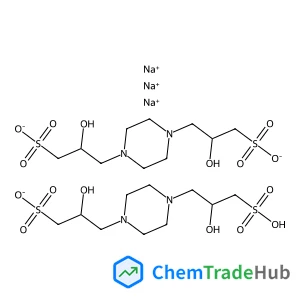
3,3'-(Piperazine-1,4-diyl)bis(2-hydroxypropane-1-sulfonic acid) Sodium Salt
CAS番号:
108321-08-0
分子式:
C20H41N4Na3O16S4

おすすめサプライヤー




免責事項
このページに表示される学術雑誌情報は、参考および研究目的のみを目的としています。当社は雑誌出版社とは提携しておらず、投稿の取り扱いも行っておりません。出版に関するお問い合わせは、各雑誌出版社に直接ご連絡ください。
表示されている情報に誤りがある場合は、support@chemtradehub.com までご連絡ください。迅速に確認し、対応いたします。