












![[5-fluoro-2-(morpholine-4-carbonyl)phenyl]boronic acid structure](https://static.chemtradehub.com/structs/121/1217501-26-2-505c.webp "[5-fluoro-2-(morpholine-4-carbonyl)phenyl]boronic acid structure")
The effect of solvent polarity and macromolecular crowding on the viscosity sensitivity of a molecular rotor BODIPY-C10
文献情報
出版日
2020-02-20
DOI
10.1039/C9CP06865A
インパクトファクター
3.676
著者
Artūras Polita, Stepas Toliautas, Rokas Žvirblis, Aurimas Vyšniauskas
原文を見る
要旨
Viscosity is the key parameter of many biological systems as it influences passive diffusion, affects the lipid raft formation and plays a significant role in several diseases on a cellular level. Consequently, determination of precise viscosity values is of great interest and viscosity-sensitive fluorescent probes offer a convenient solution for this task. One of the most frequently used viscosity-sensitive probes is BODIPY-C10. Yet despite its regular use, BODIPY-C10 remains insufficiently investigated. In this work, we explored how the polarity, hydrogen bonding abilities of the solvent and the presence of macromolecules affect the viscosity-sensing qualities of BODIPY-C10. In addition, we investigated the relaxation pathway of BODIPY-C10 with the help of femtosecond transient absorption and time-dependent DFT calculations. Our results show that while BODIPY-C10 is not affected by protic solvents, accurate quantitative determination of viscosity is possible only if BODIPY-C10 is calibrated in the same polarity environment as in the sample of interest, and the size of the surrounding molecules is not larger than the size of BODIPY-C10. The latter limitation is likely to apply to all molecular rotors.
関連文献
Thio[2-(benzoylamino)ethylamino]-β-CD fragment modified gold nanoparticles as recycling extractors for [60]fullerene
Yu Liu, Ying-Wei Yang, Yong Chen
2005-07-21
Communication
DOI: 10.1039/B507650A
Entropy-controlled supramolecular photochirogenesis: enantiodifferentiating Z–E photoisomerization of cyclooctene included and sensitized by permethylated 6-O-benzoyl-β-cyclodextrin
Gaku Fukuhara, Tadashi Mori
2005-07-21
Communication
DOI: 10.1039/B504948B
Chiral azide-bridged two-dimensional Cu(ii) compounds showing a field-induced spin–flop transition
Young Sin You, Jung Hee Yoon, Hyoung Chan Kim, Chang Seop Hong
2005-07-15
Communication
DOI: 10.1039/B507051A
An organometallic chimie douce approach to new RexW1−xO3 phases
Christian Helbig, Rudolf Herrmann, Franz Mayr, Ernst-Wilhelm Scheidt, Klaus Tröster, Jan Hanss, Hans-Albrecht Krug von Nidda, Gunter Heymann, Hubert Huppertz, Wolfgang Scherer
2005-07-14
Communication
DOI: 10.1039/B506088E
Comb-shaped poly(ethylene glycol)-modified subtilisin Carlsberg is soluble and highly active in ionic liquids
Kazunori Nakashima, Tatsuo Maruyama, Noriho Kamiya, Masahiro Goto
2005-08-02
Communication
DOI: 10.1039/B505479F
The first ternary tin(ii) nitride: NaSnN
Nicholas S. P. Watney, Zoltán A. Gál, Matthew D. S. Webster, Simon J. Clarke
2005-07-20
Communication
DOI: 10.1039/B505208D
Self-repairing polymers: poly(dioxaborolane)s containing trigonal planar boron
Weijun Niu, Caroline O'Sullivan, Brett M. Rambo, Mark D. Smith, John J. Lavigne
2005-07-28
Communication
DOI: 10.1039/B504634C
Control of dark current in photoelectrochemical (TiO2/I−–I3−) and dye-sensitized solar cells
Seigo Ito, Paul Liska, Pascal Comte, Raphaël Charvet, Peter Péchy, Udo Bach, Lukas Schmidt-Mende, Shaik Mohammed Zakeeruddin, Andreas Kay, Mohammad K. Nazeeruddin, Michael Grätzel
2005-08-02
Communication
DOI: 10.1039/B505718C
Solid-state 87Rb NMR signatures for rubidium cations bound to a G-quadruplex
Ramsey Ida, Gang Wu
2005-08-02
Communication
DOI: 10.1039/B505674H
こちらもおすすめ
化合物よくある質問
2-メトキシ-4-(メチルスルフィニル)アミンの主な用途は何ですか?
2-メトキシ-4-(メチルスルフィニル)アミンは、主に医薬品および農薬の製造に使用されます。また、合成化学の一部として研究用材料としても利用されます。
41608-73-52-Methoxy-4-(methyls...
118684-13-24-(Bromomethyl)-3-me...
化合物よくある質問
4,6-二氯-N-甲基ピラミジンアミンの代替品はありますか?
代替品としては、4,6-二クロロピラミジンアミンや他のピラミジン系化合物が考えられます。ただし、目的と用途によって最適な代替品は異なります。
10397-15-64,6-Dichloro-N-methy...
化合物よくある質問
6-氯-4-甲基-1H-吲哚を含む廃棄物はどのように処理すべきですか?
6-氯-4-甲基-1H-吲哚の廃棄物は、適切な容器に収集し、密閉して保管します。温度は常温、湿度は低く、直射日光を避けて保管することを推奨します。廃棄処理は専門...
885520-84-36-chloro-4-methyl-1H...
化合物よくある質問
2-フローユロ-4-(トリフルオロメチル)ベンゾイドについて「に適用される法規ガイドラインは何ですか」
2-フローユロ-4-(トリフルオロメチル)ベンゾイドのCAS番号は207974-08-1です。この化合物はGHS分類で毒性物質と有害な反応物質として分類されます...
207974-08-1[2-Fluoro-4-(trifluo...
化合物よくある質問
4-ニトロフェニルN-[(ベンゼルオキシルカーボンイル]グリシングリシングリシン酸はどのように保存すればよいですか?
4-ニトロフェニルN-[(ベンゼルオキシルカーボンイル]グリシングリシングリシン酸は、室温で暗所に保管し、乾燥した環境で保存することを推奨します。容器は密閉性の...
19811-64-44-Nitrophenyl N-[(be...
化合物よくある質問
イソデスロラタドリンの代替品はありますか?
イソデスロラタドリンの代替品としては、デスロラタドリンや他の抗ヒスタミン薬が挙げられます。具体的には、デスロラタドリン、ラセカミド、フェルタドリンなどが、症状や...
183198-49-4Iso Desloratadine
化合物よくある質問
5-甲氧基-1,2,3,4-四氢异喹啉盐酸盐はどのように合成されますか?
5-甲氧基-1,2,3,4-四氢异喹啉盐酸盐の一般的な合成方法は、メタノール中で5-メトキシ-1,2,3,4-四ヒュドロイソキシンを塩酸で塩化します。この反応で...
103030-69-95-Methoxy-1,2,3,4-te...
化合物よくある質問
4-アミノ-5-メトキシ-2-トルエンサルホニック酸についての法規ガイドラインは何ですか?
CAS番号6471-78-9の4-アミノ-5-メトキシ-2-トルエンサルホニック酸は、GHS分類では corrosive(腐食性)と識別されます。EUのREAC...
6471-78-94-Amino-5-Methoxy-2-...
化合物よくある質問
甲基孕酮を取り扱う際の実験室安全事項は何ですか?
甲基孕酮の取り扱いは、PPE(個人保護具)の使用が必要な重要な安全事項を伴います。防塵マスク、ゴーグル、手袋を着用することが推奨されます。ドラフトチャンバーを使...
204063-33-22-[(Diphenylmethyl)a...
掲載誌
Physical Chemistry Chemical Physics

CiteScore:
5.5
自己引用率:
10.3%
年間論文数:
3036
Physical Chemistry Chemical Physics (PCCP) is an international journal co-owned by 19 physical chemistry and physics societies from around the world. This journal publishes original, cutting-edge research in physical chemistry, chemical physics and biophysical chemistry. To be suitable for publication in PCCP, articles must include significant innovation and/or insight into physical chemistry; this is the most important criterion that reviewers and Editors will judge against when evaluating submissions. The journal has a broad scope and welcomes contributions spanning experiment, theory, computation and data science. Topical coverage includes spectroscopy, dynamics, kinetics, statistical mechanics, thermodynamics, electrochemistry, catalysis, surface science, quantum mechanics, quantum computing and machine learning. Interdisciplinary research areas such as polymers and soft matter, materials, nanoscience, energy, surfaces/interfaces, and biophysical chemistry are welcomed if they demonstrate significant innovation and/or insight into physical chemistry. Joined experimental/theoretical studies are particularly appreciated when complementary and based on up-to-date approaches.
おすすめ化合物
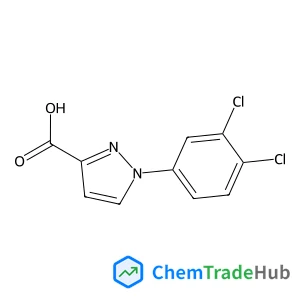

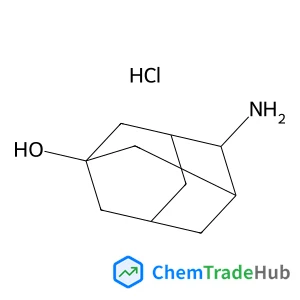
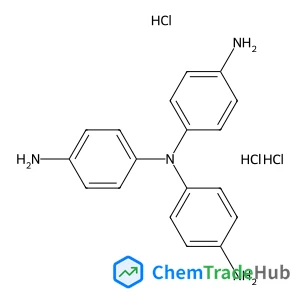
おすすめサプライヤー






免責事項
このページに表示される学術雑誌情報は、参考および研究目的のみを目的としています。当社は雑誌出版社とは提携しておらず、投稿の取り扱いも行っておりません。出版に関するお問い合わせは、各雑誌出版社に直接ご連絡ください。
表示されている情報に誤りがある場合は、support@chemtradehub.com までご連絡ください。迅速に確認し、対応いたします。