



Re-evaluating the role of phosphinic acid (DINHOP) adsorption at the photoanode surface in the performance of dye-sensitized solar cells
文献情報
出版日
2019-12-09
DOI
10.1039/C9CP05063A
インパクトファクター
3.676
著者
Manuel Rodríguez-Perez, Felipe Noh-Pat, Alfredo Romero-Contreras, Emigdio J. Reyes-Ramírez, Siva Kumar Krishnan, Jose L. Ortíz-Quiñonez, Joaquín Alvarado, Umapada Pal, Paul Olalde-Velasco, Julio Villanueva-Cab
原文を見る
要旨
Dineohexyl phosphinic acid (DINHOP) is a popular amphiphilic molecular insulator considered as the most efficient co-adsorbent (co-grafter) for the improvement of the photovoltaic performance of TiO2 based hybrid solar cells. Although the effect of its incorporation on the improvement of cell performance has been well demonstrated, the mechanisms through which it affects the photovoltaic and electrodynamic parameters of the cells are not yet clear. Here we re-examine the mechanism through which the DINHOP co-adsorbent affects the photovoltaic and electrodynamic parameters of dye-sensitized solar cells. Although DINHOP is widely believed to inhibit (passivate) recombination across the TiO2/electrolyte interface, we demonstrate that this is sublte, noticeable only for a very high concentration (e.g. 750 μM) of DINHOP, co-sensitized with a dye. For the most frequently used DINHOP concentrations (e.g. 75 μM and 375 μM), an observed increase of the diffusion coefficient and recombination rate could be directly associated with a decrease of total intra-gap states in TiO2. For a DINHOP concentration as low as 75 μM, the conduction band edge of TiO2 moves upward due to the combined effect of charge accumulation and a decrease in the total number of intra-gap states leading to an effective enhancement of the DCCS VOC, where the decrease in total intra-gap states does not contribute positively. The decrease of total intra-gap states enhances both the transport and recombination rates of charge carriers by the same fraction due to a transport-limited recombination process. On the other hand, adsorption of DINHOP molecules at higher concentrations such as 375 μM and 750 μM additionally modifies the distribution of intra-gap states, affecting the nonlinear recombination parameter of charge carriers at the anode–electrolyte interface, leading to an overall enhancement of the DSSC VOC. In all cases, incorporation of DINHOP results in an overall improvement of the solar cell efficiency (∼14% compared with the reference one), with a maximum for a concentration of 375 μM, where no inhibition of recombination was observed. Interestingly, for this DINHOP concentration, we estimate that 1 DINHOP molecule per every 12 molecules of dye occupies the intra-gap states of the TiO2 surface. The results presented in this work elucidate the physical phenomena involved in the interaction of co-adsorbents, pre-treatments or additives with the electrolyte at the surface of the TiO2 photoanode of dye-sensitized solar cells and can be easily adapted to study other electrochemical systems.
おすすめジャーナル

Pharmacological Reviews

Science

Proceedings of the National Academy of Sciences of the United States of America

European Journal of Wood and Wood Products

Science Progress

Organic Preparations and Procedures International

Planta Medica

Journal of Heterocyclic Chemistry

Kinetics and Catalysis

Pure and Applied Chemistry
関連文献
Large-scale virtual high-throughput screening for the identification of new battery electrolyte solvents: computing infrastructure and collective properties
Tamara Husch, Nusret Duygu Yilmazer, Andrea Balducci, Martin Korth
2014-12-10
Paper
DOI: 10.1039/C4CP04338C
Quantification of protein–materials interaction by soft colloidal probe spectroscopy
Steve Martin, Hanqing Wang, Laura Hartmann, Tilo Pompe, Stephan Schmidt
2014-12-23
Communication
DOI: 10.1039/C4CP05484A
Atomic force microscopy in biomaterials surface science
2014-12-10
Perspective
DOI: 10.1039/C4CP04427D
Remarkable improvement in microwave absorption by cloaking a micro-scaled tetrapod hollow with helical carbon nanofibers
Xiangnan Chen, Zuowan Zhou, Gang Li, Man Jiang, Xiaoling Xu, Jun Lu, Qiming Li, Yong Wang, Jihua Gou, David Hui
2014-11-28
Paper
DOI: 10.1039/C4CP04849K
The role of oxygen vacancies and their location in the magnetic properties of Ce1−xCuxO2−δ nanorods
M. I. B. Bernardi, A. Mesquita, F. Béron, K. R. Pirota, A. O. de Zevallos, A. C. Doriguetto, H. B. de Carvalho
2014-12-02
Paper
DOI: 10.1039/C4CP04879B
Magnetic and microwave absorption properties of self-assemblies composed of core–shell cobalt–cobalt oxide nanocrystals
Zhongzhu Wang, Hong Bi, Peihong Wang, Min Wang, Zhiwei Liu, Lei shen, Xiansong Liu
2014-12-11
Paper
DOI: 10.1039/C4CP04985C
How is the AIE mechanism profoundly changed in an ESIPT family: the novel introduction of a tetraphenylethene group onto (Z)-3-(quinolin-2-ylmethylene)-3,4-dihydroquinoxalin-2(1H)-one
Ding-Er Wu, Qi-Chao Yao, Min Xia
2014-12-19
Paper
DOI: 10.1039/C4CP03963G
Perfect light trapping in nanoscale thickness semiconductor films with a resonant back reflector and spectrum-splitting structures
Xin-Hua Deng, Wen Yang, Jun Li
2014-12-11
Paper
DOI: 10.1039/C4CP04717F
Al20+ does melt, albeit above the bulk melting temperature of aluminium
Udbhav Ojha, Krista G. Steenbergen, Nicola Gaston
2014-12-16
Paper
DOI: 10.1039/C4CP05143B
Exploring the binding mechanisms of MIF to CXCR2 using theoretical approaches
Lei Xu, Youyong Li, Dan Li, Peng Xu, Sheng Tian, Huiyong Sun, Hui Liu, Tingjun Hou
2014-12-11
Paper
DOI: 10.1039/C4CP05095A
こちらもおすすめ
化合物よくある質問
2-ブロモ-9,9-ジフェニル-9H-フルオレンの主な用途は何ですか?
2-溴-9,9-二苯基芴は、医薬品、工業材料、有機合成の研究分野で応用されます。特に、レーザー材料や機能性ポリマーの合成に使用されることがあります。また、蛍光色...
474918-32-62-Bromo-9,9-diphenyl...
化合物よくある質問
四氯化铱の市場動向や研究トレンドはどうですか?
四氯化铱の市場は研究開発分野で注目されており、特にナノ技術や金属有機框架(MOFs)の分野での需要が増加傾向にあります。価格は安定しており、中国や韓国での生産が...
207399-11-9Tetrachloroiridium h...
882-06-44-Nitrocinnamic acid
化合物よくある質問
1-(4-溴-3-氟苯基)-2-氯乙酮を含む廃棄物はどのように処理すべきですか?
1-(4-溴-3-氟苯基)-2-氯乙酮 (CAS番号: 1260857-14-4) の廃棄物は専門的な廃棄処理が必要です。まず、廃棄物は密閉された容器に収集し、...
1260857-14-41-(4-Bromo-3-fluorop...
化合物よくある質問
苦参酚Kとは何ですか?
苦参酚Kは、CAS番号101236-49-1を持つ化合物で、主に天然由来の生薬から抽出されます。この化合物は、抗炎症作用や抗癌作用を持つことが報告されています。
101236-49-1Kushenol K
化合物よくある質問
POTASSIUM (1-(TERTBUTOXYCARBONYL)AZETIDIN-3-YL)TRIFLUOROBORATE を含む廃棄物はどのように処理すべきですか?
POTASSIUM (1-(TERTBUTOXYCARBONYL)AZETIDIN-3-YL)TRIFLUOROBORATE を含む廃棄物は、まず安全なエント...
1430219-73-0Potassium (1-(tert-b...
化合物よくある質問
4-庚基-4’-联苯羧酸の市場動向や研究トレンドはどうですか?
4-庚基-4’-聯苯羧酸は、特殊化学品や合成化学の分野で用いられる化学物質ですが、市場動向としては、研究開発の進展とともに需要が増加しています。また、環境配慮型...
58573-94-74'-Heptyl-4-biphenyl...
化合物よくある質問
6-ブロモ-3-メトキシ-1-フェニル-1H-インドゾールを含む廃棄物はどのように処理すべきですか?
6-ブロモ-3-メトキシ-1-フェニル-1H-インドゾールを含む廃棄物は、適切な化学廃棄処理が必要です。通常、廃棄物は密閉容器に収集され、専門の廃棄処理業者に引...
1332527-03-36-Bromo-3-methoxy-1-...
化合物よくある質問
4,4-二甲基-2-吡咯烷酮はどの業界で使用されていますか?
4,4-二甲基-2-吡咯烷酮は医薬、ポリマー、センサー、半導体などの業界で広く使用されています。特に溶媒としての性能が高く評価されています。
66899-02-34,4-dimethylpyrrolid...
51312-42-6Sodium Phosphotungst...
掲載誌
Physical Chemistry Chemical Physics

CiteScore:
5.5
自己引用率:
10.3%
年間論文数:
3036
Physical Chemistry Chemical Physics (PCCP) is an international journal co-owned by 19 physical chemistry and physics societies from around the world. This journal publishes original, cutting-edge research in physical chemistry, chemical physics and biophysical chemistry. To be suitable for publication in PCCP, articles must include significant innovation and/or insight into physical chemistry; this is the most important criterion that reviewers and Editors will judge against when evaluating submissions. The journal has a broad scope and welcomes contributions spanning experiment, theory, computation and data science. Topical coverage includes spectroscopy, dynamics, kinetics, statistical mechanics, thermodynamics, electrochemistry, catalysis, surface science, quantum mechanics, quantum computing and machine learning. Interdisciplinary research areas such as polymers and soft matter, materials, nanoscience, energy, surfaces/interfaces, and biophysical chemistry are welcomed if they demonstrate significant innovation and/or insight into physical chemistry. Joined experimental/theoretical studies are particularly appreciated when complementary and based on up-to-date approaches.
おすすめ化合物
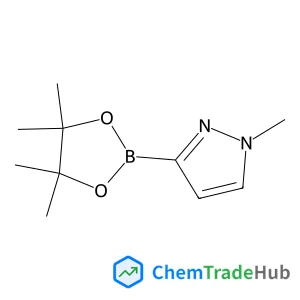
1-Methyl-3-(4,4,5,5-tetramethyl-1,3,2-dioxaborolan-2-yl)-1H-pyrazole
CAS番号:
1020174-04-2
分子式:
C10H17BN2O2

(1H-Benzotriazol-1-yloxy)(di-1-pyrrolidinyl)methylium hexafluorophosphate
CAS番号:
105379-24-6
分子式:
C15H21F6N5OP
おすすめサプライヤー




免責事項
このページに表示される学術雑誌情報は、参考および研究目的のみを目的としています。当社は雑誌出版社とは提携しておらず、投稿の取り扱いも行っておりません。出版に関するお問い合わせは、各雑誌出版社に直接ご連絡ください。
表示されている情報に誤りがある場合は、support@chemtradehub.com までご連絡ください。迅速に確認し、対応いたします。