












![1,2-Diphenyl-4-[2-(phenylsulfinyl)ethyl]-3,5-pyrazolidinedione structure](https://static.chemtradehub.com/structs/57-/57-96-5-efcc.webp "1,2-Diphenyl-4-[2-(phenylsulfinyl)ethyl]-3,5-pyrazolidinedione structure")
Isomer-sensitive characterization of low temperature oxidation reaction products by coupling a jet-stirred reactor to an electron/ion coincidence spectrometer: case of n-pentane
文献情報
出版日
2019-12-10
DOI
10.1039/C9CP04992D
インパクトファクター
3.676
著者
Jérémy Bourgalais, Zied Gouid, Olivier Herbinet, Gustavo A. Garcia, Philippe Arnoux, Zhandong Wang, Luc-Sy Tran, Guillaume Vanhove, Majdi Hochlaf, Laurent Nahon, Frédérique Battin-Leclerc
原文を見る
要旨
Through the use of tunable vacuum ultraviolet light generated by the DESIRS VUV synchrotron beamline, a jet-stirred reactor was coupled for the first time to an advanced photoionization mass spectrometer based upon a double imaging PhotoElectron PhotoIon COincidence (i2PEPICO) scheme. This new coupling was used to investigate the low-temperature oxidation of n-pentane, a prototype molecule for gasoline or diesel fuels. Experiments were performed under quasi-atmospheric pressure (1.1 bar) with a residence time of 3 s for two equivalence ratios (1/3 and 0.5) with a fuel initial mole fraction of 0.01. The measured time-of-flight mass spectra are in good agreement with those previously obtained with other photoionization mass spectrometers and, like those previous ones, display several m/z peaks for which the related species assignation is ambiguous. This paper shows how the analysis of the coincident mass-tagged Threshold PhotoElectron Spectra (TPES) together with first principle computations, consisting of the determination of the adiabatic ionization energies and the spectra of some products, may assist products’ identification. The results mostly confirm those previously obtained by photoionization mass spectrometry and gas chromatography, but also allow a more accurate estimation of the 1-pentene/2-pentene mole fraction ratio. Our data also indicate a higher formation of acetone and methyl ethyl ketone than what is predicted by current models, as well as the presence of products that were not previously taken into account, such as methoxyacetylene, methyl vinyl ketone or furanone. The formation of three, four and five membered ring cyclic ethers is confirmed along with linear ketones: 2- and 3-pentanone. A significant general trend in indicating higher amounts of ketones than are indicated by gas chromatography is noted. Finally, TPES of alkenylhydroperoxides are also provided for the first time and constrains on the isomers identification are provided.
関連文献
Exploring experimental fitness landscapes for chemical synthesis and property optimization
Katharine Moore Tibbetts, Xiao-Jiang Feng, Herschel Rabitz
2017-01-18
Paper
DOI: 10.1039/C6CP06187G
Engineering the electronic and optoelectronic properties of InX (X = S, Se, Te) monolayers via strain
Hao Jin, Jianwei Li, Ying Dai, Yadong Wei
2017-01-09
Paper
DOI: 10.1039/C6CP08158D
Novel high-temperature ferroelectric domain morphology in PbTiO3 ultrathin films
Dorothy M. Duffy
2017-01-13
Paper
DOI: 10.1039/C6CP08157F
Molecular interactions of organic molecules at the air/water interface investigated by sum frequency generation vibrational spectroscopy
2017-01-05
Paper
DOI: 10.1039/C6CP07827C
Free-energy patterns in inclusion complexes: the relevance of non-included moieties in the stability constants
Tânia F. G. G. Cova, Sandra C. C. Nunes, Alberto A. C. C. Pais
2017-01-10
Paper
DOI: 10.1039/C6CP08081B
Photoassist-phosphorylated TiO2 as a catalyst for direct formation of 5-(hydroxymethyl)furfural from glucose
Masashi Hattori, Keigo Kamata
2016-12-23
Paper
DOI: 10.1039/C6CP06864B
Coarse-grained molecular dynamics study on the self-assembly of Gemini surfactants: the effect of spacer length
Xiaoli Sun
2017-01-09
Paper
DOI: 10.1039/C6CP07690D
Molecular dynamics simulations of the effect of waviness and agglomeration of CNTs on interface strength of thermoset nanocomposites
A. R. Alian, S. A. Meguid
2017-01-13
Paper
DOI: 10.1039/C6CP07464B
Layered structure of the near-surface region of oxidized chalcopyrite (CuFeS2): hard X-ray photoelectron spectroscopy, X-ray absorption spectroscopy and DFT+U studies
Yuri Mikhlin, Vladimir Nasluzov, Alexander Romanchenko, Yevgeny Tomashevich, Alexey Shor, Roberto Félix
2017-01-09
Paper
DOI: 10.1039/C6CP07598C
こちらもおすすめ
化合物よくある質問
2-ブロモ-9,9-ジフェニル-9H-フルオレンの主な用途は何ですか?
2-溴-9,9-二苯基芴は、医薬品、工業材料、有機合成の研究分野で応用されます。特に、レーザー材料や機能性ポリマーの合成に使用されることがあります。また、蛍光色...
474918-32-62-Bromo-9,9-diphenyl...
化合物よくある質問
四氯化铱の市場動向や研究トレンドはどうですか?
四氯化铱の市場は研究開発分野で注目されており、特にナノ技術や金属有機框架(MOFs)の分野での需要が増加傾向にあります。価格は安定しており、中国や韓国での生産が...
207399-11-9Tetrachloroiridium h...
882-06-44-Nitrocinnamic acid
化合物よくある質問
1-(4-溴-3-氟苯基)-2-氯乙酮を含む廃棄物はどのように処理すべきですか?
1-(4-溴-3-氟苯基)-2-氯乙酮 (CAS番号: 1260857-14-4) の廃棄物は専門的な廃棄処理が必要です。まず、廃棄物は密閉された容器に収集し、...
1260857-14-41-(4-Bromo-3-fluorop...
化合物よくある質問
苦参酚Kとは何ですか?
苦参酚Kは、CAS番号101236-49-1を持つ化合物で、主に天然由来の生薬から抽出されます。この化合物は、抗炎症作用や抗癌作用を持つことが報告されています。
101236-49-1Kushenol K
化合物よくある質問
POTASSIUM (1-(TERTBUTOXYCARBONYL)AZETIDIN-3-YL)TRIFLUOROBORATE を含む廃棄物はどのように処理すべきですか?
POTASSIUM (1-(TERTBUTOXYCARBONYL)AZETIDIN-3-YL)TRIFLUOROBORATE を含む廃棄物は、まず安全なエント...
1430219-73-0Potassium (1-(tert-b...
化合物よくある質問
4-庚基-4’-联苯羧酸の市場動向や研究トレンドはどうですか?
4-庚基-4’-聯苯羧酸は、特殊化学品や合成化学の分野で用いられる化学物質ですが、市場動向としては、研究開発の進展とともに需要が増加しています。また、環境配慮型...
58573-94-74'-Heptyl-4-biphenyl...
化合物よくある質問
6-ブロモ-3-メトキシ-1-フェニル-1H-インドゾールを含む廃棄物はどのように処理すべきですか?
6-ブロモ-3-メトキシ-1-フェニル-1H-インドゾールを含む廃棄物は、適切な化学廃棄処理が必要です。通常、廃棄物は密閉容器に収集され、専門の廃棄処理業者に引...
1332527-03-36-Bromo-3-methoxy-1-...
化合物よくある質問
4,4-二甲基-2-吡咯烷酮はどの業界で使用されていますか?
4,4-二甲基-2-吡咯烷酮は医薬、ポリマー、センサー、半導体などの業界で広く使用されています。特に溶媒としての性能が高く評価されています。
66899-02-34,4-dimethylpyrrolid...
51312-42-6Sodium Phosphotungst...
掲載誌
Physical Chemistry Chemical Physics

CiteScore:
5.5
自己引用率:
10.3%
年間論文数:
3036
Physical Chemistry Chemical Physics (PCCP) is an international journal co-owned by 19 physical chemistry and physics societies from around the world. This journal publishes original, cutting-edge research in physical chemistry, chemical physics and biophysical chemistry. To be suitable for publication in PCCP, articles must include significant innovation and/or insight into physical chemistry; this is the most important criterion that reviewers and Editors will judge against when evaluating submissions. The journal has a broad scope and welcomes contributions spanning experiment, theory, computation and data science. Topical coverage includes spectroscopy, dynamics, kinetics, statistical mechanics, thermodynamics, electrochemistry, catalysis, surface science, quantum mechanics, quantum computing and machine learning. Interdisciplinary research areas such as polymers and soft matter, materials, nanoscience, energy, surfaces/interfaces, and biophysical chemistry are welcomed if they demonstrate significant innovation and/or insight into physical chemistry. Joined experimental/theoretical studies are particularly appreciated when complementary and based on up-to-date approaches.
おすすめ化合物
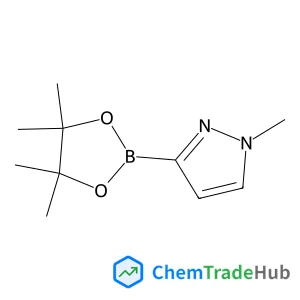
1-Methyl-3-(4,4,5,5-tetramethyl-1,3,2-dioxaborolan-2-yl)-1H-pyrazole
CAS番号:
1020174-04-2
分子式:
C10H17BN2O2
![[4-(Heptyloxy)phenyl]boronic acid structure](https://static.chemtradehub.com/structs/136/136370-19-9-ad33.webp "[4-(Heptyloxy)phenyl]boronic acid structure")

おすすめサプライヤー




免責事項
このページに表示される学術雑誌情報は、参考および研究目的のみを目的としています。当社は雑誌出版社とは提携しておらず、投稿の取り扱いも行っておりません。出版に関するお問い合わせは、各雑誌出版社に直接ご連絡ください。
表示されている情報に誤りがある場合は、support@chemtradehub.com までご連絡ください。迅速に確認し、対応いたします。