












Structure, elastic characteristic, ideal strengths, and phonon stability of binary uranium intermetallic UGe3 of AuCu3-type
文献情報
出版日
2019-12-20
DOI
10.1039/C9CP04971A
インパクトファクター
3.676
著者
Jin-Wen Yang, Li An
原文を見る
要旨
Crystallographic characterization, energy band structure, densities of states and charge density, elastic properties, ideal tensile and shear strengths, lattice dynamics and thermophysical characteristics of UGe3 of AuCu3-type have been studied by employing the first principles method based on Density Functional Theory (DFT). The optimized lattice parameters, such as lattice constant a, equilibrium cell volume V0, U–Ge distance and U–U distance of UGe3, are in favorable agreement with the available experimental results. Three single-crystalline elastic constants of C11, C12, and C44 have been obtained using the “energy–strain” technique by increasingly varying small strains. The polycrystalline elastic moduli including volume modulus B, Young's modulus E, and shear modulus G, Poisson's ratio v, brittle/ductile nature, Debye temperature θD, and the integration of elastic wave velocities over different crystallographic directions have also been successfully calculated. The anisotropy of the three-directional bulk modulus and Young's modulus is systematically explored and analyzed. The calculations indicate that UGe3 of AuCu3-type should be stabilized mechanically, and the system possesses insignificant elastic anisotropy. In particular, the vibrational spectrum, phonon densities of states and the infrared-active and inactive vibration modes at the center of the Brillouin zone are determined using Density Functional Perturbation Theory (DFPT) and group theory for the first time. This study reveals that UGe3 of AuCu3-type is also stable dynamically. Finally, within the calculated phonon densities of states and the quasi-harmonic Debye model, the constant volume heat capacity Cv and the vibration entropy S in the temperature range of 0–1000 K are predicted and analyzed comprehensively. The present investigations are expected to provide some valuable references for further exploring the properties of uranium compounds.
おすすめジャーナル
関連文献
Charge transport mechanisms in sol–gel grown La0.7Pb0.3MnO3/LaAlO3 manganite films
Eesh Vaghela, M. J. Keshvani, Keval Gadani, Zalak Joshi, Hetal Boricha, K. Asokan, D. Venkateshwarlu, V. Ganesan, N. A. Shah, P. S. Solanki
2017-01-31
Paper
DOI: 10.1039/C6CP07730G
Exploring experimental fitness landscapes for chemical synthesis and property optimization
Katharine Moore Tibbetts, Xiao-Jiang Feng, Herschel Rabitz
2017-01-18
Paper
DOI: 10.1039/C6CP06187G
Intracellular water – an overlooked drug target? Cisplatin impact in cancer cells probed by neutrons
A. L. M. Batista de Carvalho, V. Garcia Sakai, L. Hatter, L. A. E. Batista de Carvalho
2016-11-24
Paper
DOI: 10.1039/C6CP05198G
Effective pair potential between charged nanoparticles at high volume fractions
Guillaume Bareigts, Christophe Labbez
2017-01-20
Paper
DOI: 10.1039/C6CP08056A
WO3/W:BiVO4/BiVO4 graded photoabsorber electrode for enhanced photoelectrocatalytic solar light driven water oxidation
Junghyun Choi, Pitchaimuthu Sudhagar, Joo Hyun Kim, Jiseok Kwon, Jeonghyun Kim, Chiaki Terashima, Akira Fujishima, Taeseup Song, Ungyu Paik
2017-01-09
Paper
DOI: 10.1039/C6CP08199A
Kinetics, mechanisms and ionic liquids in the uptake of n-butylamine onto low molecular weight dicarboxylic acids
Michelle C. Fairhurst, Michael J. Ezell, Carla Kidd, Pascale S. J. Lakey, Manabu Shiraiwa, Barbara J. Finlayson-Pitts
2017-01-24
Paper
DOI: 10.1039/C6CP08663B
Suitability of N-propanoic acid spiropyrans and spirooxazines for use as sensitizing dyes in dye-sensitized solar cells
Noah M. Johnson, Yuriy Y. Smolin, Daniel Hagaman, Masoud Soroush, Kenneth K. S. Lau, Hai-Feng Ji
2017-01-04
Paper
DOI: 10.1039/C6CP07853B
Nanoparticle–nanoparticle vs. nanoparticle–substrate hot spot contributions to the SERS signal: studying Raman labelled monomers, dimers and trimers
Kamila Moor, Kristina Gudun, Zarina Yelemessova, Rostislav Bukasov
2016-12-15
Paper
DOI: 10.1039/C6CP08254H
A cationic naphthyl derivative defies the non-equilibrated excited rotamers principle
A. Cesaretti, B. Carlotti, F. Elisei, C. G. Fortuna, G. Consiglio, A. Spalletti
2017-01-16
Paper
DOI: 10.1039/C6CP08311K
こちらもおすすめ
化合物よくある質問
2-ブロモ-9,9-ジフェニル-9H-フルオレンの主な用途は何ですか?
2-溴-9,9-二苯基芴は、医薬品、工業材料、有機合成の研究分野で応用されます。特に、レーザー材料や機能性ポリマーの合成に使用されることがあります。また、蛍光色...
474918-32-62-Bromo-9,9-diphenyl...
化合物よくある質問
四氯化铱の市場動向や研究トレンドはどうですか?
四氯化铱の市場は研究開発分野で注目されており、特にナノ技術や金属有機框架(MOFs)の分野での需要が増加傾向にあります。価格は安定しており、中国や韓国での生産が...
207399-11-9Tetrachloroiridium h...
882-06-44-Nitrocinnamic acid
化合物よくある質問
1-(4-溴-3-氟苯基)-2-氯乙酮を含む廃棄物はどのように処理すべきですか?
1-(4-溴-3-氟苯基)-2-氯乙酮 (CAS番号: 1260857-14-4) の廃棄物は専門的な廃棄処理が必要です。まず、廃棄物は密閉された容器に収集し、...
1260857-14-41-(4-Bromo-3-fluorop...
化合物よくある質問
苦参酚Kとは何ですか?
苦参酚Kは、CAS番号101236-49-1を持つ化合物で、主に天然由来の生薬から抽出されます。この化合物は、抗炎症作用や抗癌作用を持つことが報告されています。
101236-49-1Kushenol K
化合物よくある質問
POTASSIUM (1-(TERTBUTOXYCARBONYL)AZETIDIN-3-YL)TRIFLUOROBORATE を含む廃棄物はどのように処理すべきですか?
POTASSIUM (1-(TERTBUTOXYCARBONYL)AZETIDIN-3-YL)TRIFLUOROBORATE を含む廃棄物は、まず安全なエント...
1430219-73-0Potassium (1-(tert-b...
化合物よくある質問
4-庚基-4’-联苯羧酸の市場動向や研究トレンドはどうですか?
4-庚基-4’-聯苯羧酸は、特殊化学品や合成化学の分野で用いられる化学物質ですが、市場動向としては、研究開発の進展とともに需要が増加しています。また、環境配慮型...
58573-94-74'-Heptyl-4-biphenyl...
化合物よくある質問
6-ブロモ-3-メトキシ-1-フェニル-1H-インドゾールを含む廃棄物はどのように処理すべきですか?
6-ブロモ-3-メトキシ-1-フェニル-1H-インドゾールを含む廃棄物は、適切な化学廃棄処理が必要です。通常、廃棄物は密閉容器に収集され、専門の廃棄処理業者に引...
1332527-03-36-Bromo-3-methoxy-1-...
化合物よくある質問
4,4-二甲基-2-吡咯烷酮はどの業界で使用されていますか?
4,4-二甲基-2-吡咯烷酮は医薬、ポリマー、センサー、半導体などの業界で広く使用されています。特に溶媒としての性能が高く評価されています。
66899-02-34,4-dimethylpyrrolid...
51312-42-6Sodium Phosphotungst...
掲載誌
Physical Chemistry Chemical Physics

CiteScore:
5.5
自己引用率:
10.3%
年間論文数:
3036
Physical Chemistry Chemical Physics (PCCP) is an international journal co-owned by 19 physical chemistry and physics societies from around the world. This journal publishes original, cutting-edge research in physical chemistry, chemical physics and biophysical chemistry. To be suitable for publication in PCCP, articles must include significant innovation and/or insight into physical chemistry; this is the most important criterion that reviewers and Editors will judge against when evaluating submissions. The journal has a broad scope and welcomes contributions spanning experiment, theory, computation and data science. Topical coverage includes spectroscopy, dynamics, kinetics, statistical mechanics, thermodynamics, electrochemistry, catalysis, surface science, quantum mechanics, quantum computing and machine learning. Interdisciplinary research areas such as polymers and soft matter, materials, nanoscience, energy, surfaces/interfaces, and biophysical chemistry are welcomed if they demonstrate significant innovation and/or insight into physical chemistry. Joined experimental/theoretical studies are particularly appreciated when complementary and based on up-to-date approaches.
おすすめ化合物
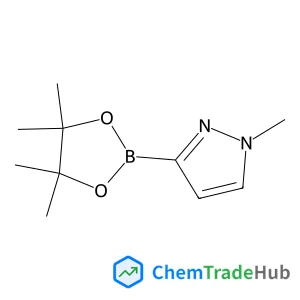
1-Methyl-3-(4,4,5,5-tetramethyl-1,3,2-dioxaborolan-2-yl)-1H-pyrazole
CAS番号:
1020174-04-2
分子式:
C10H17BN2O2
![N-[(Benzyloxy)carbonyl]serine structure](https://static.chemtradehub.com/structs/276/2768-56-1-77f7.webp "N-[(Benzyloxy)carbonyl]serine structure")
![5-Acetyl-2,3-dihydrobenzo[b]furan structure](https://static.chemtradehub.com/structs/908/90843-31-5-eea4.webp "5-Acetyl-2,3-dihydrobenzo[b]furan structure")
おすすめサプライヤー





免責事項
このページに表示される学術雑誌情報は、参考および研究目的のみを目的としています。当社は雑誌出版社とは提携しておらず、投稿の取り扱いも行っておりません。出版に関するお問い合わせは、各雑誌出版社に直接ご連絡ください。
表示されている情報に誤りがある場合は、support@chemtradehub.com までご連絡ください。迅速に確認し、対応いたします。